
 EN
EN
- Description

Is there a problem?
Please contact us to serve you!
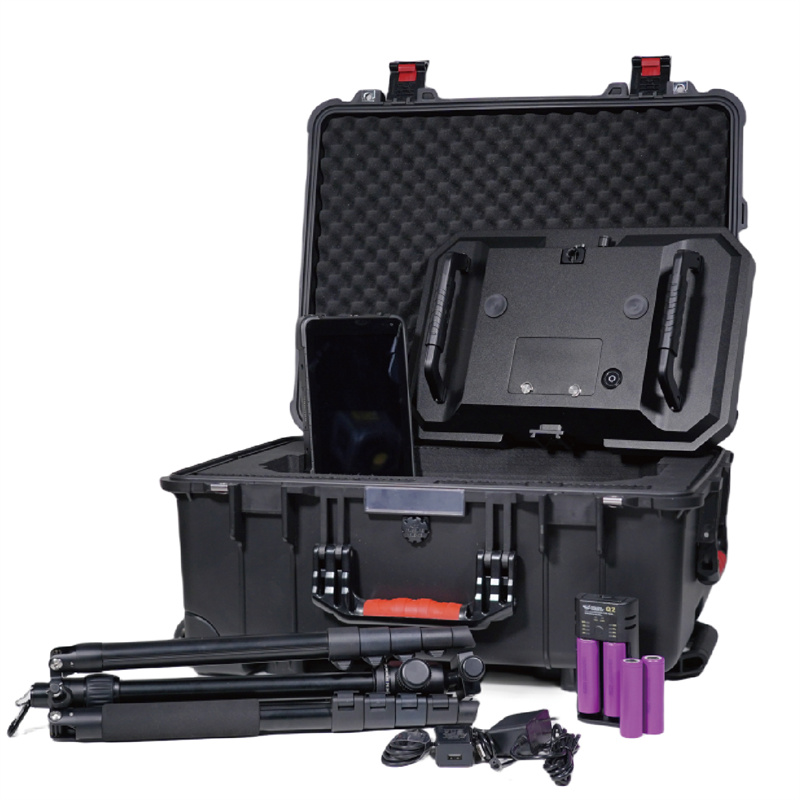
Through Wall Imaging System
UWB through-barrier survivor detection up to 35 m with 2D/3D positioning and IP67 protection.
- Description
- Parameter
- Recommended Products
Description
LSJ HX-RI UWB Radar Life Detector
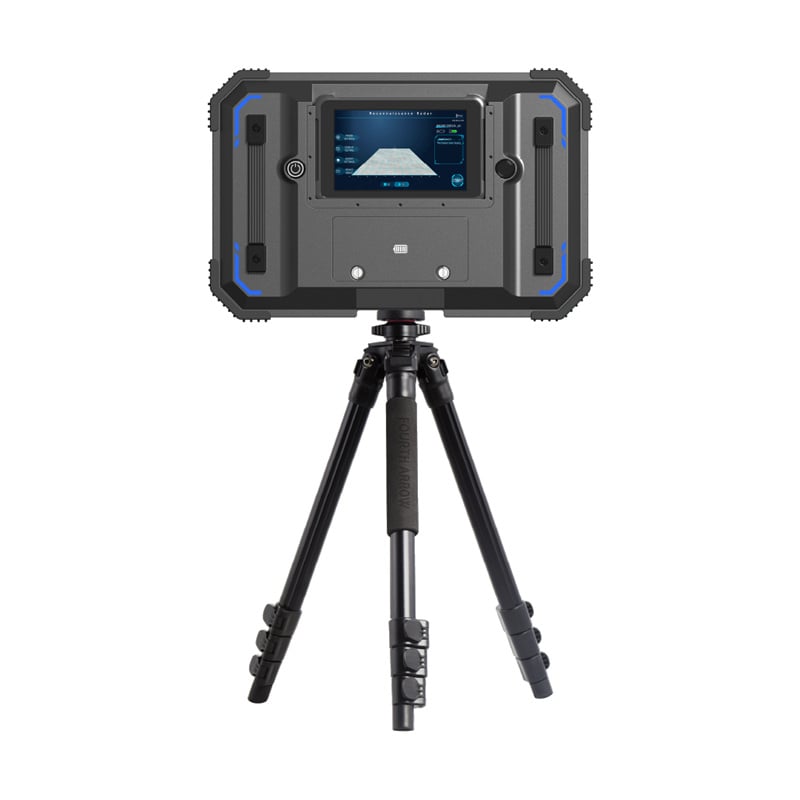
The LSJ HX-RI is a portable ultra-wideband radar life detector for locating stationary and moving survivors behind low-moisture, non-metallic barriers. It combines through-wall sensing, 2D and 3D positioning, target trajectory display and remote operation for search-and-rescue teams.
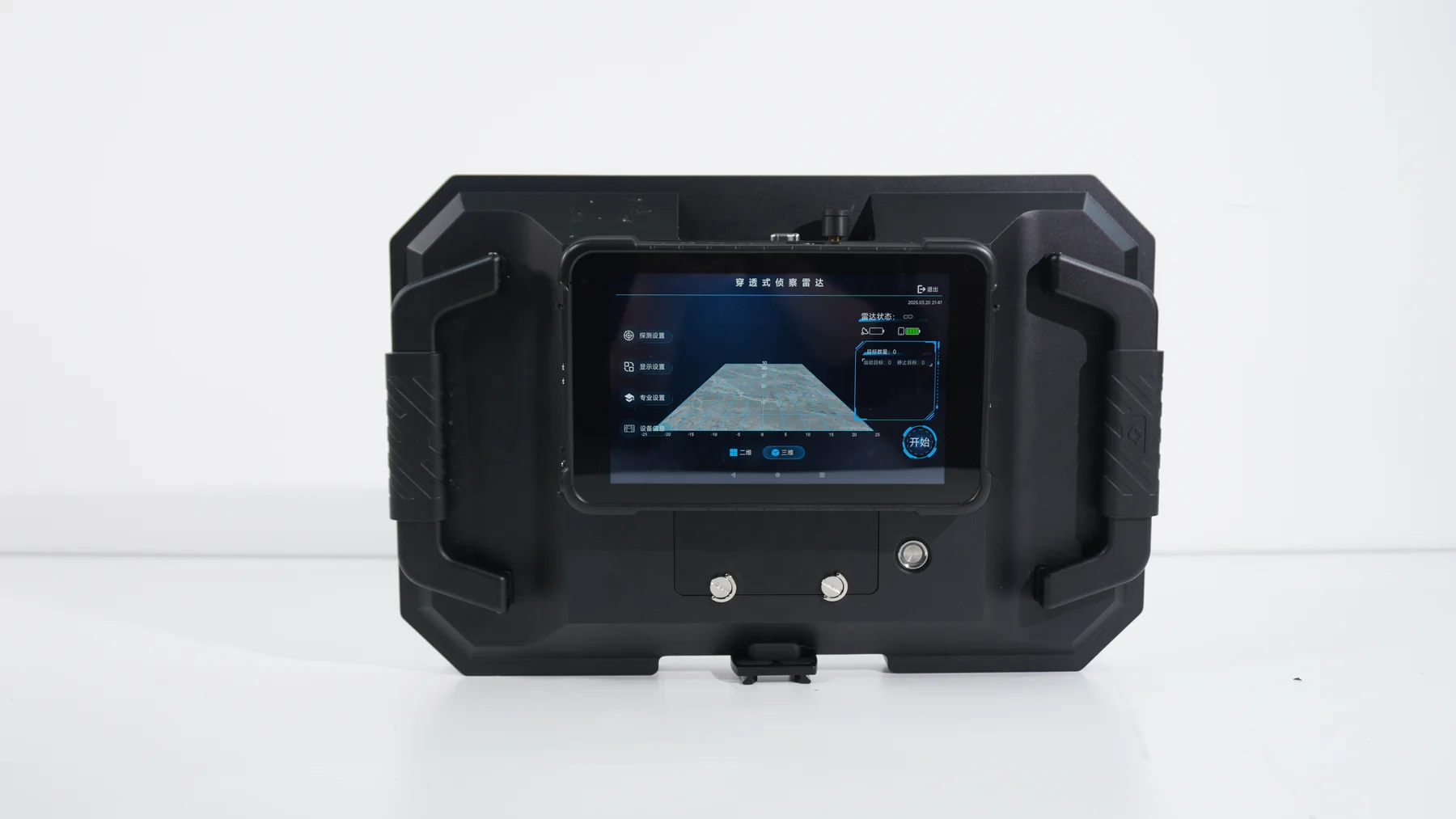
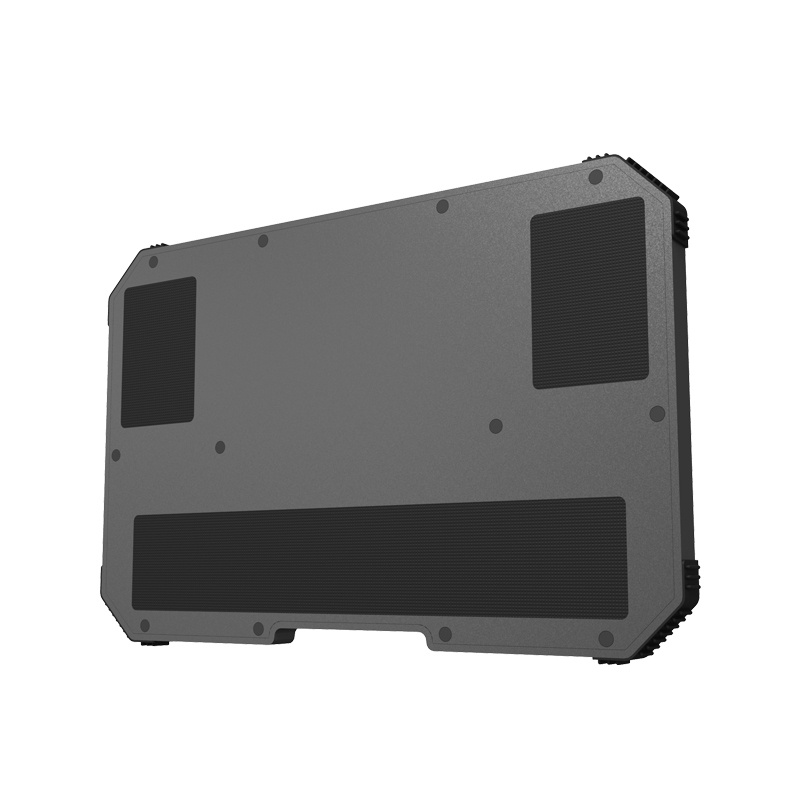
Figure: LSJ HX-RI dual-handle radar life detector with an integrated local display for field verification.
Measured Rescue Capabilities
When visual contact is impossible, the HX-RI gives rescue teams location and movement evidence before entry. Its manufacturer-stated detection accuracy is above 90%, startup time is 10 seconds, and the IP67 enclosure is specified for operation from -20°C to +60°C.
Technical Parameters
From Unseen Risk to Actionable Location Data
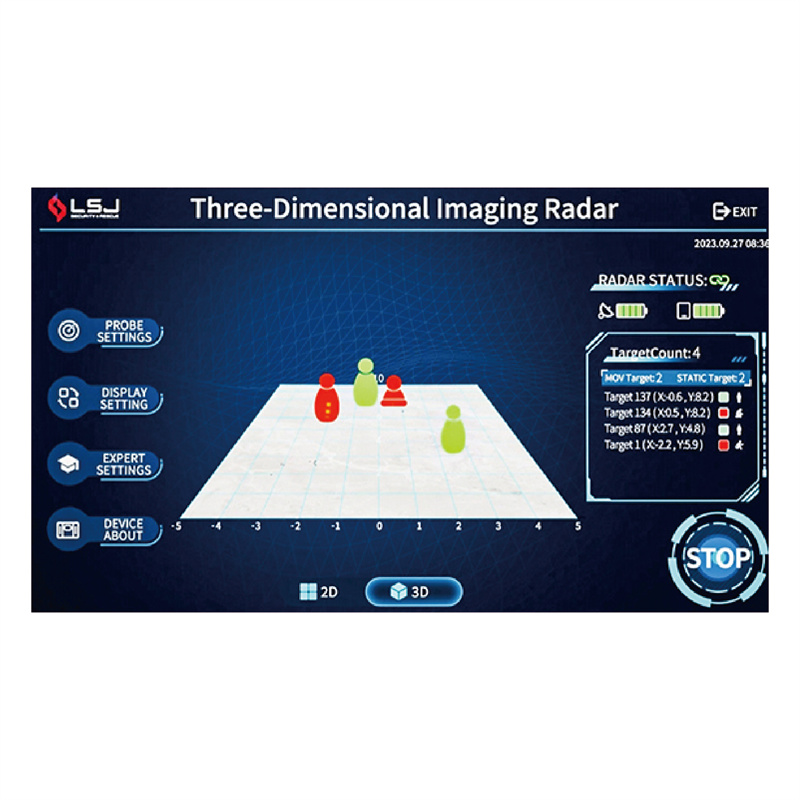
Collapsed structures and closed rooms can hide survivors while making blind entry dangerous. The HX-RI detects micro-motion and body movement without direct contact, then converts the return signal into coordinates, trajectories and breathing or movement traces for rescue assessment.
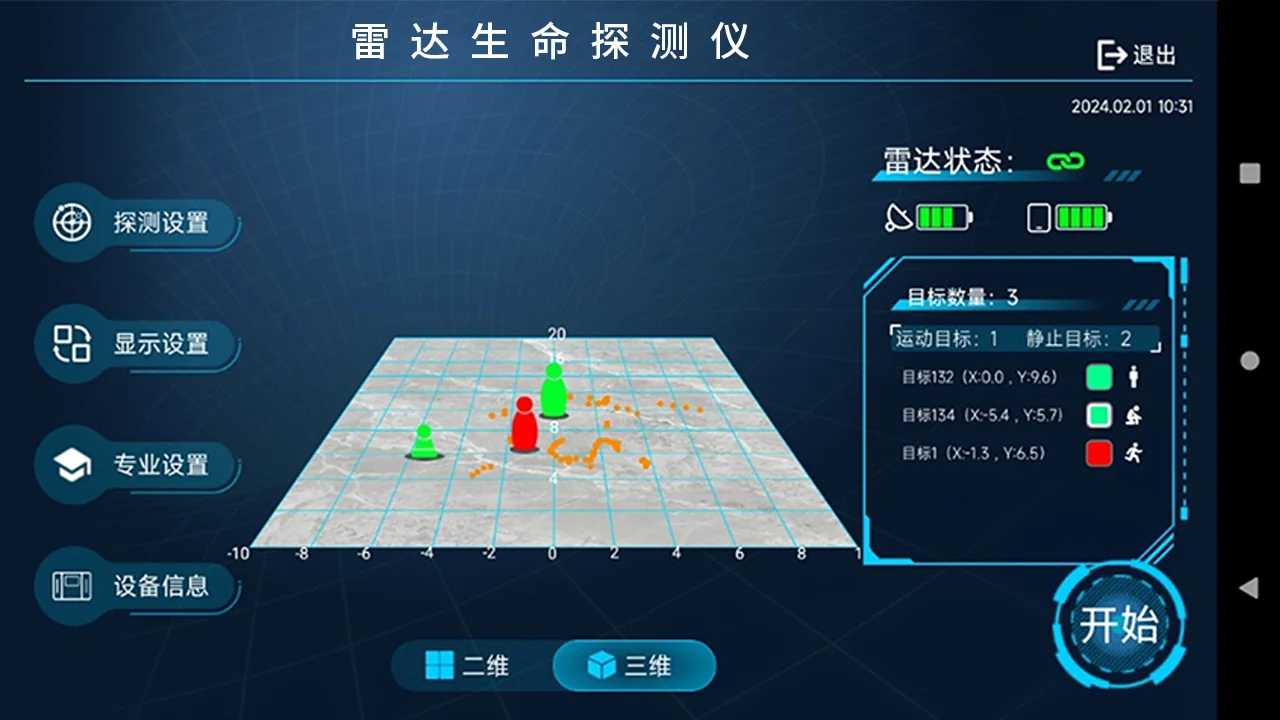
Figure: The HX-RI interface displays multiple detected targets in a 3D spatial view together with target status data.
Configurable for Real Rescue Environments
Operators can select air, through-wall, rubble or wood modes, choose high, medium or low sensitivity, switch between stationary and moving target states, and set 45, 60, 90 or 120-second scans or continuous hold.
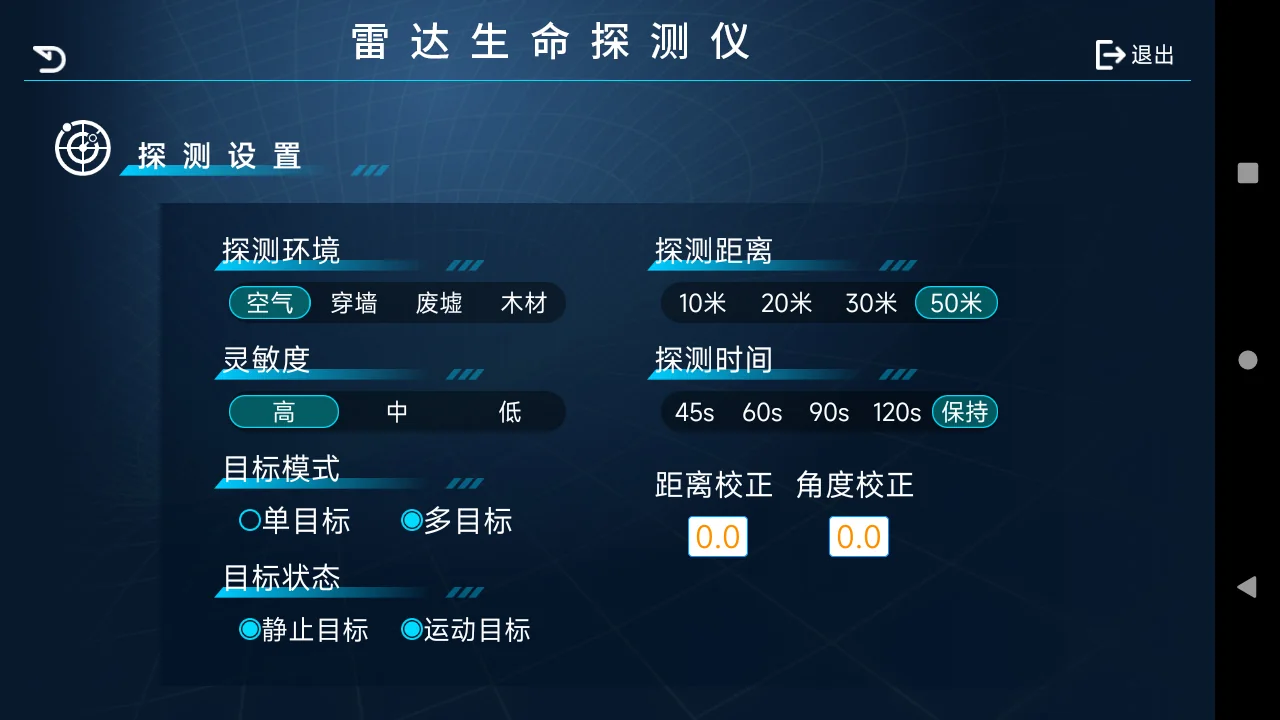
Figure: Detection settings provide direct control over environment, sensitivity, target state and scan duration.
Field Deployment and Stand-Off Operation
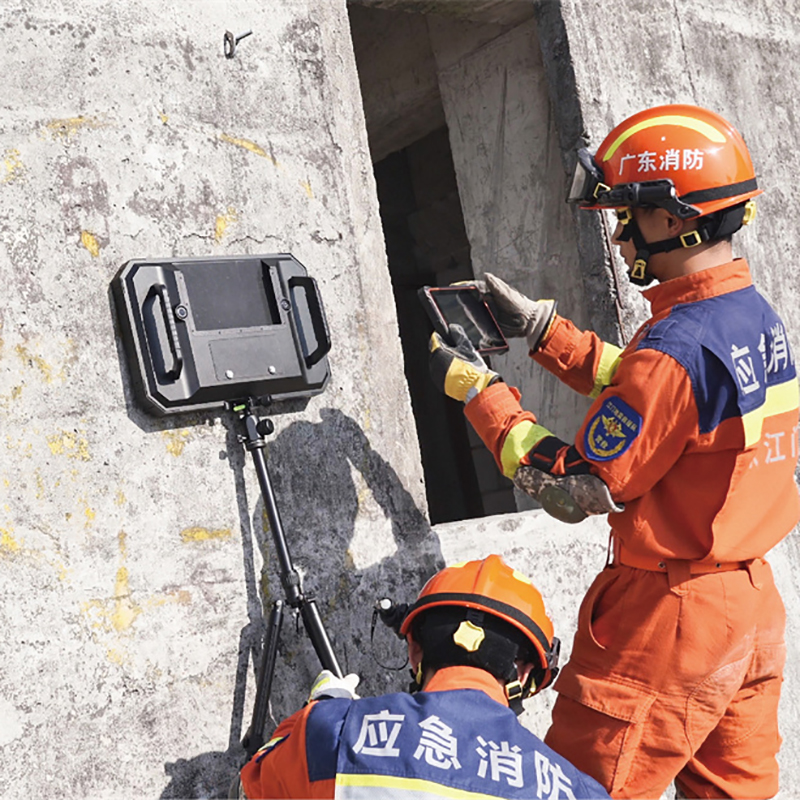
For through-wall work, place the radar level with its antenna face close to the barrier and use a tripod when site conditions allow. The wireless display terminal can communicate with the radar over 100-150 m in an open environment, helping the operator observe results away from the immediate hazard area.
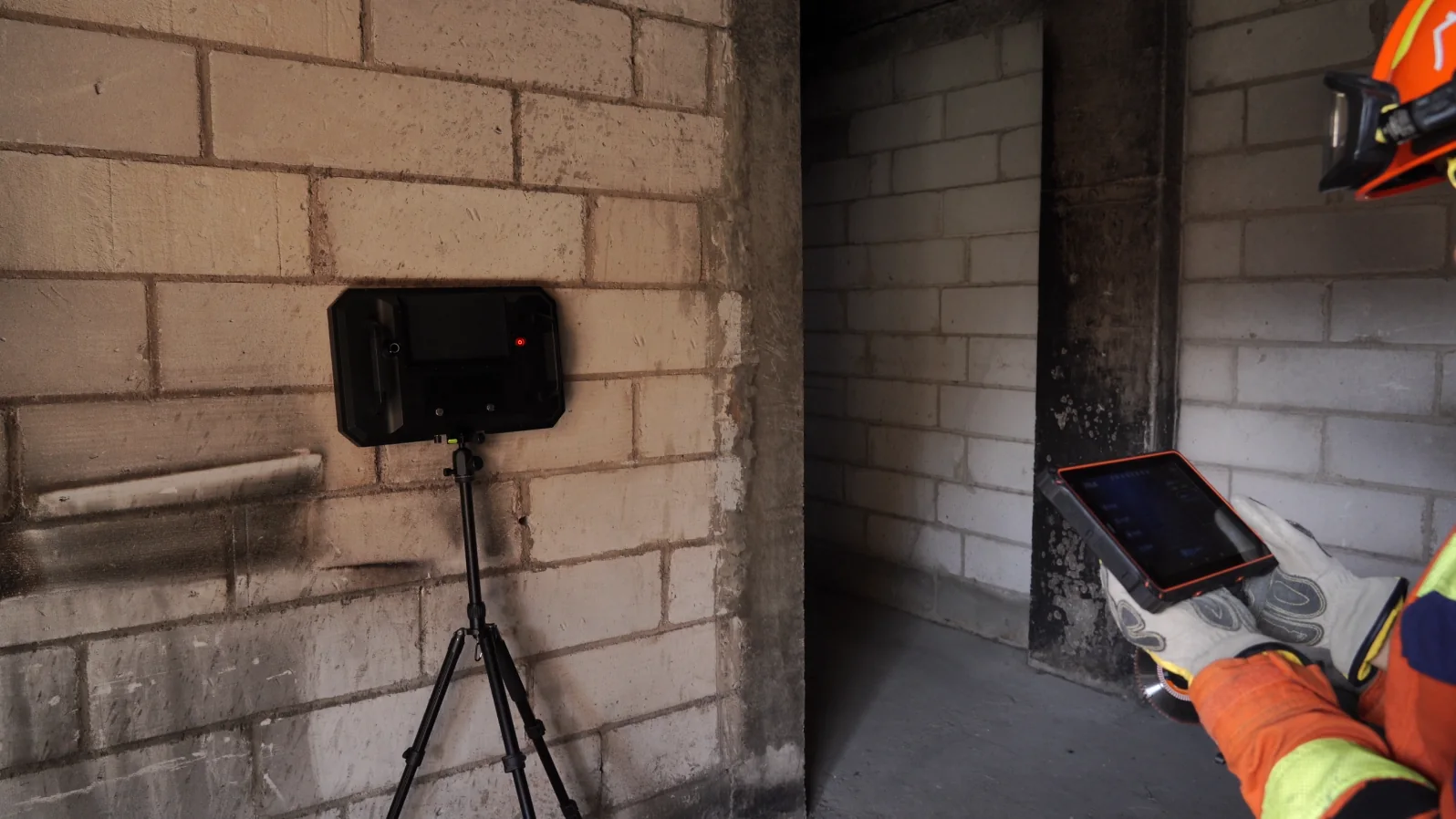
Figure: Wall-side tripod deployment with a separate wireless display terminal supports stand-off observation.
Search and Rescue Applications
Collapsed Structures
Locate stationary or moving survivors beneath rubble before committing personnel to a search path.
Through-Wall Search
Assess rooms behind non-metallic barriers and view coordinates without requiring visual contact.
Disaster Response
Use 2D or 3D target views and multi-target mode to organize search priorities across complex scenes.
Frequently Asked Questions
Q: What is the detection range of the LSJ HX-RI radar life detector?
A: The LSJ HX-RI detects stationary and moving human life signs at distances of up to 35 m after penetration through a wall over 65 cm thick. Performance depends on barrier composition, moisture and site conditions.
Q: Which materials can the LSJ HX-RI penetrate?
A: It is designed to detect through low-moisture, non-metallic materials including concrete, soil, rock and wood. Metal between the radar and target may make results inaccurate.
Q: Can it detect motionless survivors?
A: Yes. The system detects both stationary and moving people and displays breathing and movement signals for rescue assessment.
Q: Does it provide target location rather than only an alarm?
A: Yes. The system provides 2D and 3D positioning, target coordinates and trajectory display, with stated lateral accuracy within 10 cm.
Q: Can multiple survivors be detected?
A: Yes. The LSJ HX-RI supports single-target and multi-target detection modes and displays target characteristic signals.
Q: How quickly is the unit ready?
A: The stated startup time is 10 seconds. Operators can then select the environment, sensitivity, target state and 2D or 3D display mode.
Q: What environments and temperatures are supported?
A: The IP67-rated radar is specified for operation from -20°C to +60°C, with selectable air, through-wall, rubble and wood environment modes.
Q: How long can the LSJ HX-RI operate?
A: Each removable rechargeable lithium battery provides up to 10 hours of runtime, and the standard configuration includes two batteries.
Request technical confirmation for your barrier type, search distance and deployment environment.
Send an InquiryXF 3010-2020 compliant specification · IP67 · 2 removable 10-hour batteries


