

All Categories
Warning Alarm Stability Protection Device

Home /  Products /  Safety and monitoring equipment /  Warning Alarm Stability Protection Device

Warning Alarm Stability Protection Device LS-D01

Why Choose the LSJ LS-D01

✓0.1° Accuracy, 0.01° Resolution — 3-axis (X/Y/Z), full 360° tilt monitoring

✓Tilt + Vibration Dual Sensing — vibration channel covers 0.5 Hz–100 Hz

✓550 m LoRa Wireless, Up to 4 Nodes — multi-point linked alarms from one 8-inch terminal

✓95 dB Sound-and-Light Alarm — instant on-site audible and visual evacuation warning

✓5 Tool-Free Mounting Options — magnetic, suction-cup, strap, rope-tether or bracket; deployed in seconds

  • Description
  • Parameter
  • Recommended Products

Description

Core Capabilities

Keep The Team Out Of The Collapse Zone

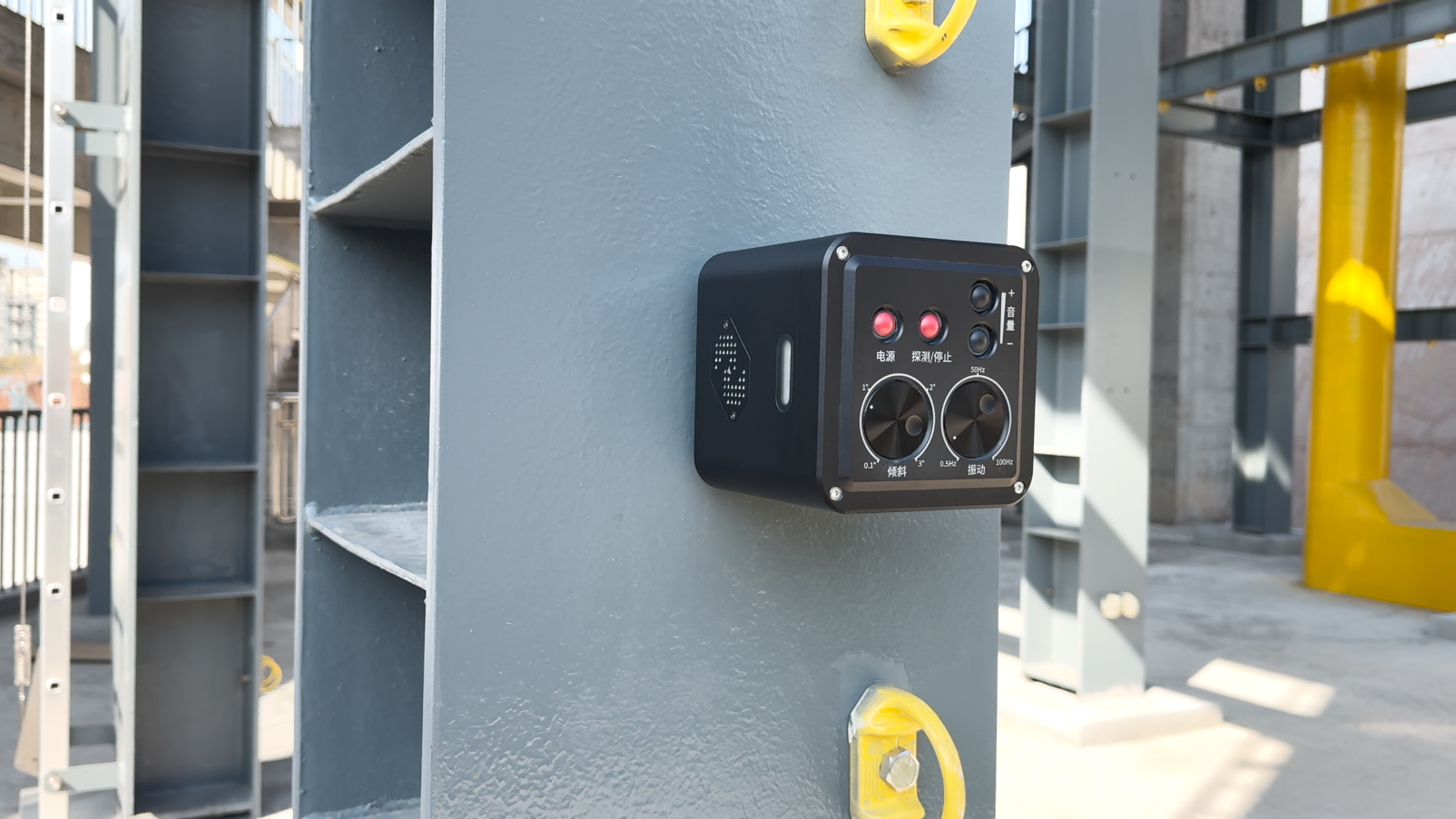
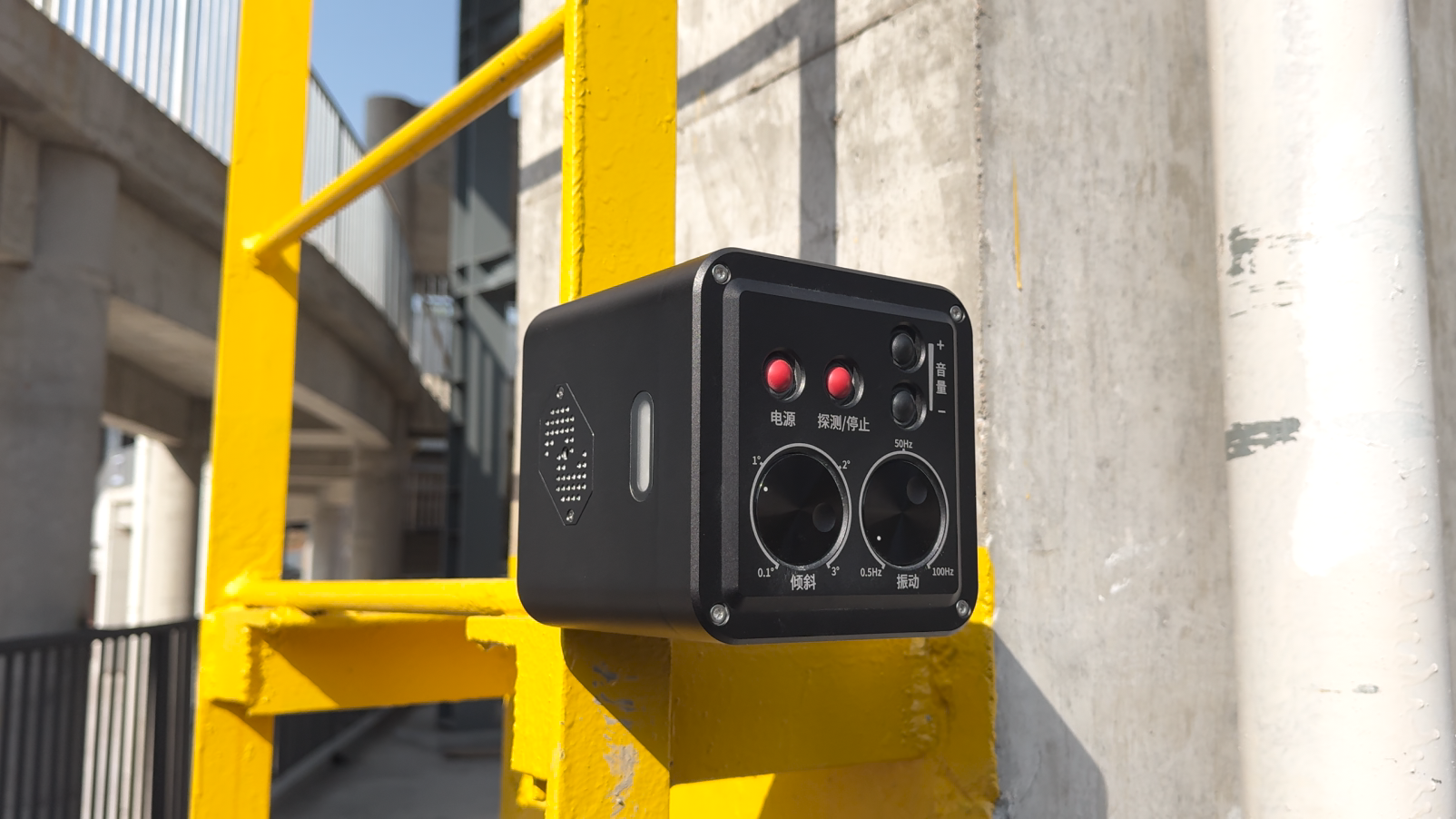
A battery-powered monitoring node that watches three-axis tilt and vibration on the damaged structure itself, and raises a 95 dB sound-and-light alarm on the spot the moment movement passes the value you set.

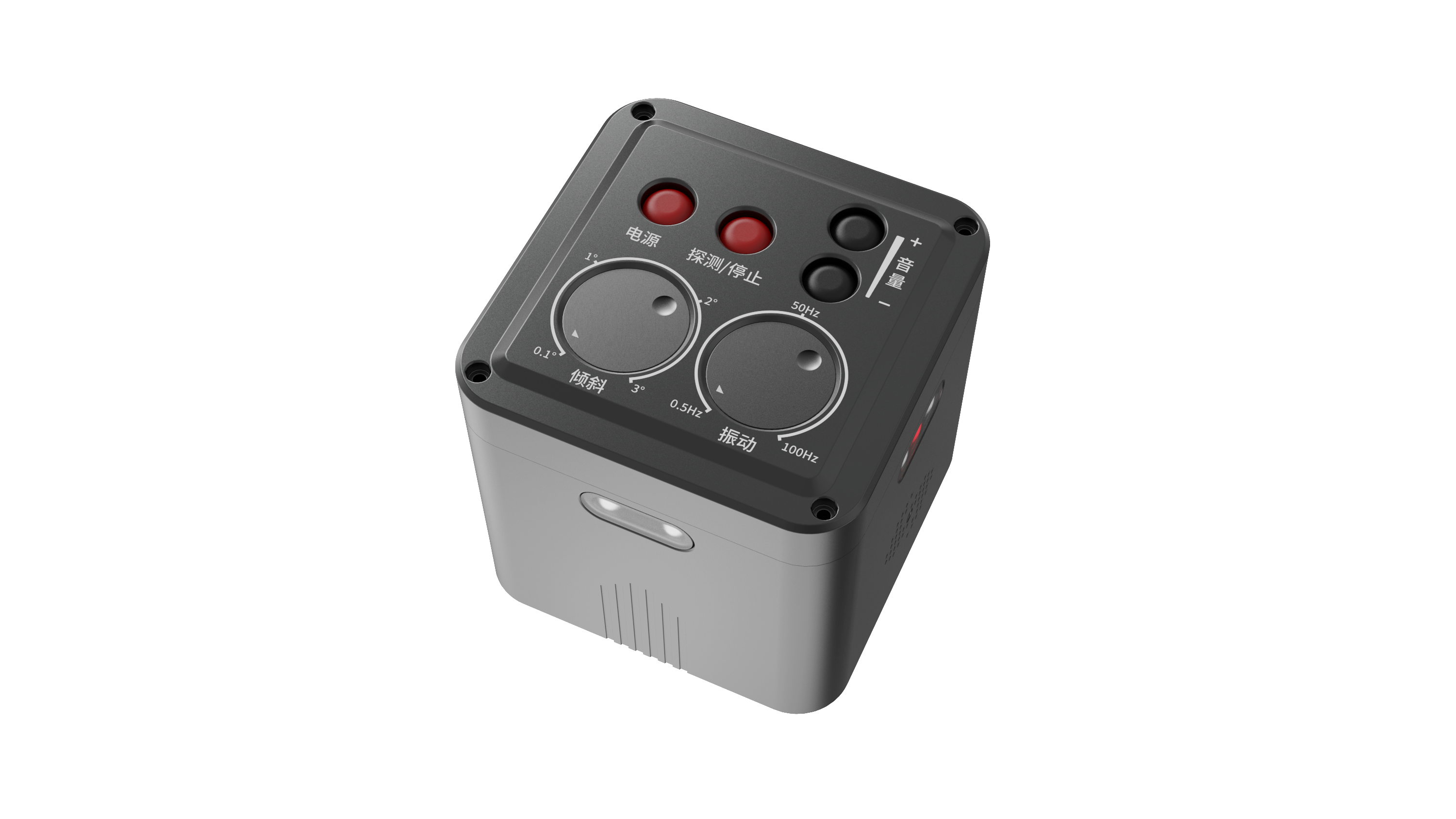
LSJ-D01 monitoring node with separate tilt and vibration setting dials, function buttons and integrated sound-and-light alarm
CAPABILITY 01

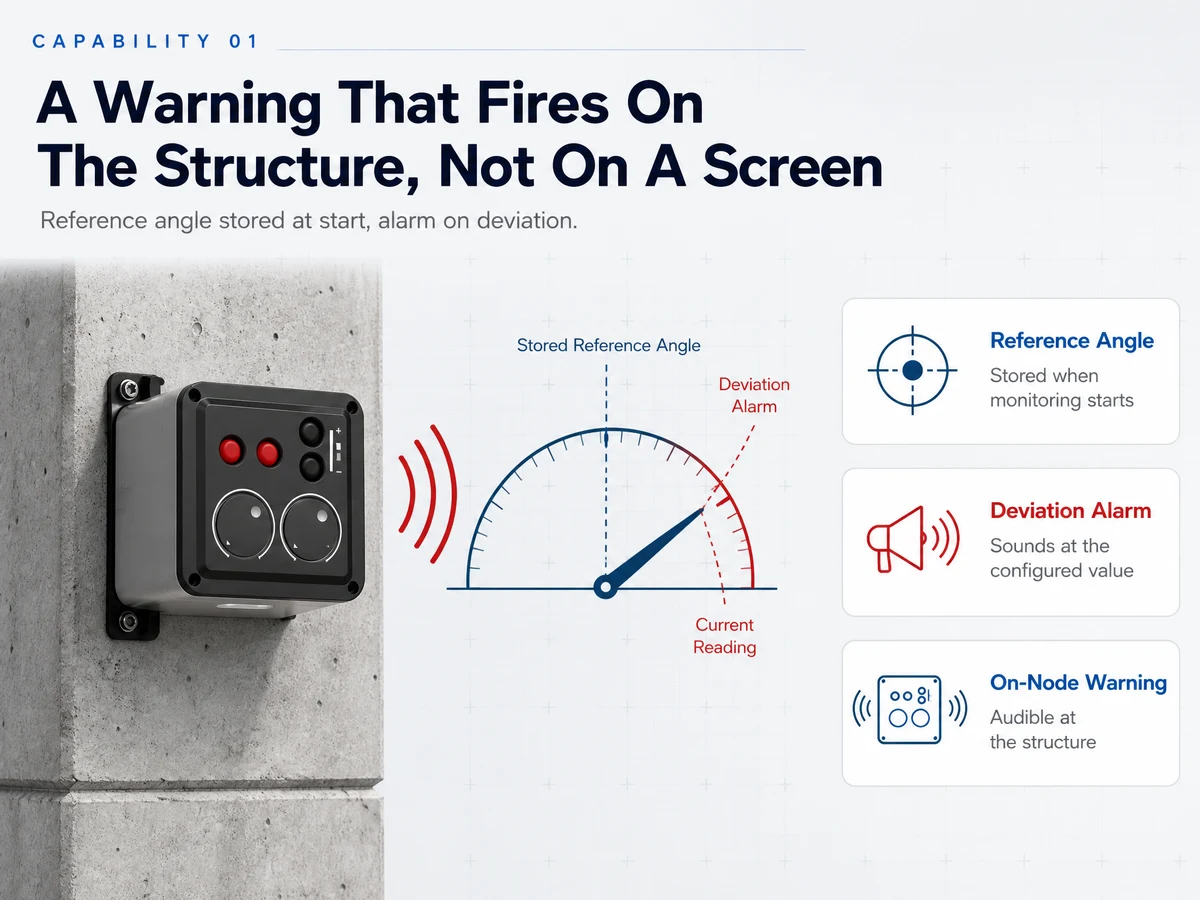
A Warning That Fires On The Structure, Not On A Screen

The node stores the reference angle recorded when monitoring starts and compares every later reading against it. Once the deviation passes the configured alarm value it sounds and flashes on the structure itself, so the warning still reaches the crew when nobody is watching the terminal.

  • Three-axis (X / Y / Z) tilt measurement across a 360° range, stated 0.1° accuracy and 0.01° resolution
  • Separate vibration channel covering 0.5 Hz–100 Hz, so shaking is caught before visible displacement develops
  • 95 dB siren and strobe built into the node — no operator has to read a display to get the warning
CAPABILITY 02

Arm It On The Dial, Inside The Hazard Zone

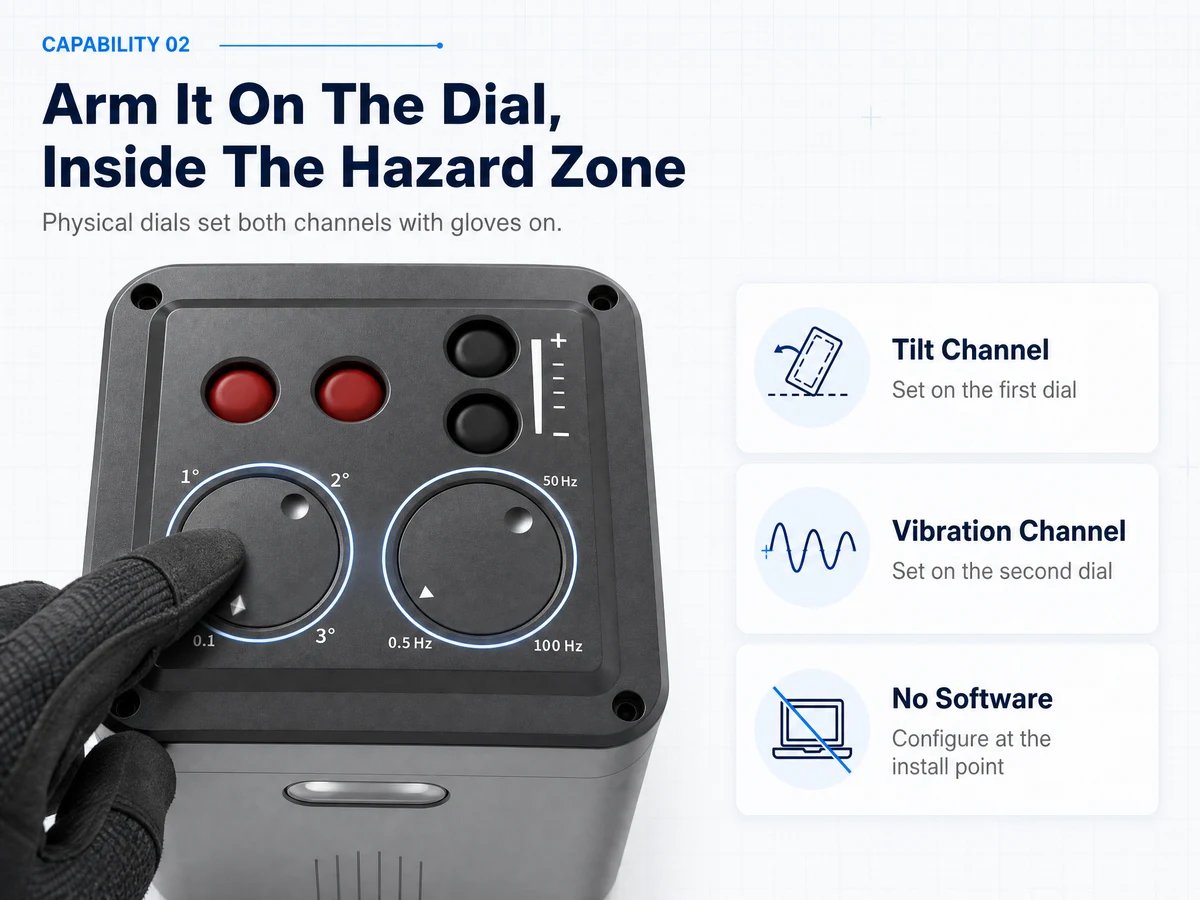
Both channels are set with physical dials on the enclosure, so a node can be configured at the point of installation — with gloves on — without opening software or a tablet. The dials cover the usual cases; the terminal also accepts any value between them.

  • Tilt dial with quick positions at 0.1° / 1° / 2° / 3°
  • Vibration dial spanning 0.5 Hz to 100 Hz
  • Stepless range from 0.1° to 9.9° for structures that need a value between the presets
Operator setting the tilt and vibration dials on the LSJ-D01 node mounted on site
LSJ-D01 control terminal screen listing four nodes with live X, Y and Z angles, alarm threshold, battery level and wireless link
CAPABILITY 03

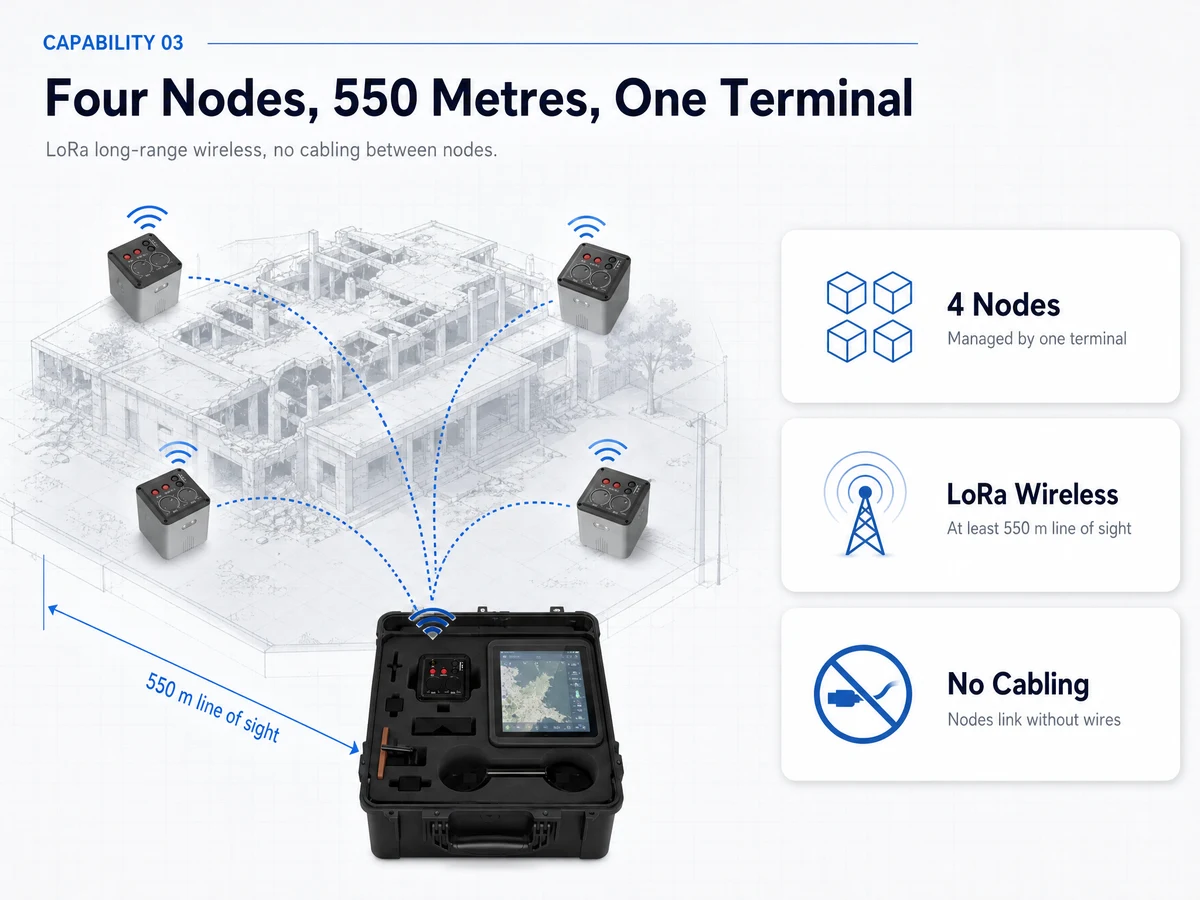
Four Nodes, 550 Metres, One Terminal

One 8-inch Android terminal (EM-T81X) manages up to four nodes over LoRa long-range wireless, with at least 550 metres line of sight and no cabling between them. The command post sees every node’s live X / Y / Z angle, alarm threshold, battery level and link state on a single screen.

  • When any node trips, its number is shown on the terminal and all linked alarms fire together
  • Reverse-search function makes a buried or misplaced node sound off for recovery
  • Wi-Fi is built into the terminal; 4G is optional
CAPABILITY 04

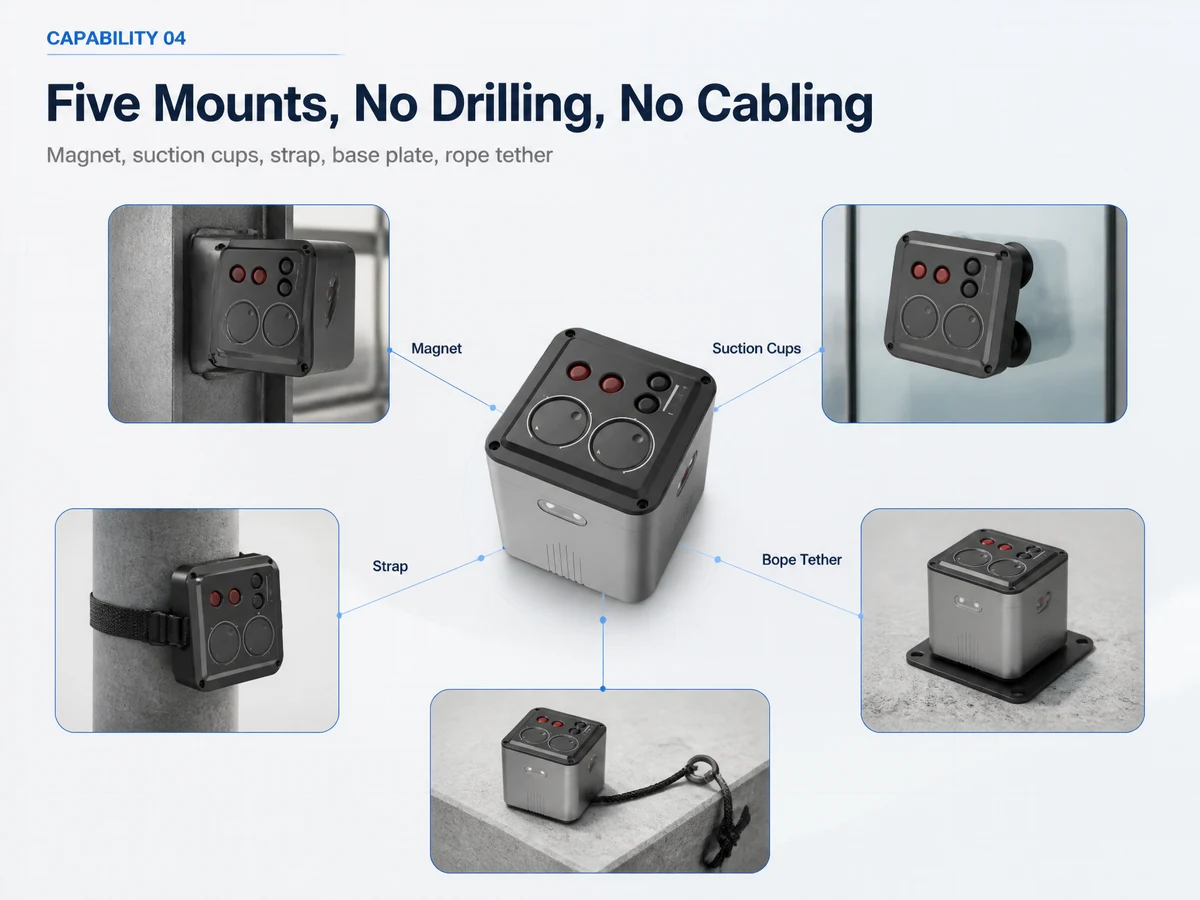
Five Mounts, No Drilling, No Cabling

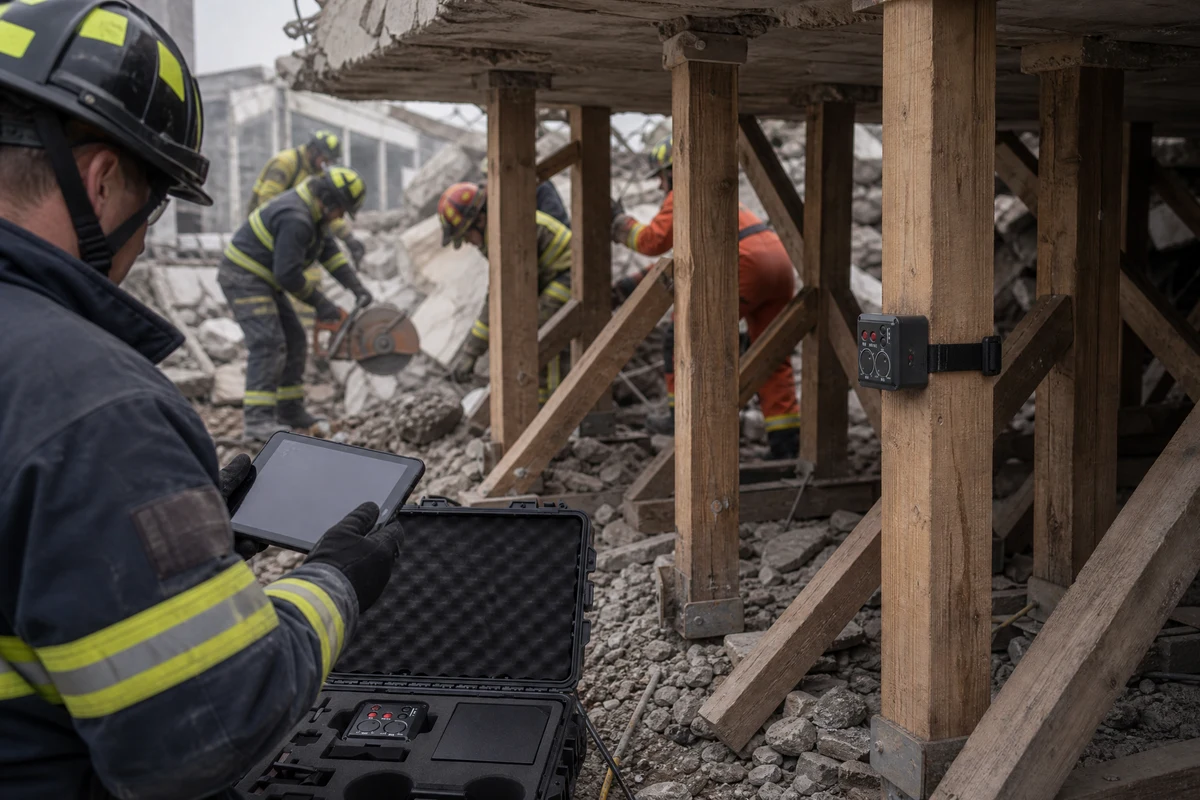
Every scene presents a different surface, so the kit ships with five attachment methods: a magnet for structural steel, a dual suction-cup bracket for glass and smooth panels, a woven strap for poles and scaffolding, a static-rope tether, and a base plate or bracket for timber shores and debris.

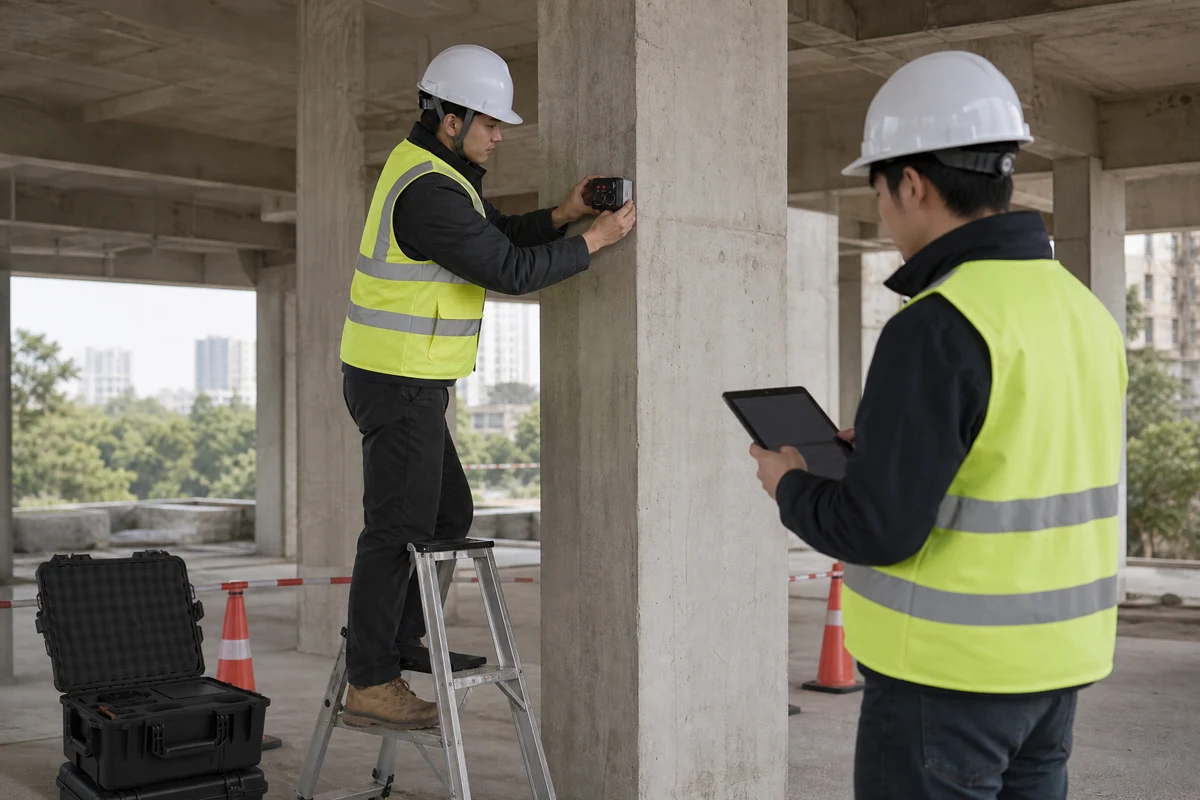
  • Suction-cup bracket fixes to finished surfaces without drilling or leaving residue
  • Magnetic and strap mounting covers steel columns, scaffolding and irregular members
  • No tools and no wiring — monitoring can begin before the team enters the hazard zone
LSJ-D01 node held on a smooth panel by the dual suction-cup bracket
LSJ-D01 node magnetically attached to a painted structural steel beam at a rescue training site
CAPABILITY 05

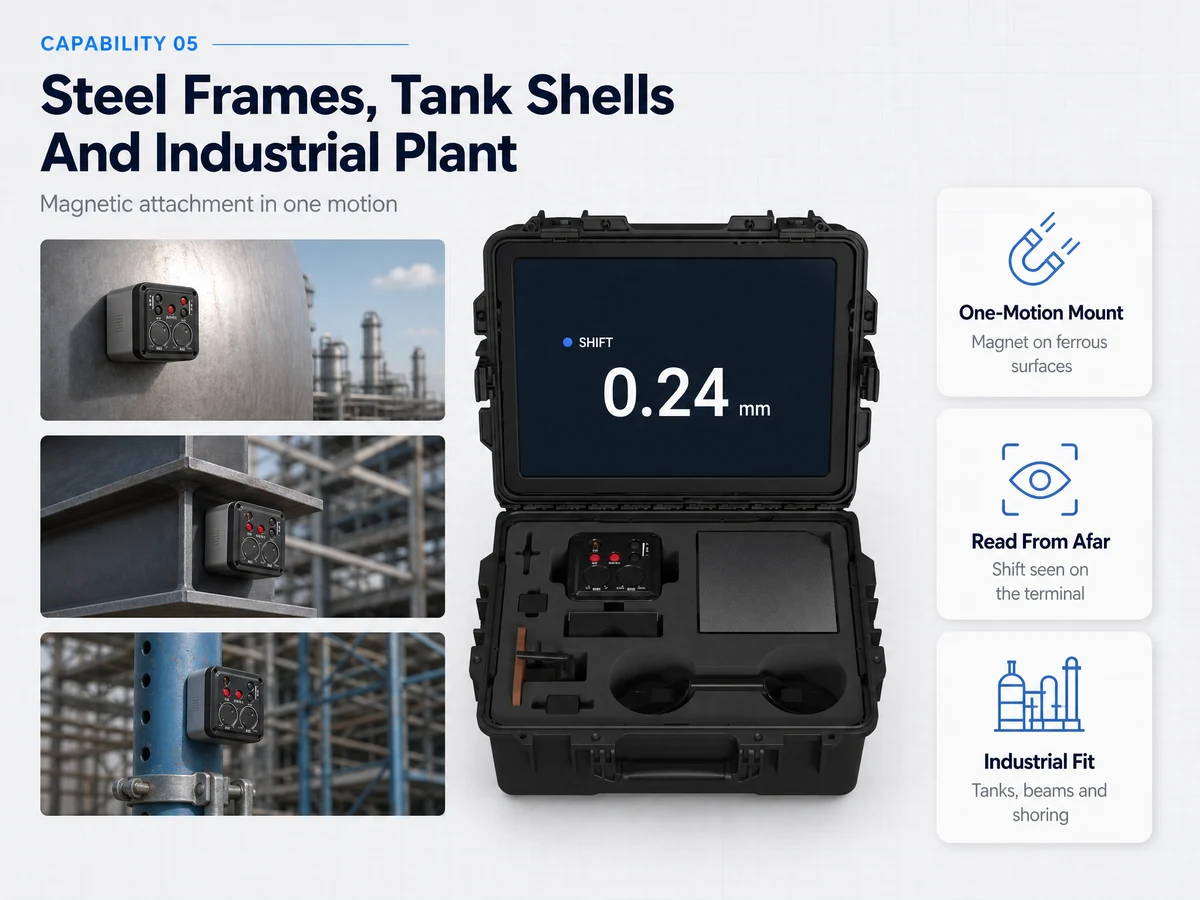
Steel Frames, Tank Shells And Industrial Plant

Magnetic attachment instruments a tank shell, an I-beam or a shoring frame in one motion, so a shift can be read from the terminal instead of from beside the vessel. The manufacturer lists storage tanks and steel structures among the intended applications, including fires and chemical incidents where a tank or support may move.

  • One-motion magnetic attachment to painted steel, columns and tank walls
  • The node stays inside the exclusion zone while the terminal stays with the command team
  • Relevant to warehouse fires, chemical incidents and industrial collapse response
CAPABILITY 06

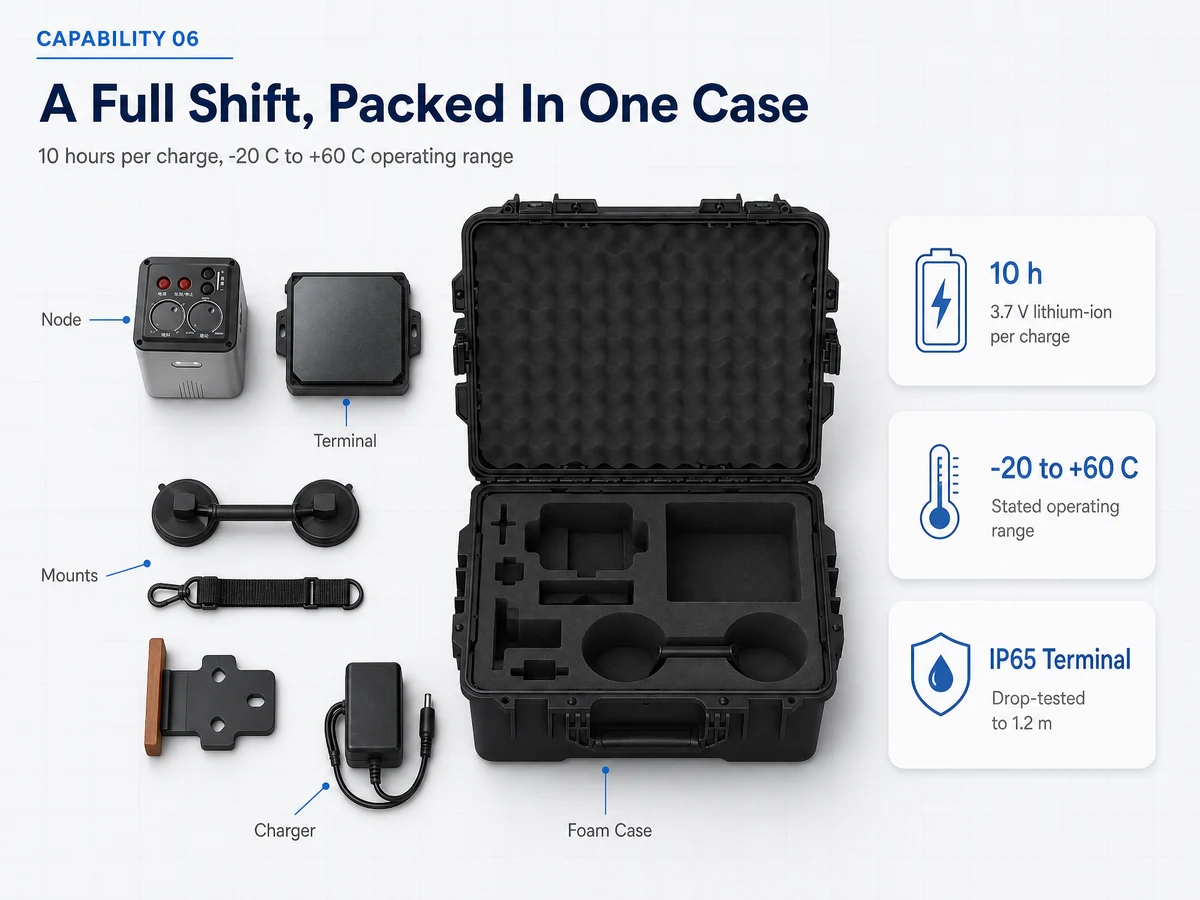
A Full Shift, Packed In One Case

The node runs for 10 hours per charge on its 3.7 V lithium-ion battery and is stated to operate from −20 °C to +60 °C with a 1 m drop design; the 8-inch terminal is IP65 and drop-tested to 1.2 m. The whole kit travels in one foam-lined hard case.

  • 10 h continuous operation per charge — charging time is not stated and is to be confirmed
  • Node operating range −20 °C to +60 °C; storage −40 °C to +70 °C
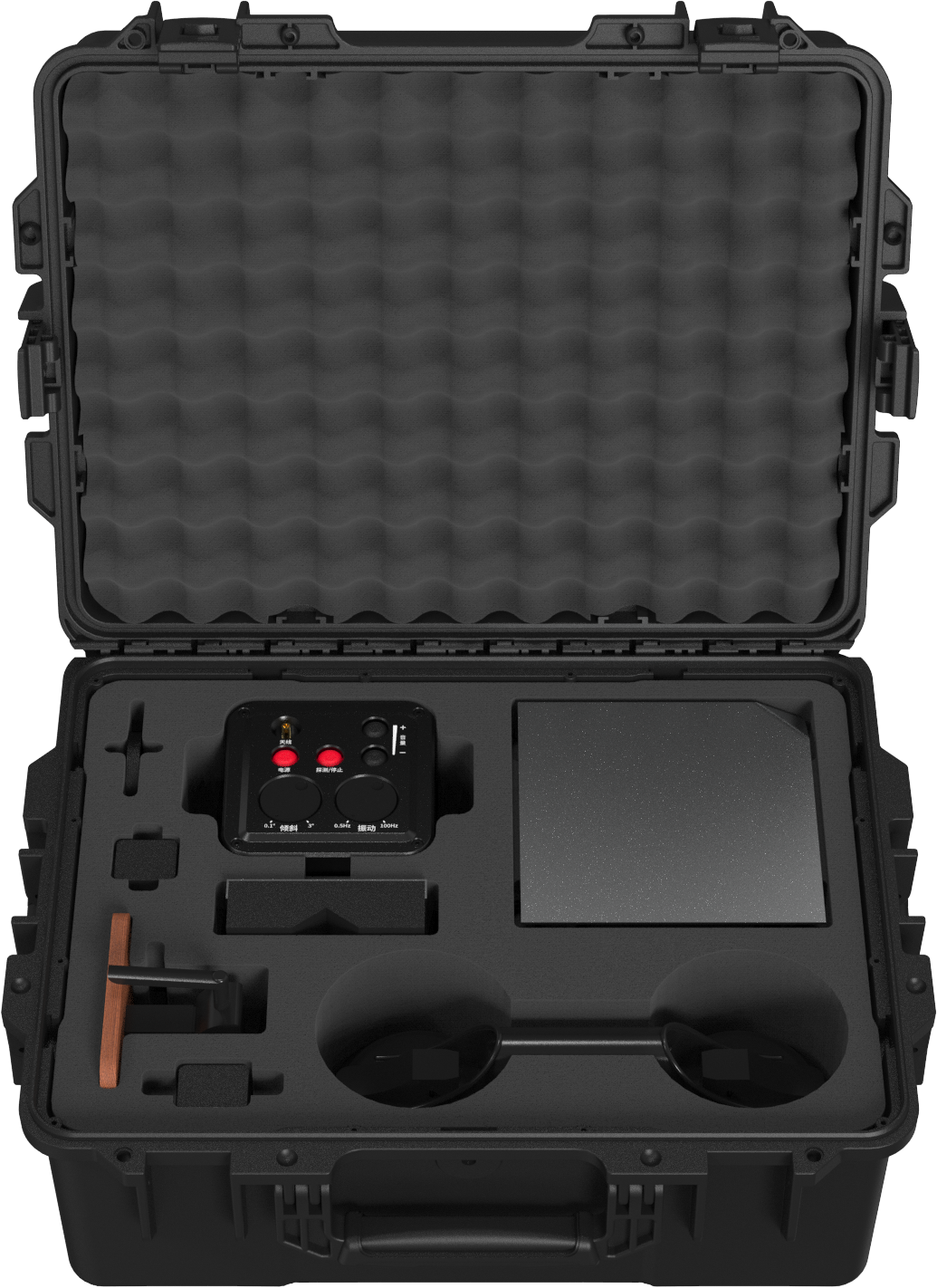
  • Custom foam holds node, terminal, antennas, mounts and charger as one deployment unit
LSJ-D01 kit in its foam-lined hard transport case with monitoring node, 8-inch terminal and mounting accessories

Put A Monitor On The Wall Before The Next Aftershock

Request the LSJ-D01 datasheet, a kit configuration, quantity pricing, or a deployment walkthrough for your team.

Applications

Where The LSJ-D01 Is Deployed

Purpose-built for continuous monitoring at earthquake, building-collapse, fire, explosion, tunnel-collapse and landslide scenes, and for industrial sites where tanks or structures may shift. Always apply the incident commander’s entry procedures.

LSJ-D01 node placed on a damaged brick wall to monitor movement after structural damage

Post-Earthquake Structures

Nodes go on damaged columns, beams and support members while the terminal stays with the command team. A renewed tilt raises an evacuation warning without sending an inspector back under the damage.

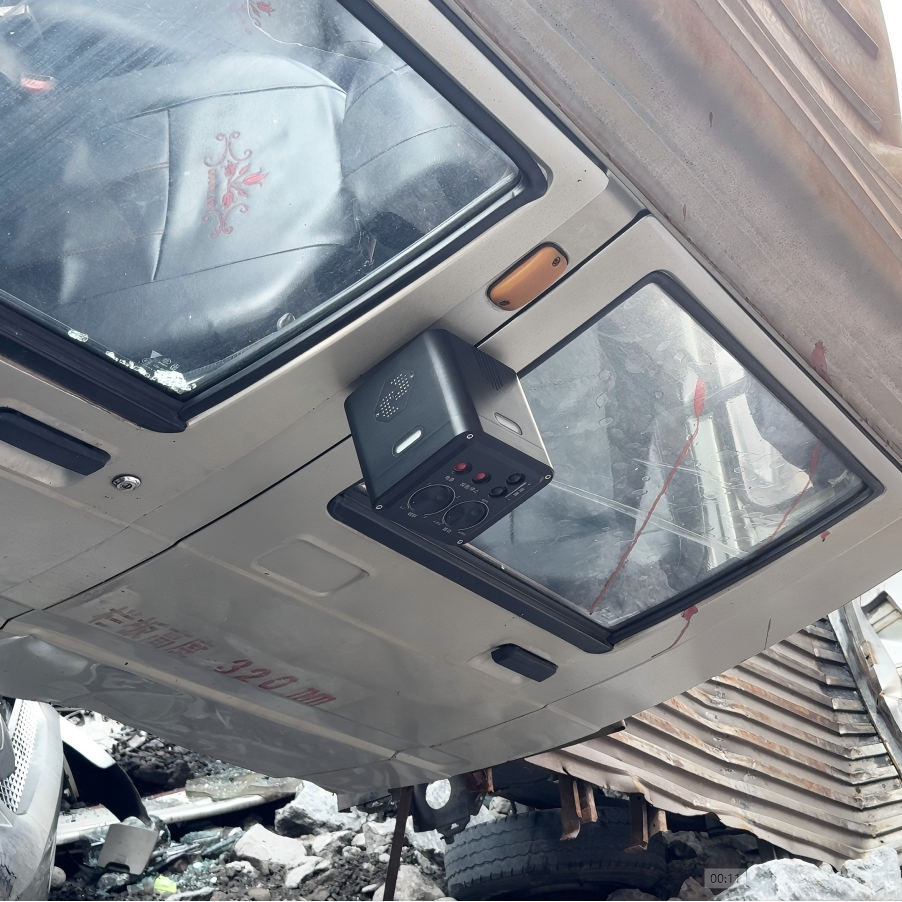
LSJ-D01 node fixed to timber shoring beside a crushed vehicle during collapse rescue training

Collapse Rescue And Shoring

Timber shores and brackets carry the weight of unstable wreckage. A node on the shore gives cutting and lifting crews a live warning if the shoring starts to move.

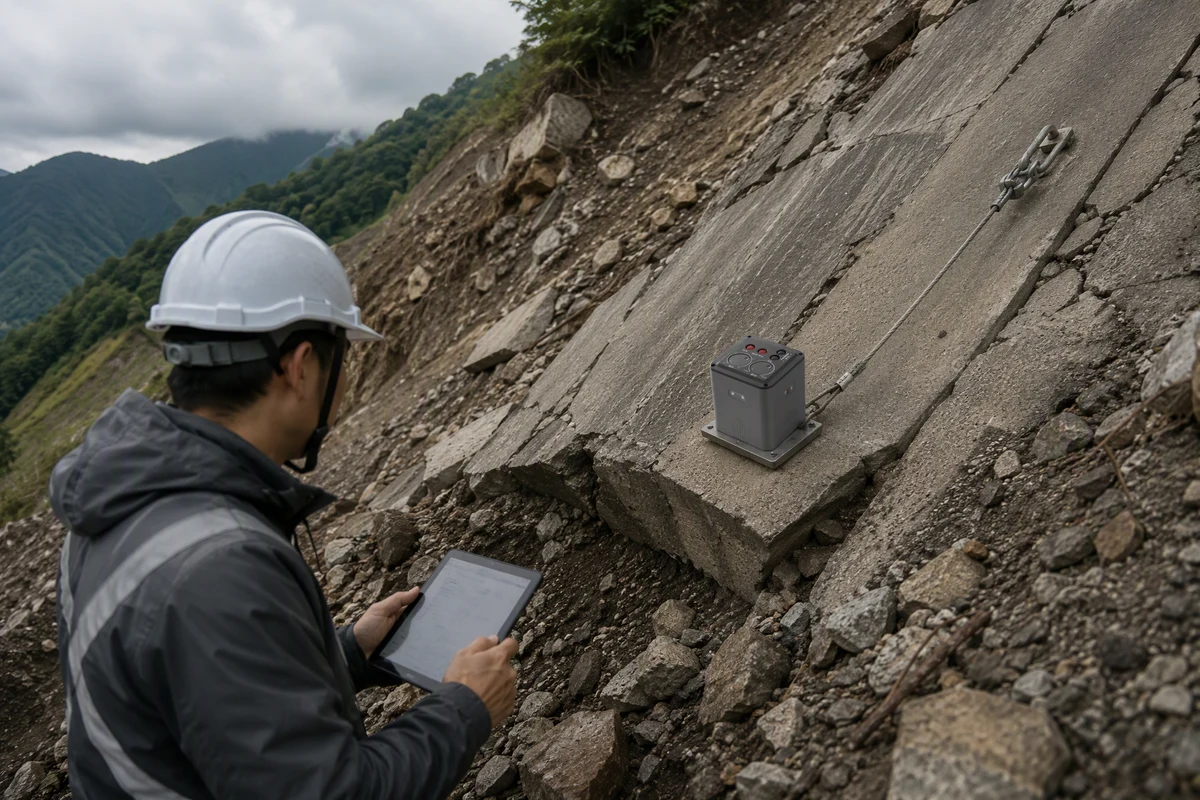
LSJ-D01 node tethered with static rope on a cracked, tilted concrete slab

Landslides And Unstable Debris

Base-plate and rope-tether mounting hold the node on tilted concrete, cracked slope slabs and broken decks, watching for renewed sliding that could cut an access route.

Operational Scenario

Watch The Structure While The Team Works

The scenario below illustrates how a wireless monitoring alarm may support a rescue team. It is not a documented customer case study.

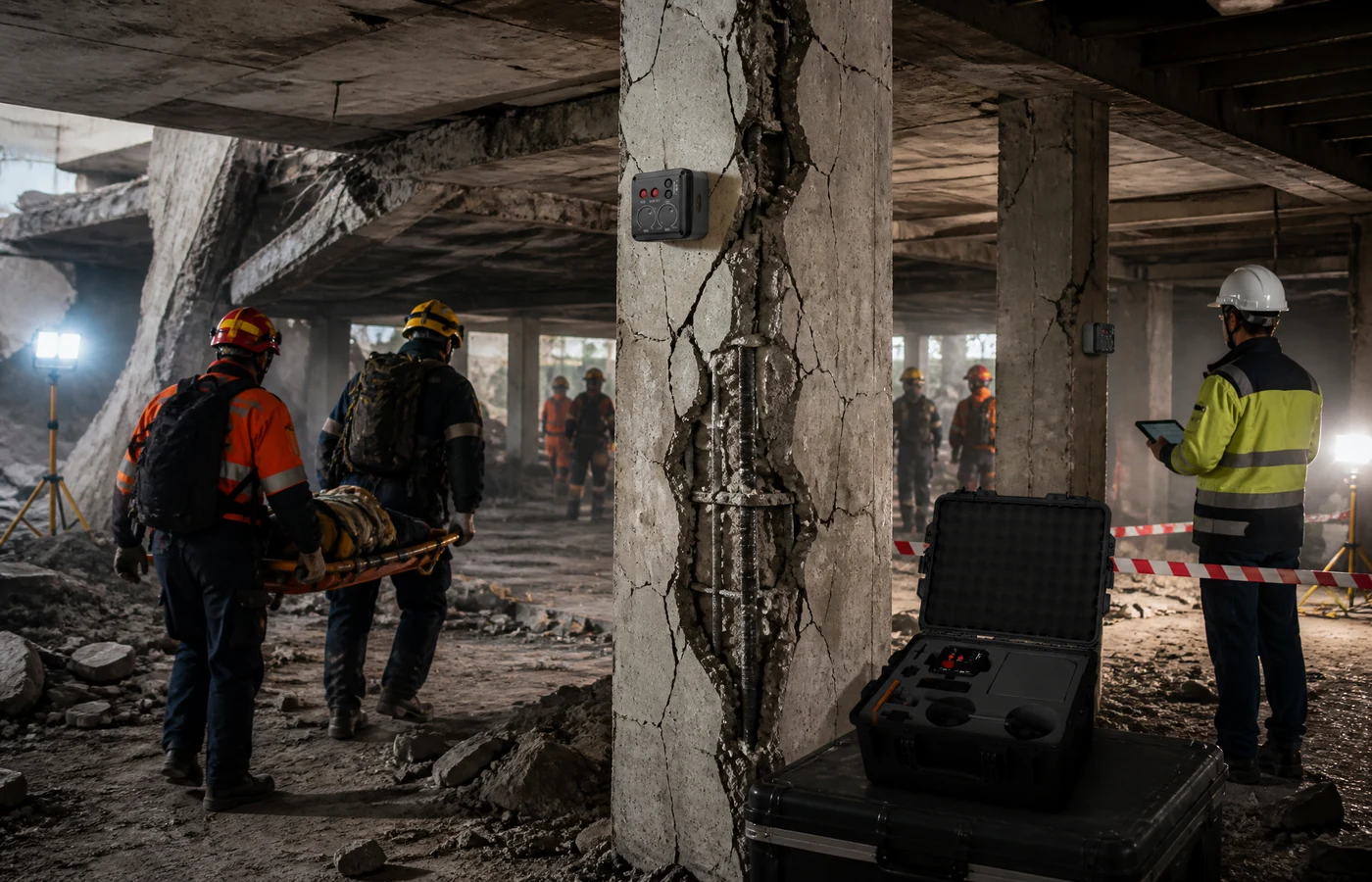
LSJ-D01 node on a steel prop under a collapsed reinforced-concrete structure, with the linked wireless alarm unit in the foreground

Monitor The Column, Not The Clock

Situation

A reinforced-concrete frame has partially collapsed. The remaining slab is held by cracked columns and exposed rebar, and a rescue team has to work beneath it to reach a casualty.

Potential use

A node could be attached to the prop or column and a linked alarm unit placed with the command team. With an alarm value chosen for the structure, the alarm keeps watch while extrication continues, instead of relying on a rotation of observers. It is a threshold warning, not a stability analysis: it does not measure load or predict failure.

Decision support

A warning may inform evacuation and re-entry decisions under the incident commander’s procedures. It does not replace structural assessment — outcomes depend on where the node is placed, the value selected, and the conditions on scene.

Why Work With LSJ

Manufacturing Capability
Built Around Procurement Needs

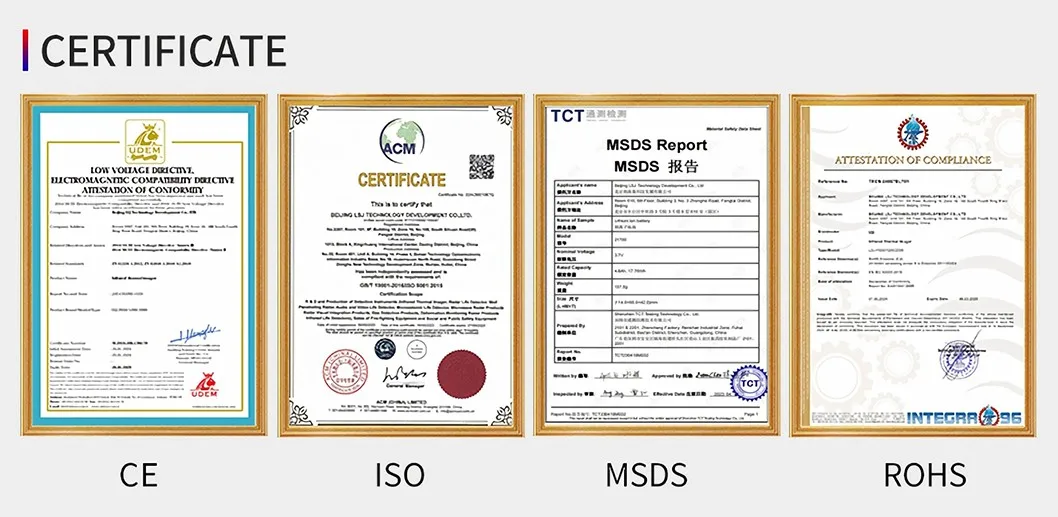
Explore the production facilities, compliance documents, and international exhibitions presented in the materials below. Confirm product-specific certifications and current manufacturing capabilities with the supplier before placing an order.

16years Manufacturing
experience
4document types CE · ISO · MSDS · RoHS
shown in supplied image
GLOBAL International trade-show
engagement
Supplied collage of LSJ manufacturing, assembly, and testing areas
01 · PRODUCTION

Assembly and Testing Capability

The supplied company materials describe 16 years of manufacturing experience alongside assembly and testing activities. Confirm the applicable product line, current capabilities, and lead time when requesting a quote.

Supplied collage of CE, ISO, MSDS, and RoHS-related documents
02 · CERTIFIED

Documentation for Due Diligence

Request current, product-specific documents and verify their scope before use in a tender or import review.

CEISOMSDSRoHS
LSJ team and visitors at international trade exhibitions
03 · GLOBAL

Product Discussions at Global Events

Explore images of industry exhibitions and in-person discussions with international partners and emergency-response professionals.

Click an image for a larger view · Request a facility visit or document verification
Request a Deployment Demonstration

Ask for the arming, four-node pairing and alarm-test walkthrough

Deployment Demonstration

See The LSJ-D01 Armed And Linked

No operation video is published for this model yet. Ask the supplier to walk through the sequence on a live call: mount a node, set both dials, link four nodes to the terminal, then force an alarm to prove the warning path.

  • Node armed on the dial — no laptop, no configuration file
  • Four nodes paired to one terminal, with live angle and battery readout
  • Alarm test at the chosen threshold, on the node and on the terminal

Technical Specifications

LSJ-D01 Specification Sheet

Only the values published on the manufacturer’s product page are given below. Items marked “to be confirmed” are not stated there and must be obtained in writing before procurement; no figures have been carried over from another model in the same range.

Parameter Stated Specification
Monitoring principle MEMS three-axis tilt sensing plus a separate vibration channel; alarm on deviation from the baseline angle captured at start-up
Tilt axes / range Three axes (X / Y / Z), 360° full three-dimensional range
Tilt accuracy / resolution 0.1° accuracy / 0.01° resolution
Vibration channel 0.5 Hz – 100 Hz
Alarm threshold Stepless 0.1° – 9.9°; dial presets at 0.1° / 1° / 2° / 3°; any value also settable on the terminal
Alarm output 95 dB sound-and-light alarm on the node; linked alarms fire together when any node trips
Node display 1.8-inch display
Node battery / runtime 3.7 V lithium-ion; 10 h continuous operation per charge; charging time to be confirmed
Node operating temperature −20 °C to +60 °C; storage −40 °C to +70 °C
Node drop resistance 1 m
Node ingress protection To be confirmed — an IP rating is not stated for the node
Wireless link LoRa long-range wireless; up to 4 nodes per terminal; ≥ 550 m line of sight
Control terminal 8-inch Android tablet, model EM-T81X
Terminal protection IP65; drop-tested to 1.2 m
Terminal connectivity Wi-Fi built in; 4G optional
Start-up time Approx. 7 s; factory tests measured 3.4 s
Mounting options Magnet, dual suction cup, woven strap, static-rope tether, base plate / bracket
Kit contents Node(s), 8-inch terminal, antennas, dual suction-cup mount, magnetic / strap / rope-tether accessories, charger, foam-lined hard case
Weight / dimensions To be confirmed
Standards / approvals To be confirmed — no certification or hazardous-area (Ex) rating is stated for this model

Frequently Asked Questions

Procurement and Deployment

Answers to questions from USAR, fire-service, civil-defence and structural-safety procurement teams. Anything marked to be confirmed is not stated on the manufacturer’s page and should be agreed in writing.

How is this different from a fixed inclinometer or a wired monitoring system?

A fixed inclinometer is installed permanently and read through a logger; the LSJ-D01 is a battery-powered rescue tool, mounted and armed in seconds with no cabling, and it alarms on the structure instead of at a workstation. It is a threshold alarm, not a survey-grade monitoring system: it does not record a long time series or produce a stability analysis. Confirm the accuracy class and recording requirements of your monitoring plan before selection.

How many nodes can one terminal handle, and how far apart can they be?

One 8-inch terminal links up to four nodes, with a stated range of at least 550 metres line of sight. All linked alarms fire together when any node trips, and the terminal shows each node’s X / Y / Z angle, threshold, battery level and link state. The 550 m figure is a line-of-sight value: treat concrete, steel and site clutter as reducing it, and confirm the working range on your site.

Will wind, traffic or handling set it off?

The first reading when monitoring starts is stored as the baseline, and an alarm is raised only when a later reading deviates beyond the configured value; measurement and alarm precision are tuned in the field to suppress nuisance alarms. Any threshold instrument can still react to real movement that is not a hazard — a slamming door, plant machinery, or someone knocking the mount — so set the value against the structure you are watching, and use the vibration dial to raise the level where a site is noisy.

How long does it run, and what is not published?

The node runs 10 hours per charge from a 3.7 V lithium-ion battery and is stated to operate from −20 °C to +60 °C, with storage from −40 °C to +70 °C and a 1 m drop design. Charging time, battery model and replacement availability, weight, dimensions and the node’s own IP rating are not stated on the source page and are listed as to be confirmed.

Is it certified for hazardous chemical areas?

No hazardous-area (Ex) certification is stated for this model, and the page shows it monitoring a painted steel tank during a hazardous-environment exercise rather than in a classified zone. For a zone-classified site, request the certification package, confirm the radio and 95 dB alarm against site rules, and have the authority having jurisdiction review the arrangement before deployment.

Supplier Support

Support from Selection to Service

Monitoring Plan and Placement

Discuss the structure, the surfaces that can be reached and the number of points needed, to agree node placement, mounting method and alarm values for the task.

Tender Documents and Training

Request the datasheet, accuracy documentation, radio compliance information for your market, and operator-training options for rescue-team readiness before deployment.

Service, Spares and Batteries

Confirm warranty terms, spare nodes and batteries, the calibration interval and repair arrangements for your delivery market.

LSJ · Safety & Monitoring Equipment LSJ-D01 Wireless Aftershock Tilt & Vibration Alarm · © 2026

Get a Free Quote

Our representative will contact you soon.
Email
Name
Mobile
Company Name
Message
0/1000

Get a Free Quote

Our representative will contact you soon.
Email
Name
Mobile
Company Name
Message
0/1000

Get a Free Quote

Our representative will contact you soon.
Email
Name
Mobile
Company Name
Message
0/1000
warning alarm stability protection device ls d01-0

Copyright © Beijing LSJ Technology Development Co., Ltd. All Rights Reserved  -  Privacy Policy