
All Categories
Trace Detector

Home /  Products /  CBRNE Detector /  Trace Detector

Trace Detector SEED-PM

LSJ SEED-PM  |  IMS TRACE DETECTOR

Six Threat Classes. One Handheld Instrument.

Six Threat Classes in One Unit

Chemical warfare agents, toxic industrial gases, combustible gas, explosives, drugs and radiation, backed by a 600+ sample library

2–32 Second Analysis

Selectable IMS analysis time with pg-class sensitivity; Sarin (GB) detection limit 0.5 mg/m³

Solid, Liquid & Gas Detection

One front suction inlet samples all three states — no cartridges or consumable probes to swap on site

4.3-In Color Touchscreen

IMS spectra plus RAD (μSv/h), LEL (%LEL) and TVOC (ppm) on one screen; audible-visual or covert silent alarm

Field-Ready 3 kg Build

5+ h battery  −20 to +55 °C  300,000-record storage, Ethernet/USB/Wi-Fi upload

600+Substances2–32sAnalysis3 kgHandheld
  • Description
  • Parameter
  • Recommended Products

Description

Portable IMS Trace Detector

LSJ SEED-PM: Six Threats, One Handheld Instrument

Chemical warfare agents, toxic industrial gases, combustible gas, explosives, drugs and nuclear radiation — identified by Ion Mobility Spectrometry in 2–32 seconds against a 600+ expandable substance library.

2–32 s Analysis Time 600+ Substance Library 3 kg Handheld Weight 4.3-in Color Touchscreen
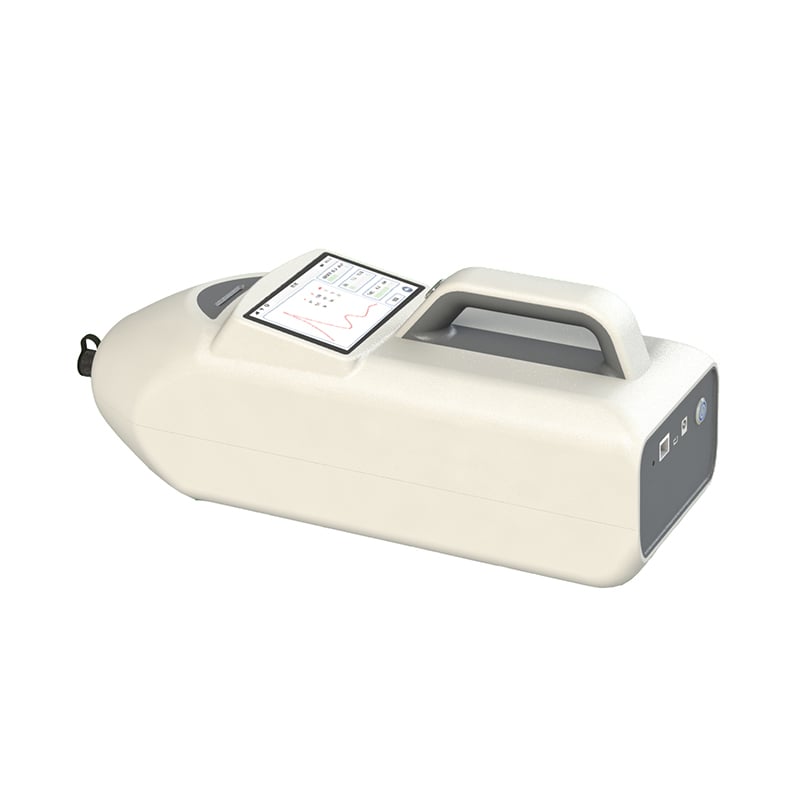
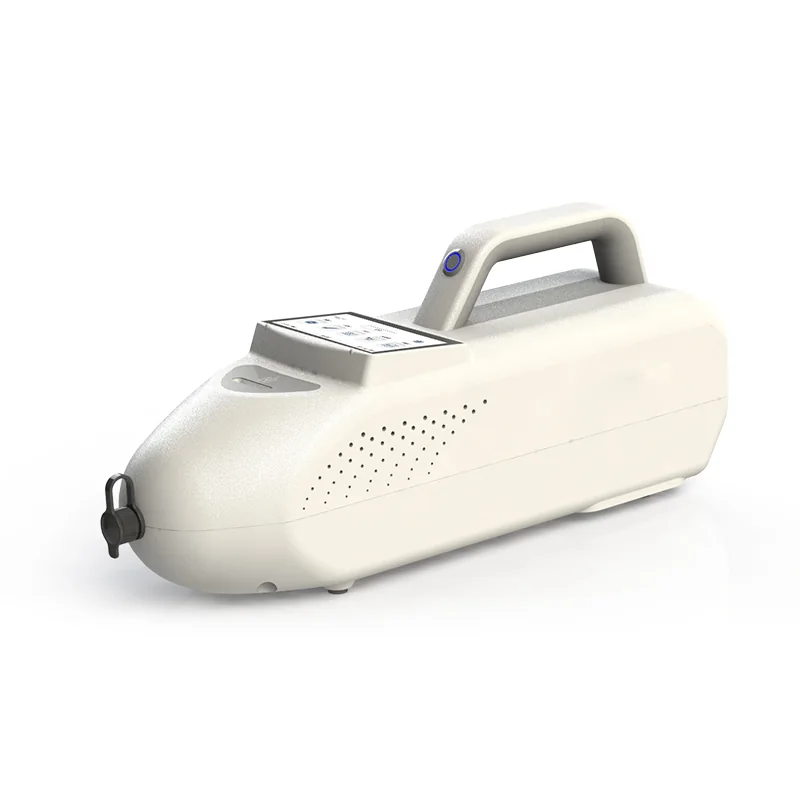
LSJ SEED-PM portable handheld IMS trace detector with 4.3-inch color touchscreen and integrated carry handle

Figure: The LSJ SEED-PM portable IMS trace detector — handheld form factor, integrated carry handle, angled 4.3-inch color touchscreen and front suction sampling inlet.

At a Glance

The LSJ SEED-PM is a portable handheld trace detector built on Ion Mobility Spectrometry (IMS) for emergency firefighting, public security, border defense, anti-smuggling, national defense, the military, airports, railway stations and customs — a single 3 kg instrument for solid, liquid and gaseous samples.

01The Problem: Hot Zones Hide Six Different Threats

Teams cannot carry six single-purpose instruments into one time-critical scene — and the threats themselves are engineered to be invisible:

!Invisible, Odorless Lethal Hazards

Chemical warfare agents and toxic industrial gases are invisible and often odorless at lethal concentrations; a wrong entry decision can cost lives.

!Too Many Single-Purpose Instruments

Separate instruments for chemistry, combustible gas, radiation and explosives are slow to deploy and difficult to cross-check under pressure.

!Unknown Mixtures After Disasters

After earthquakes, floods or industrial fires, ruptured tanks and damaged pipelines release unknown mixtures of solids, liquids and gases.

!Seconds Matter at Checkpoints

At customs, airports and border checkpoints, trace contraband needs a verdict in seconds — with a defensible digital record for every screening.
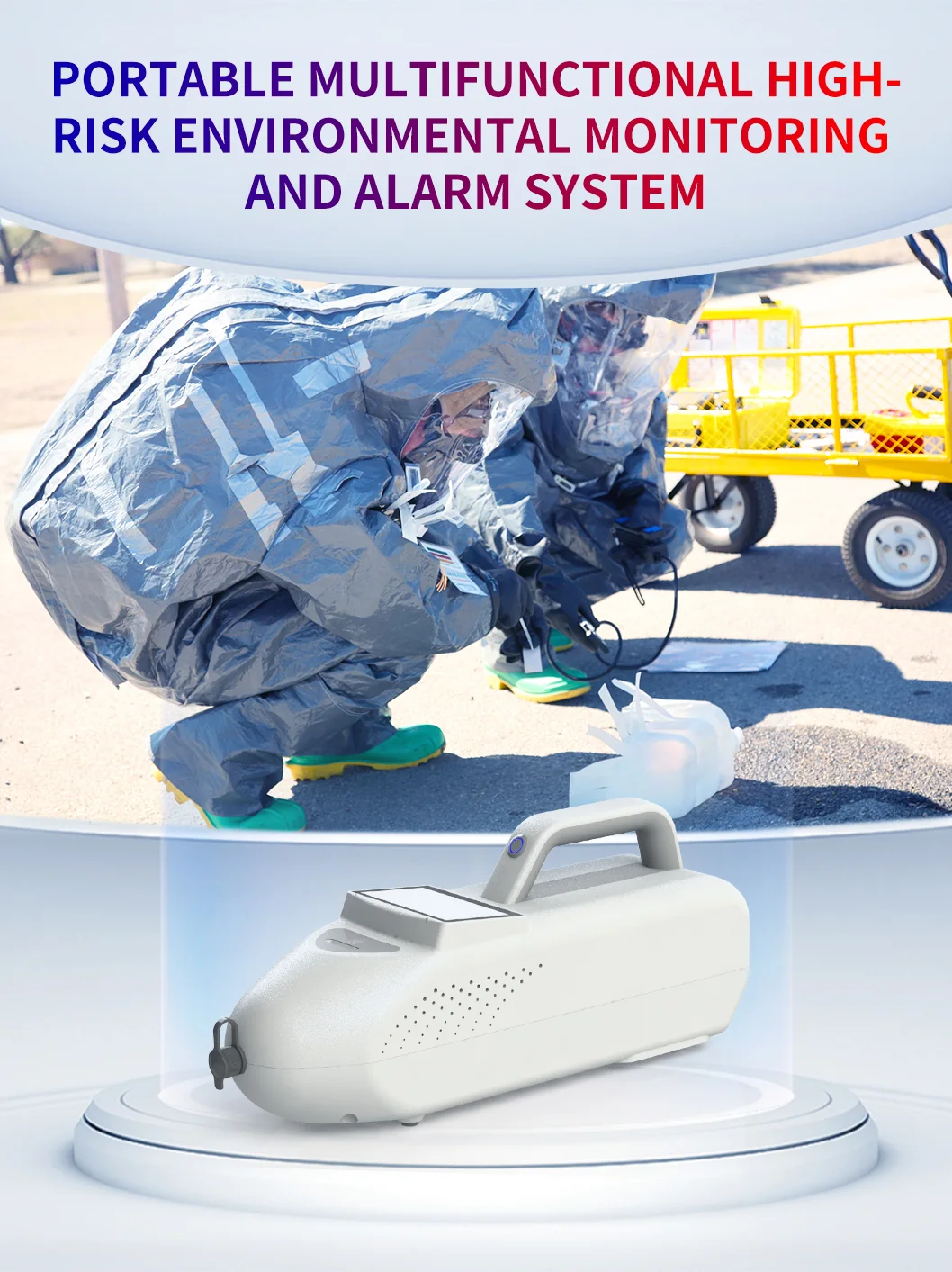
Encapsulated hazmat entry team supported by the LSJ SEED-PM portable high-risk environmental monitoring and alarm system at an industrial chemical incident

Figure: Encapsulated hazmat entry teams rely on pre-entry screening with the LSJ SEED-PM to identify invisible chemical agent and toxic gas hazards before committing personnel.

02One Device Replaces a Rack of Single-Purpose Detectors

The SEED-PM consolidates six detection capabilities into one handheld unit. Its onboard database holds no fewer than 600 sample profiles and can be expanded as new threats emerge, while the front suction inlet accepts solid, liquid and gaseous samples without swapping probes.

CWA Chemical Warfare Agents Nerve, blister, blood & choking agents
GA, GB, GD, VX, VS, HD, L, HN3, AC, CG and related chemical gases
TIC Toxic Industrial Chemicals Releases from plants & pipelines
NH₃, Cl₂, H₂S, NO, NO₂, HCHO, toluene and other toxic / harmful gases
LEL Combustible Gas Explosion risk control
Lower explosive limit readings in %LEL, displayed live alongside chemical results
EXP Explosives Trace Particle & vapor trace screening
Trace-level particle and vapor screening for security checkpoints and venues
DRG Drugs Customs & anti-smuggling screening
Narcotics trace detection for customs, anti-smuggling and public security operations
RAD Nuclear Radiation Dose rate in μSv/h
Radiation level displayed in μSv/h on the same screen as chemical results

One inlet, three states: solid, liquid and gas samples run through the same suction workflow — no cartridges, probes or consumables to swap on site.
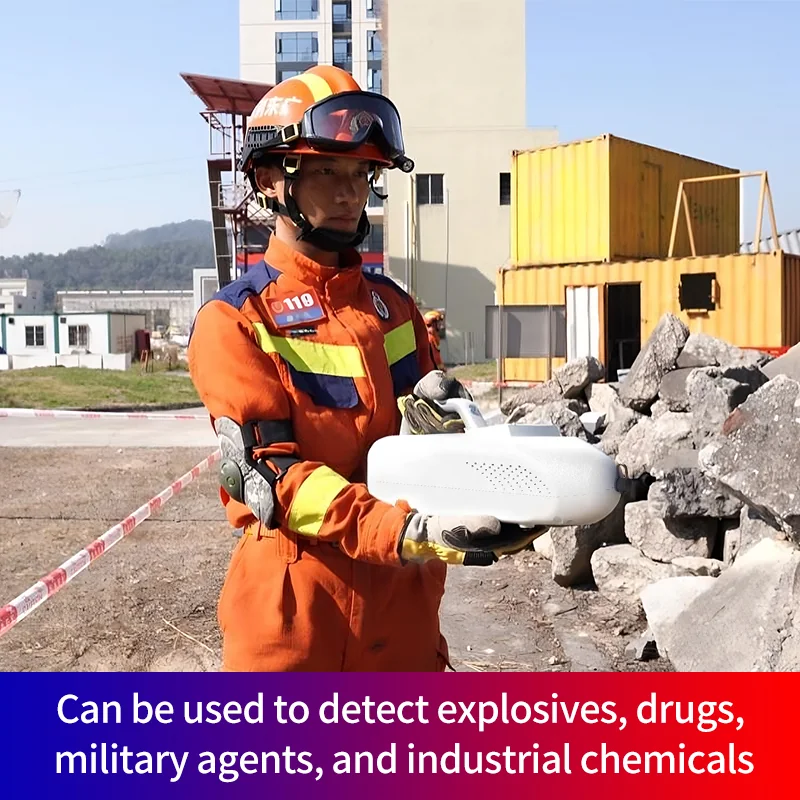
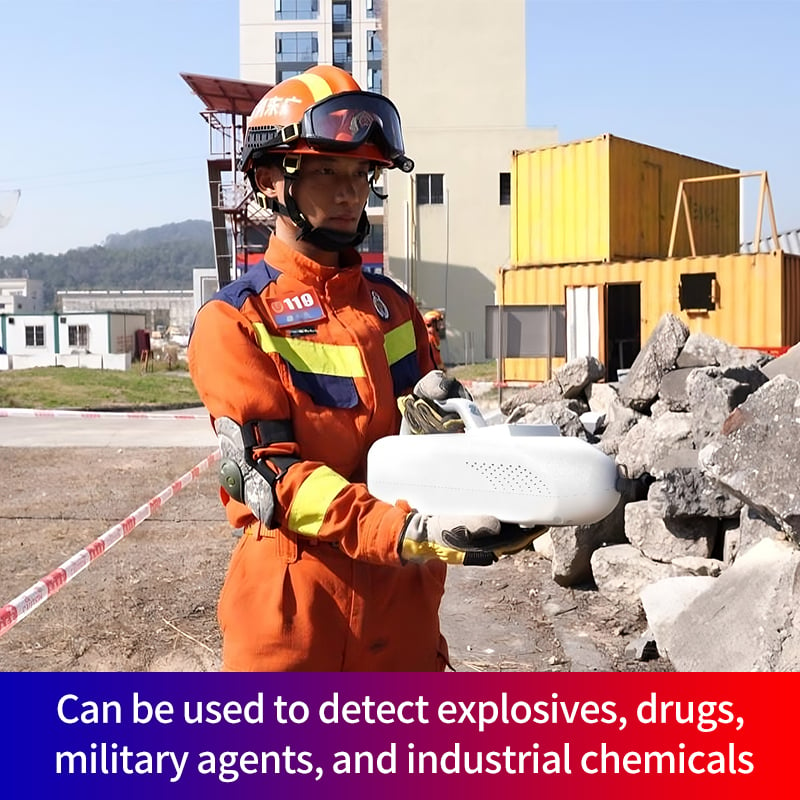
Rescue technician operating the LSJ SEED-PM trace detector to screen for explosives, drugs, military chemical agents and industrial toxic chemicals

Figure: A single LSJ SEED-PM unit screens for explosives, drugs, military chemical agents and industrial chemicals during a field rescue operation.

03From Power-On to Verdict in Seconds, Not Minutes

A built-in intelligent algorithm drives fast response at pg-class sensitivity, with a quantified Sarin (GB) detection limit of 0.5 mg/m³. The workflow is deliberately simple — one key starts the unit, self-check and automatic calibration run without intervention, and the operator presents the suction inlet to the target:
1 One-key startup — power on and the SEED-PM completes self-inspection and calibration automatically; warm-up takes no more than 10 minutes.
2 Suction sampling — draw solid, liquid or gas samples through the front inlet; no consumable probes to change.
3 2–32 s analysis — selectable analysis time matches the threat and screening tempo; the identified agent type is shown on screen.
4 Alarm and record — audible-visual alarm, or covert silent alarm, with the event stored automatically among 300,000+ records.
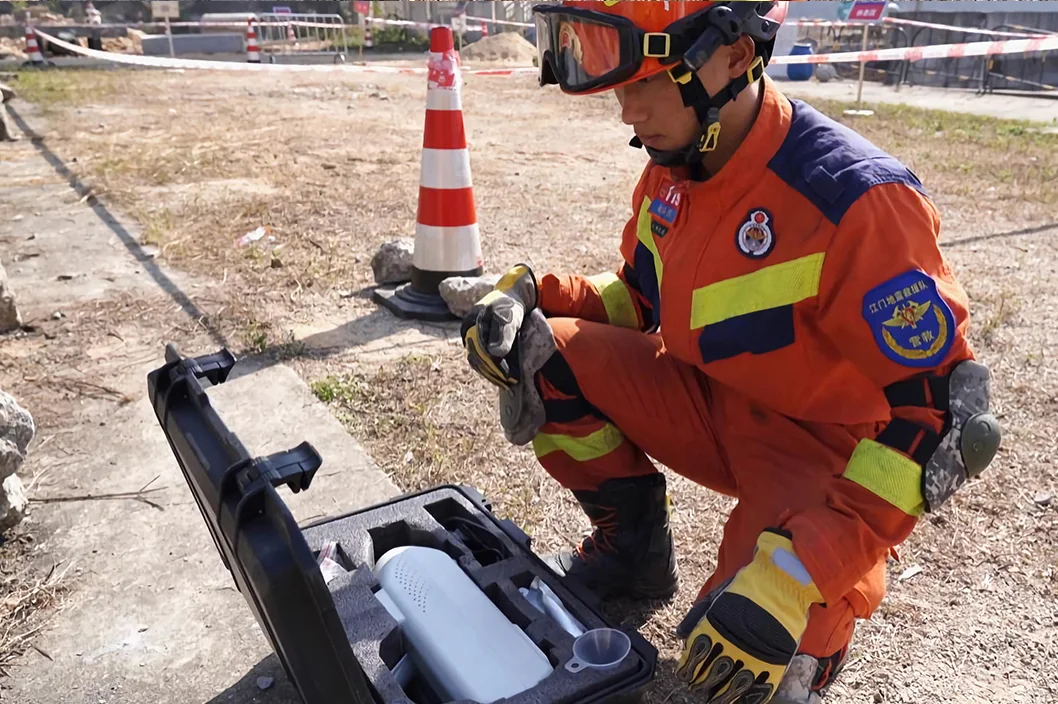
LSJ SEED-PM trace detector secured in custom-cut foam inside a rugged hard carrying case for transport and rapid one-key field deployment

Figure: The SEED-PM travels in a rugged hard case with custom-cut foam for the detector and sampling accessories — arrive, open and start screening with one key.

04A 4.3-Inch Touchscreen for the Whole Threat Picture

The color touchscreen displays the IMS spectral fingerprint alongside three live environmental channels — radiation level (μSv/h), combustible gas (LEL, %LEL) and TVOC (ppm) — so an operator sees chemical, explosive and radiological risk at one glance. The status line confirms “Ready”, one-tap automatic calibration is always available, and a clear audible-visual alarm fires the moment a hazard is identified. For checkpoint and patrol work, a covert (silent) alarm mode can be selected instead.

On-Screen Readout Example

RAD 10.0 μSv/h LEL 0.1 %LEL TVOC 0.1 ppm

● READY AUTO CALIBRATION ▲ AUDIBLE-VISUAL / COVERT ALARM
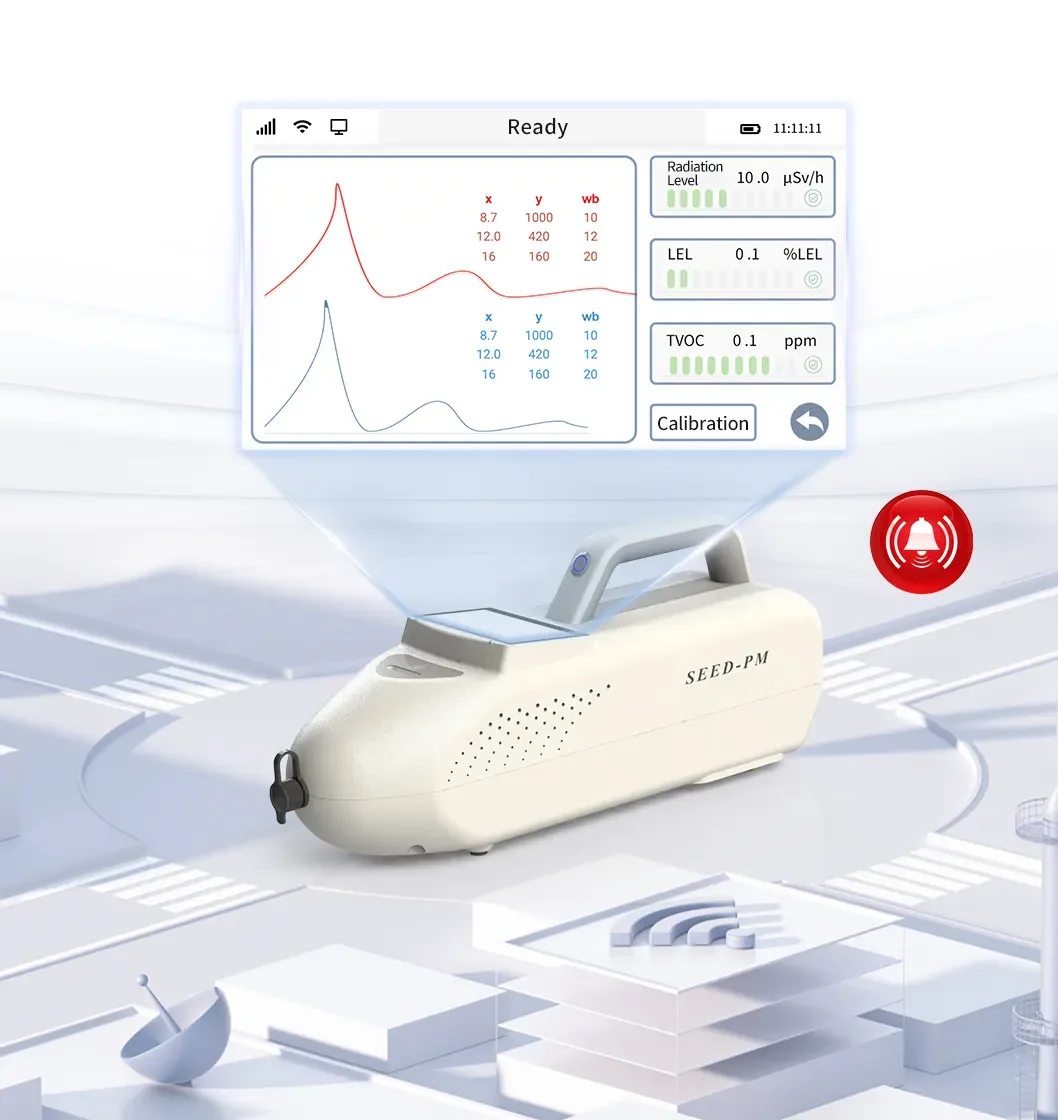
LSJ SEED-PM 4.3-inch touchscreen showing IMS spectra with radiation level in uSv/h, LEL and TVOC readings, automatic calibration and audible-visual alarm indicator

Figure: SEED-PM interface — IMS spectra, radiation (μSv/h), LEL (%LEL) and TVOC (ppm) readouts, automatic calibration, wireless status and audible-visual alarm.

05Engineered for the Field, Wired for the Command Post

At 3 kg and 367 × 138 × 169 mm, the SEED-PM is carried one-handed through a full shift. It operates from −20 °C to +55 °C at up to 95%RH, runs for more than 5 hours on the lithium-ion battery (10+ hours standby), and links to the command post through WAN Ethernet, dual USB and wireless upload. Every screening is stored — up to 300,000+ detection records — with storage, retrieval, export and USB backup.
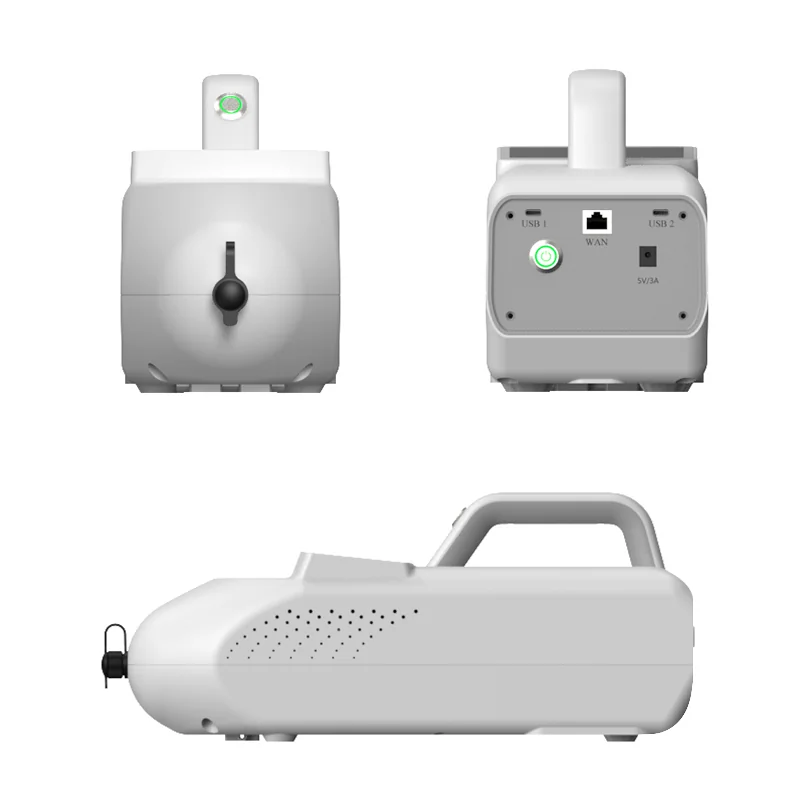
3 kg handheld weight, one-hand carry 5+ h continuous battery, 10+ h standby 300k+ detection records stored −20~55°C operating range, ≤95%RH
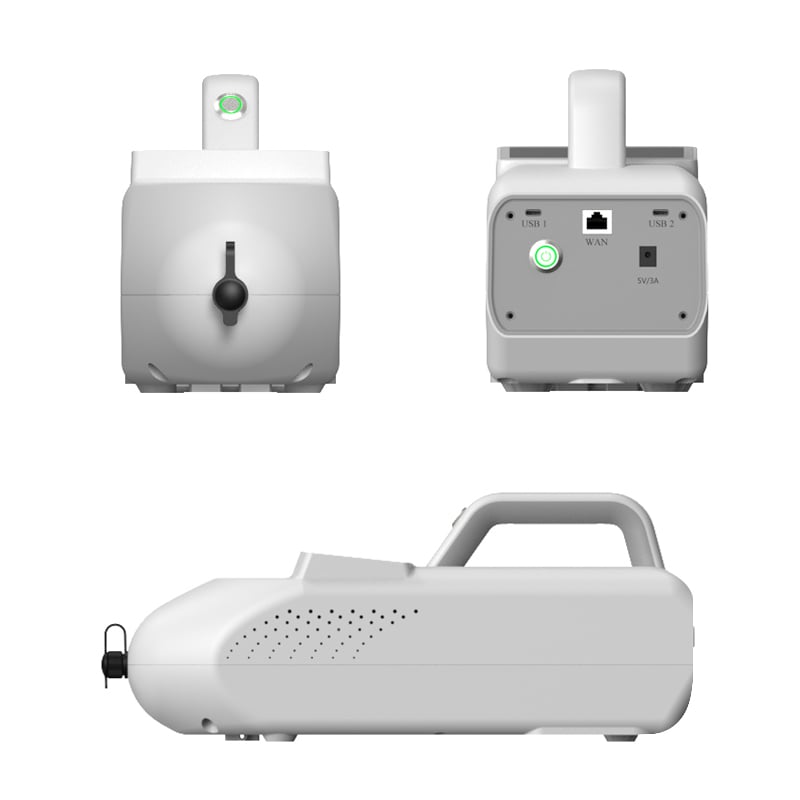
LSJ SEED-PM front suction sampling inlet and rear interface panel with two USB ports, WAN Ethernet port and 5V/3A power input

Figure: Front suction sampling inlet (left) and rear interface panel with USB 1, USB 2, WAN Ethernet and power input — supporting USB backup and wired / wireless data upload.

06Who Relies on the LSJ SEED-PM

Use Case 01

Emergency Firefighting & HazMat Response

Fire rescue and hazardous-materials teams screen smoke, spills and collapsed structures for chemical agents and toxic gas before committing crews. When a hazardous gas is detected, the unit raises an audible-visual alarm and shows the agent type on screen, letting commanders plan routes and keep personnel out of poisoned zones.
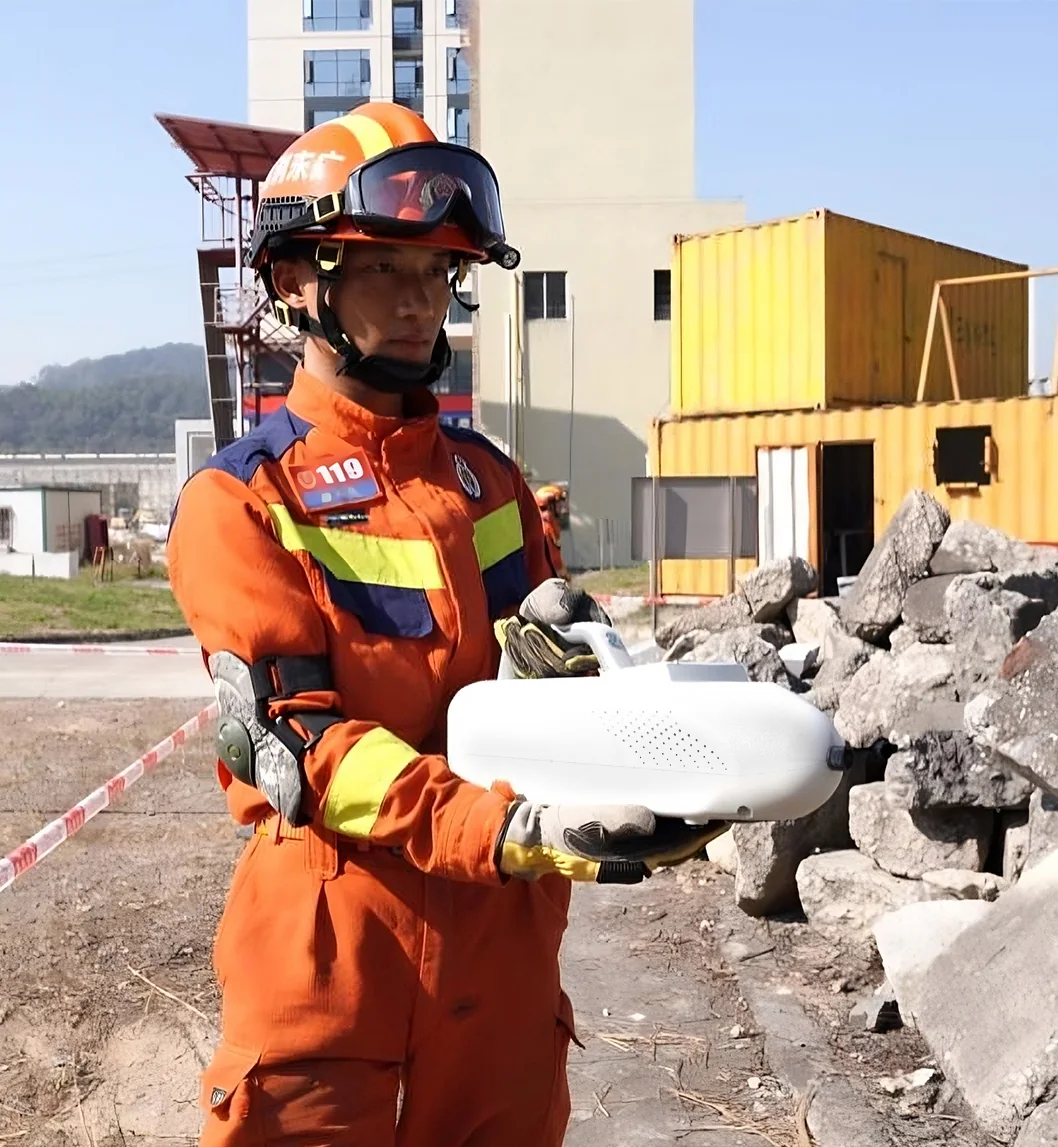
Fire rescue operator in protective gear holding the LSJ SEED-PM trace detector during a hazardous-materials inspection at a rubble search-and-rescue site

Figure: A rescue operator carries the LSJ SEED-PM one-handed through a rubble search-and-rescue site for on-site hazardous-materials screening.

Use Case 02

National Defense, Military CBRN, Border & Anti-Smuggling

Military CBRN reconnaissance patrols, border defense units and anti-smuggling teams use the SEED-PM to verify chemical and radiological contamination in the field, with covert silent alarming for discreet operations. The same instrument supports trace screening of explosives and narcotics at checkpoints.
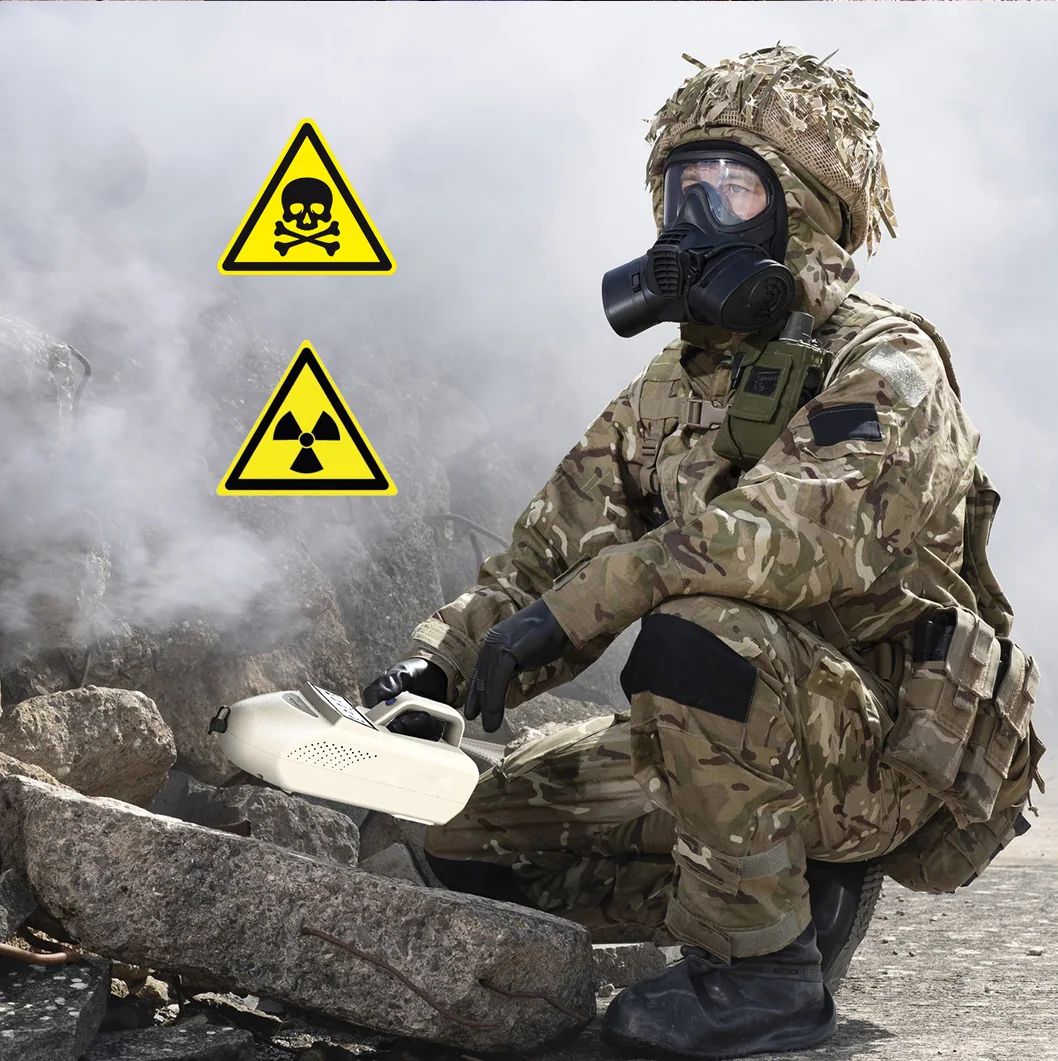
Soldier wearing a gas mask operating the LSJ SEED-PM trace detector for CBRN reconnaissance in a toxic chemical and radiological hazard zone

Figure: CBRN reconnaissance in a toxic / radiological hazard zone — the SEED-PM identifies chemical agents and radiation while the operator works in full protective equipment.

Use Case 03

Disaster Relief & Environmental Hazard Monitoring

After earthquakes, floods and industrial accidents, damaged plants and pipelines may leak toxic substances. Environmental and rescue teams survey contaminated ground, waterlines and debris before entry, using stored results to map hazard zones and plan safe rescue routes.
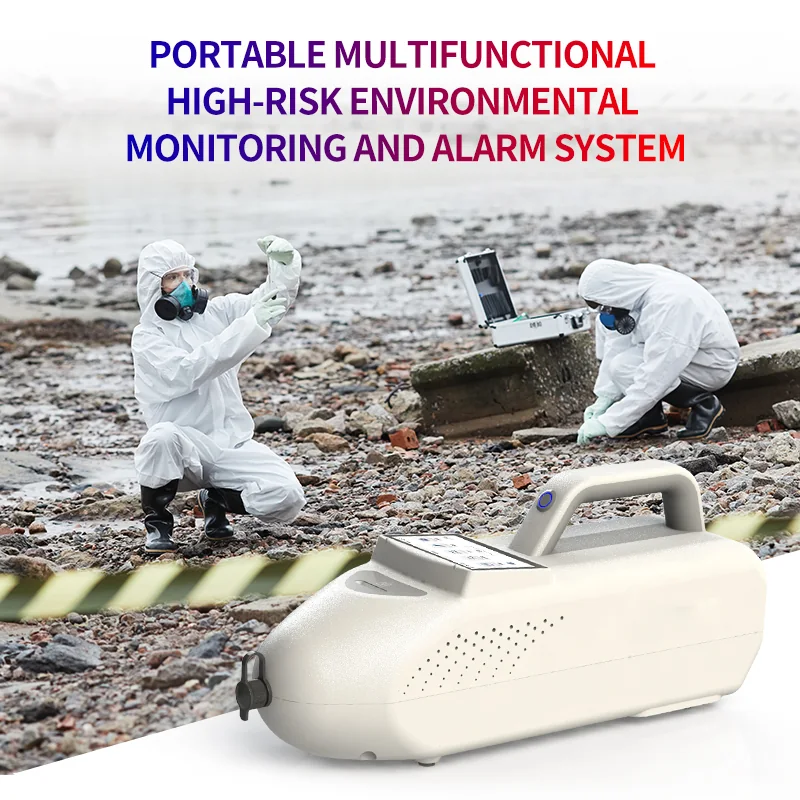
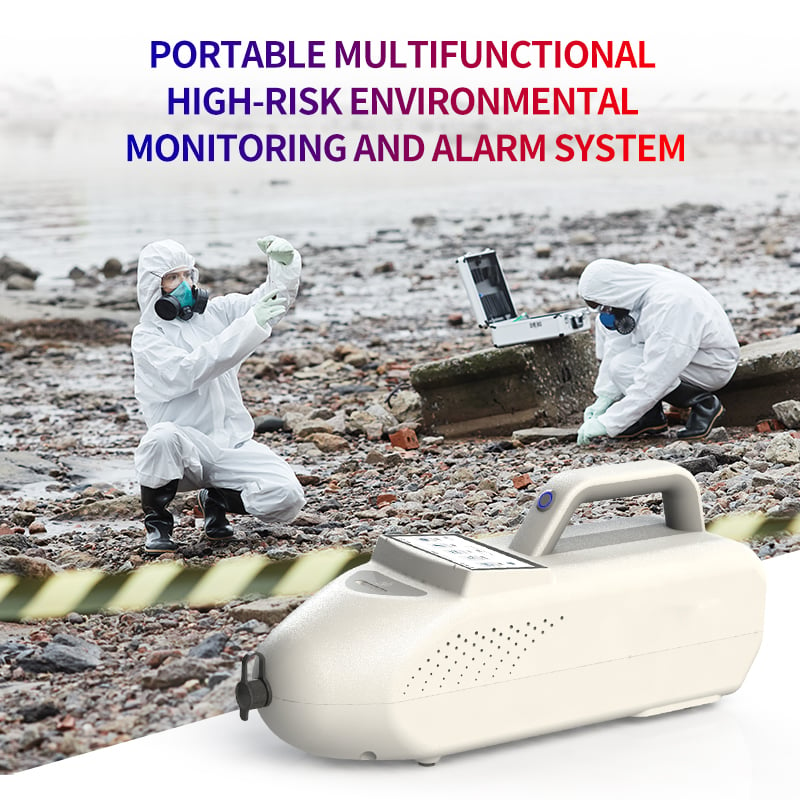
Hazmat technicians in protective suits surveying a contaminated shoreline with the LSJ SEED-PM portable high-risk environmental monitoring and alarm system

Figure: Hazmat technicians survey a contaminated shoreline with the SEED-PM, a portable high-risk environmental monitoring and alarm system.

Additional deployment settings: public security operations, airports, railway stations, customs inspection halls, chemical industrial parks, large-event security screening and national defense installations.

07LSJ SEED-PM Trace Detector FAQ

Q What substances can the LSJ SEED-PM detect?
A Six threat classes in one instrument: chemical warfare agents (GA, GB, GD, VX, VS, HD, L, HN3, AC, CG and related gases), toxic industrial chemicals (including NH₃, Cl₂, H₂S, NO, NO₂, HCHO and toluene), combustible gas (LEL), explosives trace, drugs and nuclear radiation. Its expandable library holds more than 600 sample types.
Q How fast does it return a result?
A Analysis takes 2–32 seconds and is selectable by mission. Warm-up takes no more than 10 minutes, after which one-key startup leaves the unit ready with no manual intervention. Sensitivity is pg-class, with a quantified Sarin (GB) detection limit of 0.5 mg/m³.
Q Can it test solids, liquids and gases?
A Yes. The front suction sampling inlet accepts solid, liquid and gaseous samples in the same workflow, so operators do not swap probes or consumables between sample states.
Q What does the screen show, and how does it alarm?
A The 4.3-inch color touchscreen shows IMS spectral fingerprints plus radiation level (μSv/h), combustible gas (%LEL) and TVOC (ppm). On detection it raises an audible and visual alarm and displays the agent type; a covert silent alarm mode is selectable for discreet checkpoint and patrol use.
Q How long does the battery last, and where can it operate?
A The lithium-ion battery supports more than 5 hours of continuous operation (10+ hours standby), with AC 110/220 V and DC power options. The instrument operates from −20 °C to +55 °C at relative humidity up to 95%RH and weighs 3 kg.
Q How are detection results stored and shared?
A The SEED-PM stores no fewer than 300,000 detection records with storage, retrieval and export functions, plus USB backup. Data can be uploaded through WAN Ethernet, two USB ports or wireless connection for command-post review and evidentiary records.
Q How is it calibrated and maintained in the field?
A The unit performs power-on self-inspection, automatic calibration and real-time fault diagnosis by itself, and offers both self-cleaning and manual cleaning functions. No laboratory setup is required, so non-specialist responders can keep it operational on deployment.
Q Who uses the SEED-PM and in which scenarios?
A Typical users include emergency firefighting and HazMat teams, public security units, border defense and anti-smuggling forces, national defense and military units, and customs authorities. Common sites are airports, railway stations, customs checkpoints, chemical industrial parks, disaster-relief zones and large-event security perimeters.

Request Datasheet & Quotation

Equip Your Team with One Detector for Six Threat Classes

Request the latest LSJ SEED-PM factory datasheet, configuration options and a quotation for your agency or program.

Request a Quote for the LSJ SEED-PM

Factory datasheet  ·  Configuration guidance  ·  Quotation

LSJ SEED-PM Technical Specifications

All parameters below are factory specifications of the LSJ SEED-PM portable IMS trace detector. Highlighted values are the procurement-critical performance figures.

Parameter Specification
Detection Performance
Model LSJ SEED-PM
Detection Principle Ion Mobility Spectrometry (IMS) technology
Sample Collection Suction sampling; supports solid, liquid and gas states
Detectable Substances Chemical warfare agents: Tabun (GA), Sarin (GB), Soman (GD), VX, VS, Mustard gas (HD), Lewisite (L), Nitrogen mustard (HN3), Hydrocyanic acid (AC), Phosgene (CG) and related chemical gases
Toxic industrial chemicals: Ammonia (NH₃), Chlorine (Cl₂), Hydrogen sulfide (H₂S), Nitric oxide (NO), Nitrogen dioxide (NO₂), Formaldehyde (HCHO), Toluene and other toxic / harmful gases
Additional threat classes: combustible gas (LEL), explosives trace, drugs, nuclear radiation, TVOC
Sample Database 600+ sample types  expandable library
Sensitivity & Speed
Detection Limit Sarin (GB): 0.5 mg/m³; pg-class sensitivity
Analysis Time 2–32 seconds  (selectable)
Warm-up Time ≤ 10 min
Alarm, Display & Data
Alarm Modes Audible and visual alarm; selectable covert (silent) alarm
Display 4.3-inch color LCD touchscreen
Data Storage 300,000+ records; storage, retrieval, export and USB backup
Communication Ethernet (WAN), 2 × USB, wireless data upload
Power
Power Supply AC 110/220 V, 50/60 Hz; DC 24 V working (18 V rated); lithium-ion battery: 5+ h continuous / 10+ h standby
Environment & Mechanical
Operating Environment −20 °C to +55 °C; relative humidity ≤ 95%RH
Dimensions (L×W×H) 367 × 138 × 169 mm (±10%)
Weight 3 kg (±10%)
Operation & Maintenance
Self-Diagnostics Automatic calibration, power-on self-check, real-time fault diagnosis, self-cleaning and manual cleaning
Startup One-key startup; ready to use with no manual intervention

Note: specifications are sourced from the LSJ SEED-PM factory technical datasheet and are subject to change without prior notice; confirm configuration-specific values with LSJ before ordering.

Get a Free Quote

Our representative will contact you soon.
Email
Name
Mobile
Company Name
Message
0/1000

Get a Free Quote

Our representative will contact you soon.
Email
Name
Mobile
Company Name
Message
0/1000

Get a Free Quote

Our representative will contact you soon.
Email
Name
Mobile
Company Name
Message
0/1000
Beijing LSJ Technology Development Co., Ltd.

Copyright © Beijing LSJ Technology Development Co., Ltd. All Rights Reserved  -  Privacy Policy