 EN

- Description

Is there a problem?
Please contact us to serve you!


- Description
- Parameter
- Recommended Products
Description
The LSJ TIG10 is a handheld optical gas imaging (OGI) thermal camera that makes invisible gas leaks visible. Built to the Chinese fire-service standard XF/T 635-2023, it combines a 640×512 long-wave infrared detector (≤30 mK NETD, 60 Hz) with a 5 MP visible camera and visualizes methane (CH₄), sulfur hexafluoride (SF₆), ammonia (NH₃) and 10+ other hazardous gases, while measuring temperatures from −40 °C to 1200 °C. The IP67, Ex ib IIC T4 imager survives 260 °C for 5 minutes, runs up to 6 hours per swappable battery and weighs only 0.86 kg — one device for fire rescue, hazardous-gas leak detection and industrial thermal inspection.
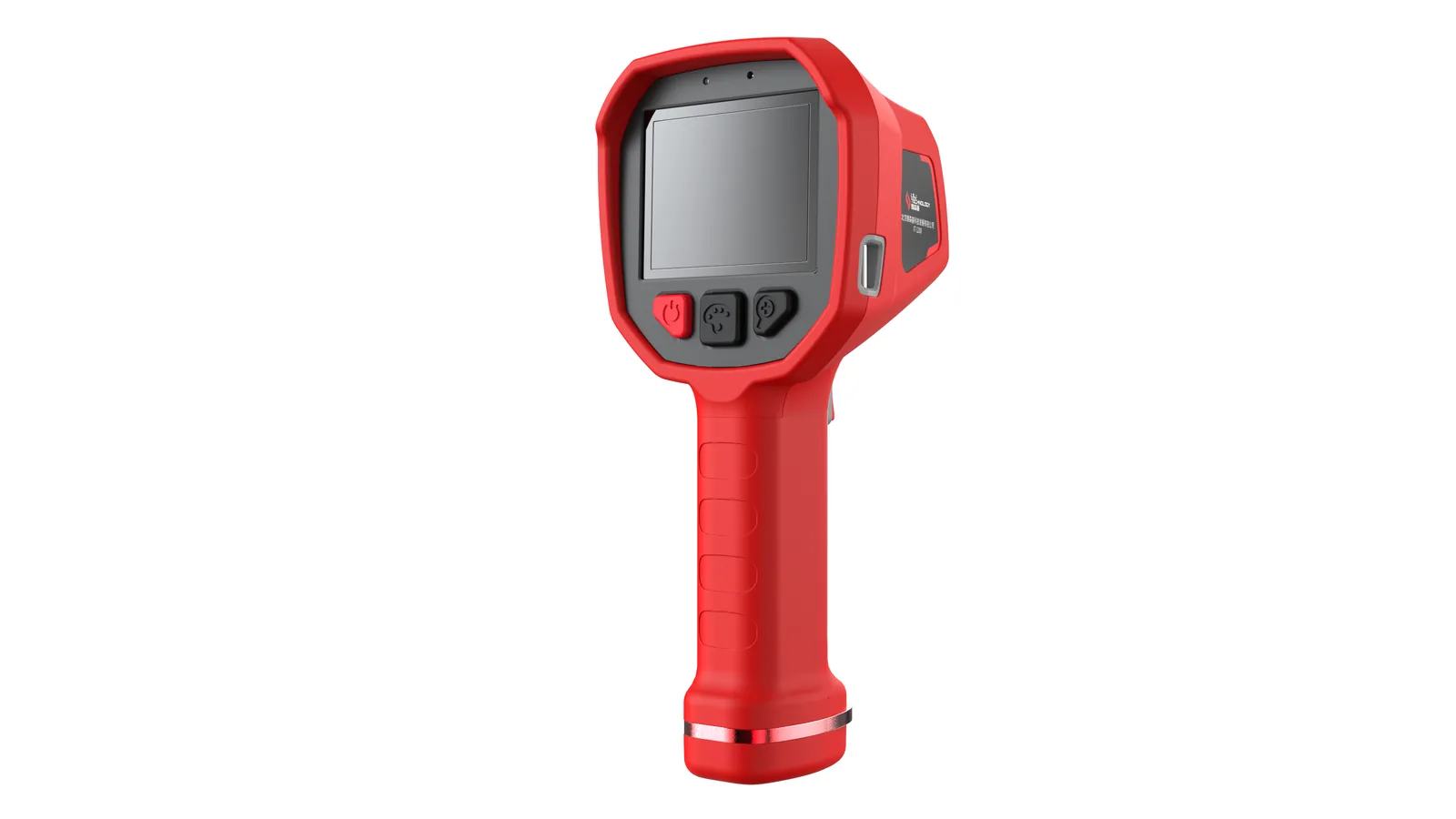
Figure 1. The LSJ TIG10 handheld optical gas imaging thermal camera — high-visibility pistol-grip body with a 3.5-inch display, one device for gas imaging, fire rescue and thermal inspection.
The Hidden Risks Your Team Is Carrying
Most hazardous gases — methane, ammonia, SF₆ and volatile chemical vapors — are invisible, odorless at dangerous concentrations, and can accumulate long before a sniff test or fixed sensor points to the source. Firefighters and plant inspectors face the same four problems every shift:
Leaks you cannot see
Point gas detectors alarm on concentration but cannot show where the leak is or which valve is emitting. Search time is lost inside the hot-zone.
Smoke, darkness and flame
In thick smoke or at night, the fire source, trapped persons and re-ignition hotspots disappear from view — seconds decide survivability.
Consumer cameras fail on scene
General-purpose thermal cameras offer only IP54 protection, 3–4 h batteries and no explosion protection — unsafe around flammable vapors.
Two devices, double the weight
Carrying both a fire-service thermal imager and a gas detector slows teams down and doubles training, charging and maintenance overhead.
One TIG10 Replaces Two Mission-Critical Devices
The LSJ TIG10 (Hazardseeker Series) is engineered to XF/T 635-2023, the Chinese national standard for fire-service thermal imagers, and adds passive optical gas imaging. Scan a valve train from outside the hazard perimeter, watch the leak plume move on screen in real time, then switch in one keystroke to fire, rescue or patrol mode — without changing equipment.
- Gas mission: dedicated gas-detection mode renders fugitive vapors as moving plumes and pinpoints the exact leaking component.
- Fire mission: fire, fire-scene, rescue, detection and patrol palettes locate the seat of fire, victims and residual hotspots through smoke and darkness.
- Inspection mission: −40 °C to 1200 °C measurement with automatic hot/cold spot tracking supports mechanical, electrical and process-equipment surveys.
640×512 High-Sensitivity Detector, 60 Hz Imaging
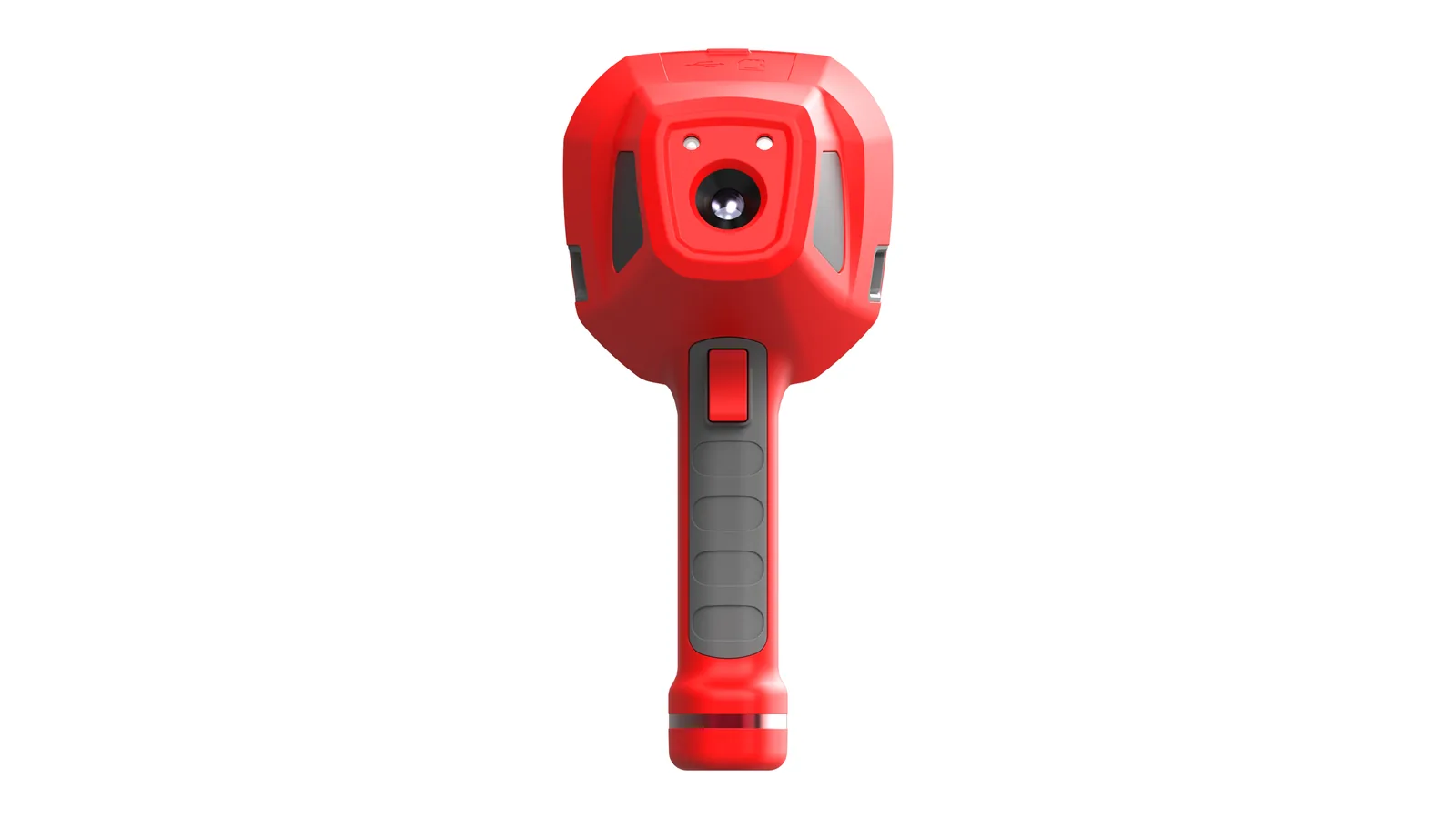
Figure 2. Front sensor head: the uncooled 640×512 long-wave infrared lens, 5 MP visible camera and laser pointer ports behind a sealed cover.
At the heart of the TIG10 is an uncooled 640×512 focal-plane detector with 12 µm pixels and a thermal sensitivity of ≤30 mK — roughly 3× sharper than 384×288 entry-level gas cameras and sensitive enough to resolve small, low-contrast leak plumes. The 13 mm athermalized fixed-focus lens (33°×27° FOV) needs no manual focusing with gloved hands, while the 60 Hz frame rate keeps moving plumes fluid during walk-around scans. A 5 megapixel visible camera adds visible-light, picture-in-picture and thermal/visible fusion views, so every leak is documented in context.
640×512
IR resolution
≤30 mK
NETD sensitivity
60 Hz
Frame rate
5 MP
Visible camera
See the Leak: Passive Optical Gas Imaging
The TIG10 uses passive infrared absorption: gases that absorb in the 8–14 µm long-wave band appear as contrasting plumes against the background, with no laser, tracer gas or sampling wand required. Aim at flanges, valves, pressure regulators, cylinder connections or switchgear, and the source — not just the concentration — is visible on screen from a safe stand-off distance.
| Gas | Formula | Typical setting |
|---|---|---|
| Methane | CH₄ | Natural gas, LNG, petrochemical plants, municipal gas networks |
| Sulfur hexafluoride | SF₆ | High-voltage switchgear, substations, electrical utilities |
| Ammonia | NH₃ | Refrigeration, fertilizer and chemical facilities |
| Ethylene | C₂H₄ | Petrochemical cracking and polymer production |
| Vinyl chloride | C₂H₃Cl | PVC manufacturing |
| Acrylonitrile | C₃H₃N | Carbon-fiber and synthetic-rubber plants |
| Acrolein | C₃H₄O | Acrylic acid / plastics production |
| Propylene | C₃H₆ | Refineries and chemical processing |
| Sulfur dioxide | SO₂ | Sulfuric-acid plants, smelters, pulp mills |
| Nitrous oxide | N₂O | Chemical and pharmaceutical production |
| Also: vinyl ether, methyl vinyl ketone (MVK), phenol, and other industrial gases with 8–14 µm infrared absorption bands. | ||
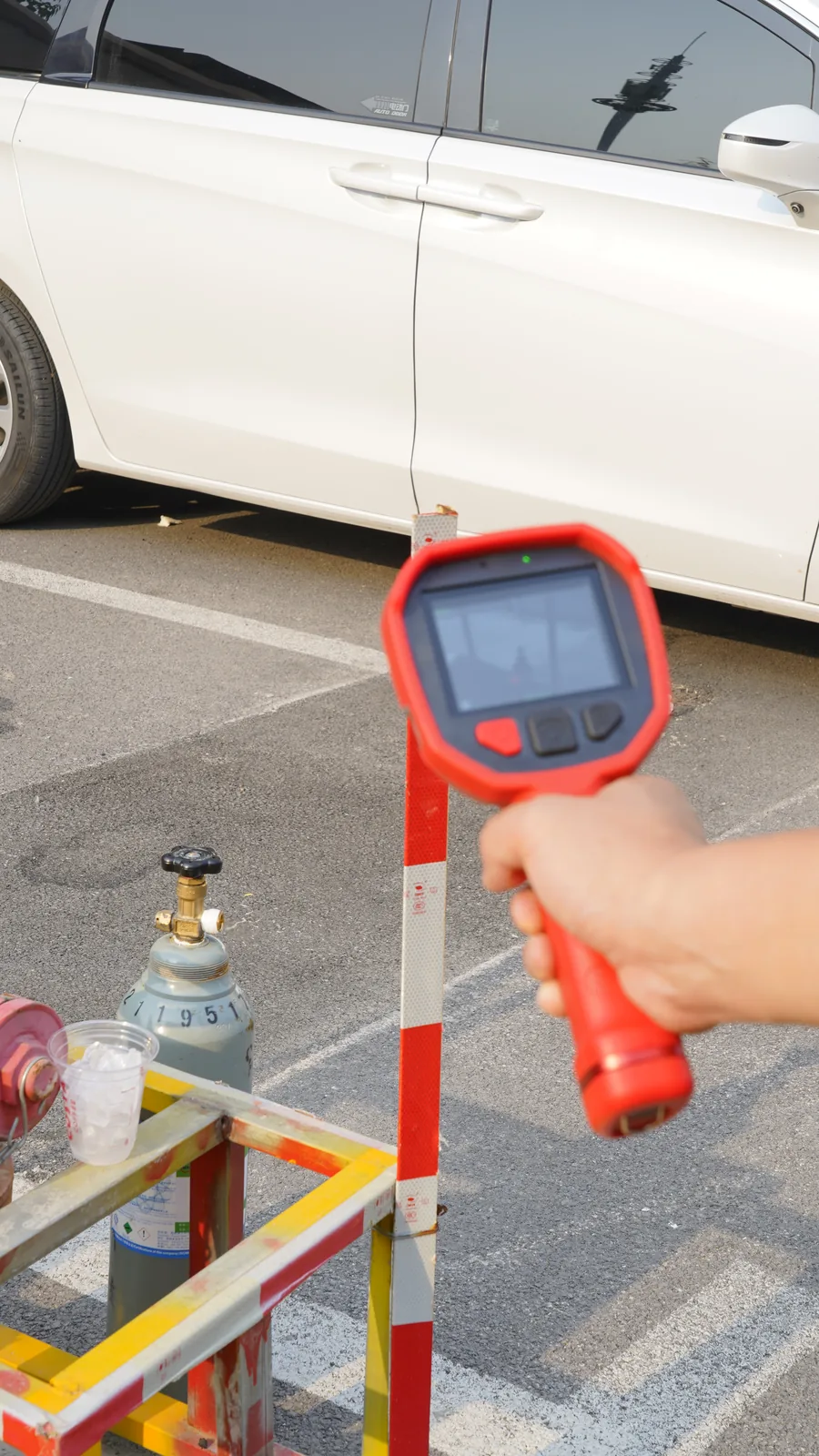
Figure 3. Field leak-check on a pressurized gas cylinder valve: scan from outside the barrier, locate the emitting component, then repair with confidence.
Built for the Fireground, Not the Laboratory Bench
The TIG10 is an integrated one-piece molded housing with an alumina internal frame and PPSU / silicone-rubber external components. It is sealed to IP67, certified intrinsic-safe Ex ib IIC T4 for hazardous areas, and tested through the same heat-soak profile fire brigades specify:
80 °C
30 minutes
120 °C
10 minutes
260 °C
5 minutes
2 m
drop-rated
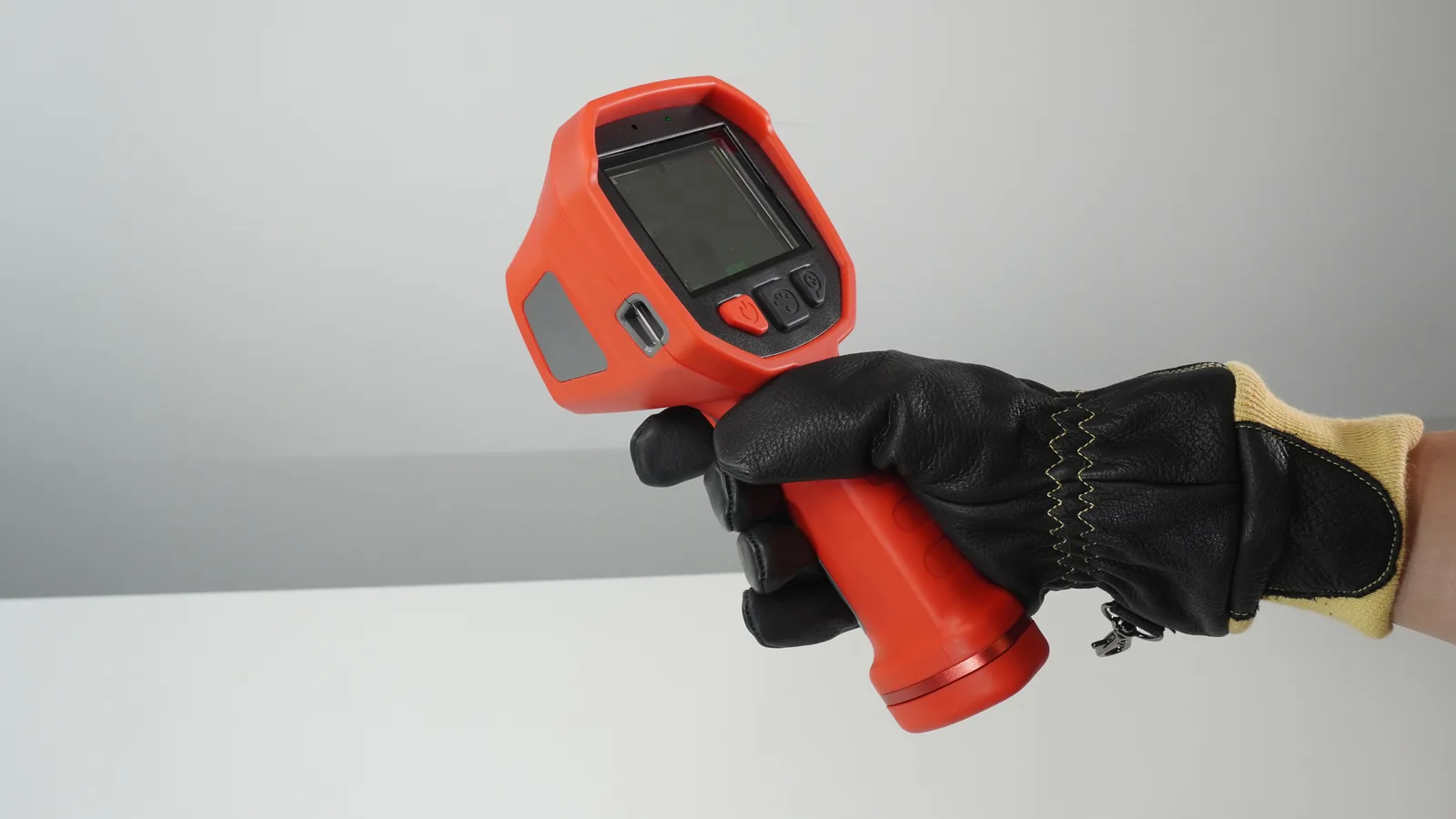
Figure 4. Oversized raised keys and a contoured anti-slip grip give positive control through structural firefighting gloves.
From Scan to Evidence in One Hand
- −40 °C to 1200 °C measurement with automatic range switching — no menu diving between a cryogenic leak and a fully involved fire.
- Center, maximum and minimum temperature read simultaneously, with automatic hot and cold spot pointers for victim search and overhaul.
- 3.5-inch 640×480 sunlight-readable screen with auto brightness and an anti-fog nano-coating that stays clear in high heat and humidity.
- 64 GB built-in storage saves temperature-tagged images and video; review and delete on the device, then export via USB Type-C or SD card to the included PC software.
- Laser pointer, electronic compass and status LED mark hazards and bearings; built-in Wi-Fi streams live video to the command post, with optional 4G and GPS for map-based fleet command of up to 2,000 devices.
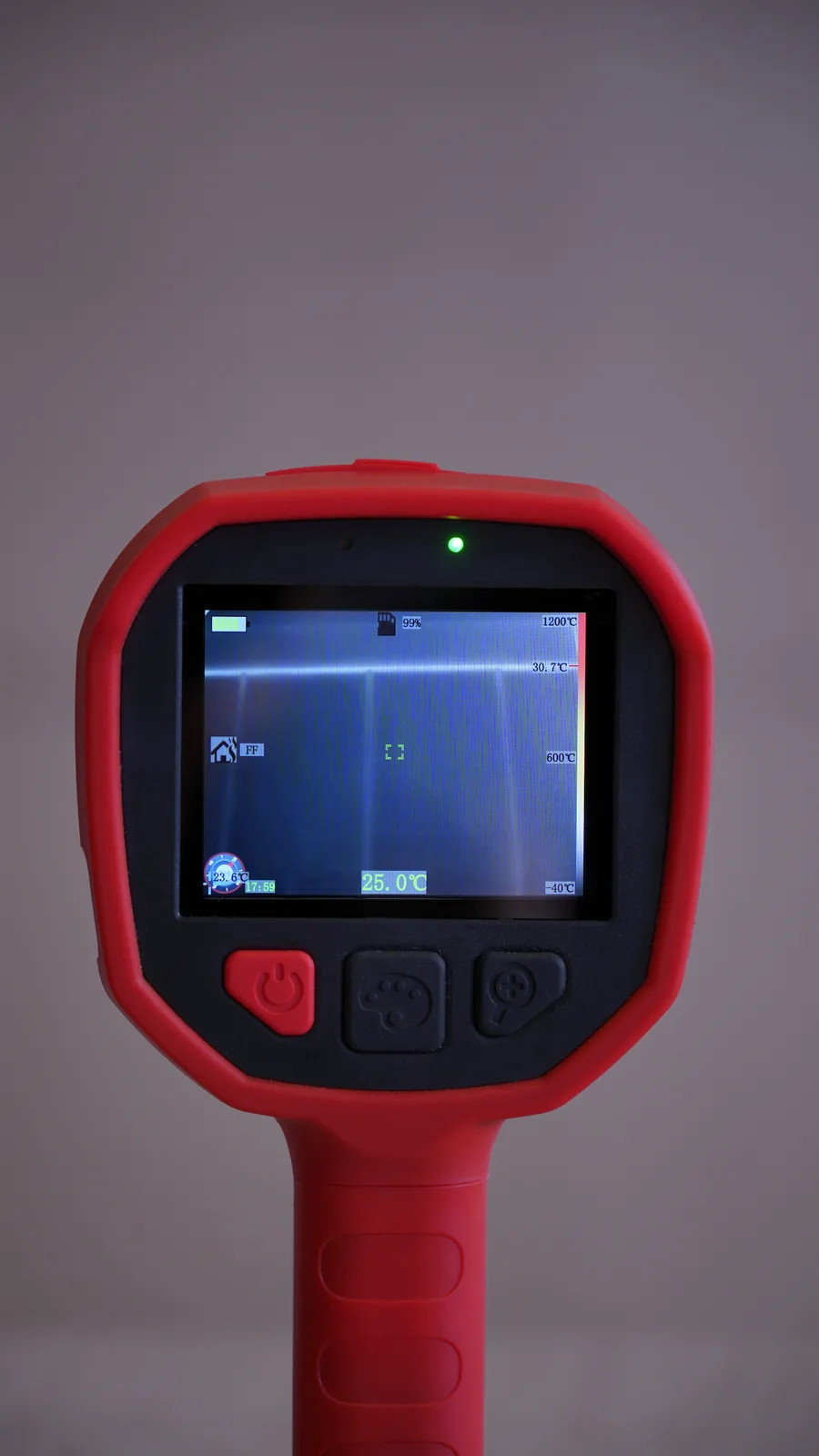
Figure 5. On-screen interface showing the −40 °C to 1200 °C temperature scale, center-spot reading, electronic compass and battery level.
Where the TIG10 Works
Fire & Rescue
Locate fire sources and high-temperature zones through smoke and darkness, plan search routes, and find trapped occupants faster.
Gas Leak Detection
Visualize the leak point and diffusion direction of methane, ammonia and chemical vapors at refineries, tank farms and gas networks.
Residual Fire Monitoring
Scan affected areas after knockdown for hidden embers and hotspots to prevent re-ignition during overhaul.
Mining Safety
Image gas accumulation in underground workings and help prevent methane-related explosion and asphyxiation accidents.
Petrochemical & Equipment Inspection
Check pipelines, flanges, valves and pumps for fugitive emissions and abnormal surface temperature during routine LDAR rounds.
Electrical Utilities & SF₆
Find SF₆ leaks in GIS switchgear and substations, and detect overheating connections before failure.
Built by LSJ Technology — Proven in Real Disasters
LSJ Technology Development Co., Ltd was founded in 2010 and launched its first independently developed radar life detector in 2013. Today LSJ holds the leading market share in China’s emergency-rescue detection equipment market and has deployed detection equipment in major operations including the 2023 Türkiye earthquake, the 2025 Xigaze earthquake in Tibet, the 2023 Jishishan earthquake in Gansu, the 2022 Luding M6.8 earthquake and the 2023 Inner Mongolia mine disaster. Expanding internationally since 2024, LSJ now serves partners across the Middle East, Southeast Asia and the Americas, and every TIG10 is backed by CNAS- and CMA-accredited test reports and an Ex ib IIC T4 explosion-proof certificate.
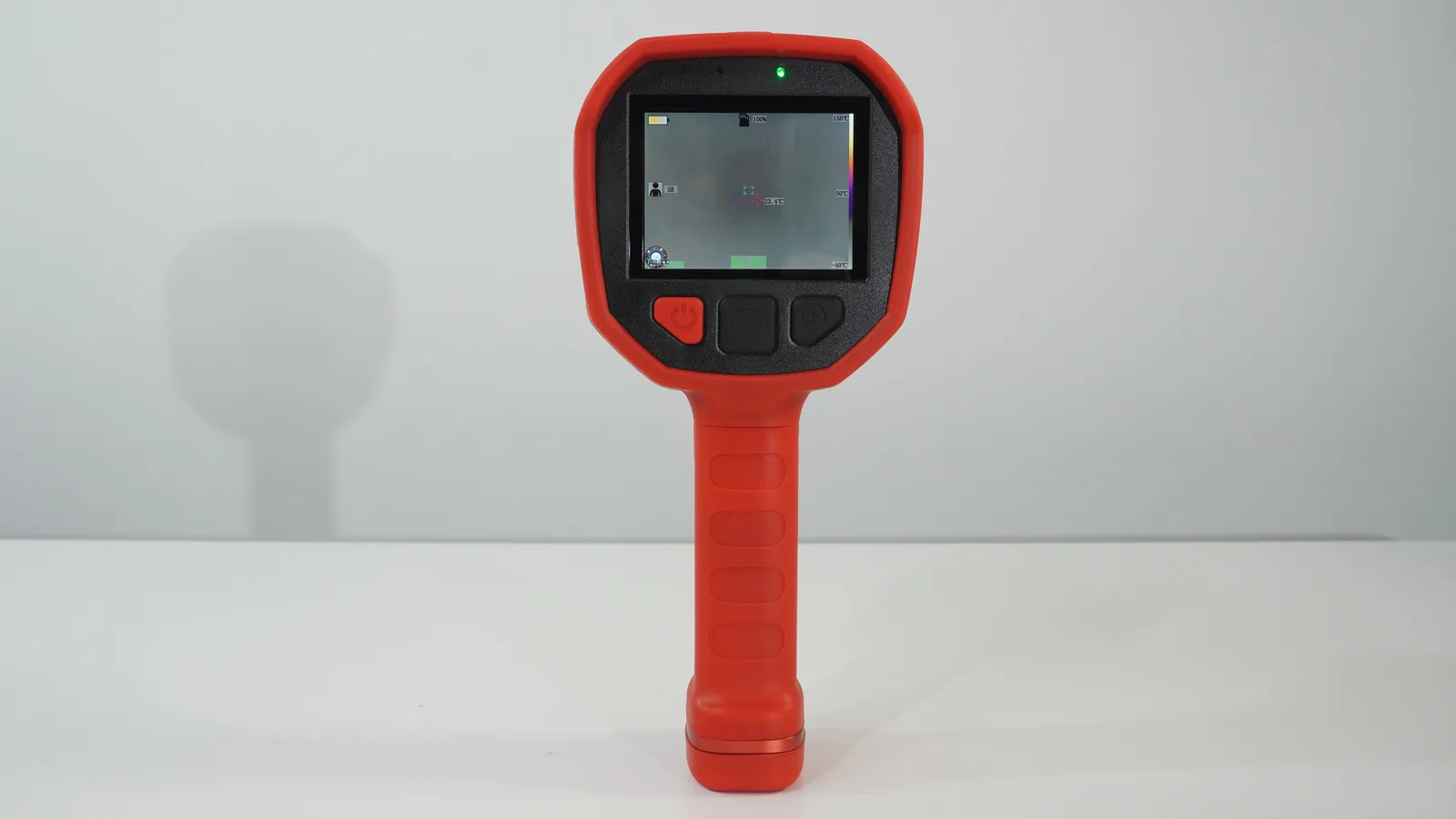
Figure 6. Every production TIG10 powers on to live thermal imaging with the green work-status indicator and on-screen temperature readouts, backed by CNAS/CMA test reports and the Ex ib IIC T4 certificate.
Frequently Asked Questions
Q: What gases can the LSJ TIG10 optical gas imaging camera detect?
A: The TIG10 visualizes gases with infrared absorption bands in the 8–14 µm long-wave range, including methane (CH₄), sulfur hexafluoride (SF₆), ammonia (NH₃), ethylene, vinyl chloride, vinyl ether, propylene, acrolein, acrylonitrile, methyl vinyl ketone, nitrous oxide (N₂O), sulfur dioxide (SO₂) and phenol. It uses passive infrared absorption — no tracer gas or sampling probe is needed. Visible plume size depends on gas concentration, leak rate and the thermal contrast of the background.
Q: Is the TIG10 certified for firefighting and explosive atmospheres?
A: Yes. The TIG10 is designed to XF/T 635-2023 Thermal Imagers for Fire Fighting, carries an intrinsic-safety rating of Ex ib IIC T4 with a national explosion-proof certificate, and is supplied with inspection reports issued by CNAS- and CMA-accredited laboratories carrying the CNAS and CMA marks. The housing is sealed to IP67.
Q: How long can it survive in a high-temperature fire environment?
A: The TIG10 is heat-tested to operate for 30 minutes at 80 °C, 10 minutes at 120 °C and 5 minutes at 260 °C, and withstands a 2 meter drop onto a hard surface. Continuous operating temperature in normal conditions is −20 °C to +50 °C.
Q: Can firefighters operate it wearing gloves?
A: Yes. The interface uses three oversized raised keys — power/laser, mode and zoom — with an ergonomic pistol grip and a fixed-focus athermalized lens that never requires manual focusing. Mode switching cycles through white hot, black hot, fire, fire scene, rescue, gas detection and other palettes with one gloved press.
Q: How does live video reach the incident commander?
A: Built-in Wi-Fi streams the live thermal picture to the rear intelligent command terminal app. The optional intelligent command platform runs on Windows, macOS, Linux, HarmonyOS and Android, displays up to four camera feeds simultaneously on one screen, maps device coordinates, archives inspection data permanently and can manage up to 2,000 front-end devices. 4G transmission and GPS positioning are available as factory options.
Q: What is the battery life and weight during a full shift?
A: The TIG10 ships with two field-swappable rechargeable Li-ion batteries, each delivering up to 6 hours of operation — hot-swap between them for continuous shift coverage. Complete with battery it weighs only 0.86 kg (116 × 114 × 257 mm), substantially lighter than typical 1–1.5 kg fire-service cameras.
Q: Does the TIG10 replace a regular fire-service thermal imager?
A: Yes — it is a fully compliant XF/T 635-2023 fire-service thermal imager with fire, rescue, patrol, assessment and residual-fire detection modes, −40 °C to 1200 °C measurement and automatic hot/cold spot tracking, with optical gas imaging added. One unit covers fireground search, overhaul, hazardous-materials response and routine industrial inspection.
Q: How do I order, and is OEM / distributor cooperation available?
A: Contact LSJ Technology for factory-direct pricing, lead times, configuration options (including 4G/GPS and the command platform) and OEM/private-label terms. LSJ is actively appointing distributors and service partners in the Middle East, Southeast Asia, the Americas and other international markets.
Make Gas Leaks Visible. Make Every Second Count.
Request the LSJ TIG10 datasheet, CNAS/CMA test reports, factory quotation or live demonstration.
Send Inquiry to LSJ TechnologyLSJ Technology Development Co., Ltd · www.lsj-te.com
LSJ TIG10 Technical Specifications
Handheld Optical Gas Imaging (OGI) Camera & Fire-Service Thermal Imager — Hazardseeker Series
| Parameter | Specification — LSJ TIG10 |
|---|---|
| Thermal Imaging Core | |
| Infrared detector | Uncooled FPA, 640 × 512 px, 12 µm pitch — maintenance-free |
| Spectral range | 8–14 µm long-wave infrared (LWIR); passive optical gas imaging by infrared absorption |
| Thermal sensitivity (NETD) | ≤ 30 mK |
| Frame rate | ≥ 60 Hz |
| Field of view / lens | 33° × 27° FOV; 13 mm athermalized fixed-focus lens (no manual focusing) |
| Digital zoom | 2× / 4× |
| Visible-light camera | 5 megapixels; visible, picture-in-picture and thermal/visible fusion modes |
| Gas Detection (OGI) | |
| Detectable gases | Methane (CH₄), sulfur hexafluoride (SF₆), ammonia (NH₃), ethylene, vinyl chloride, vinyl ether, propylene, acrolein, acrylonitrile, methyl vinyl ketone, nitrous oxide (N₂O), sulfur dioxide (SO₂), phenol, and other industrial gases with 8–14 µm absorption bands |
| Leak visualization | Dedicated gas-detection imaging mode; leak plume, source location and diffusion direction shown live on screen |
| Temperature Measurement | |
| Temperature range | −40 °C to +1200 °C, automatic range switching |
| Accuracy | ±2 °C (≤100 °C) / ±2 % of reading (>100 °C), whichever is greater |
| Measurement tools | Center spot, automatic maximum / minimum temperature, full-screen hot & cold spot tracking with pointers shown simultaneously |
| Display & Imaging Modes | |
| Display | 3.5-inch color TFT LCD, 640 × 480, automatic brightness, anti-fog nano-coating for high-temperature / high-humidity environments |
| Modes & palettes | 12 detection palettes; white hot, black hot, fire, fire scene, rescue, detection, patrol, assessment, gas detection, visible light, picture-in-picture and fusion modes |
| Storage & Connectivity | |
| Built-in storage | 64 GB; temperature-annotated images and video; on-board review and deletion without a PC |
| Interface | USB Type-C and SD card slot under a sealed protective cover |
| Wireless transmission | Built-in Wi-Fi for live video streaming to the rear command terminal; 4G and GPS/positioning optional |
| Aiming & orientation | Laser pointer, electronic compass and work-status indicator light |
| Power | |
| Battery & runtime | Two swappable Li-ion batteries, up to 6 h each (up to 12 h shift coverage); on-screen battery level; ~4 h full charge |
| Ruggedness & Environmental | |
| Ingress protection | IP67 sealed housing (dust-tight, waterproof) |
| High-temperature endurance | 80 °C / 30 min · 120 °C / 10 min · 260 °C / 5 min |
| Drop resistance | 2 m drop-rated onto hard ground |
| Explosion protection | Intrinsic-safety design, rated Ex ib IIC T4, with national explosion-proof certificate |
| Operating / storage temperature | −20 °C to +50 °C continuous operation / −40 °C to +70 °C storage |
| Weight & dimensions | ≤ 0.86 kg including battery; 116 × 114 × 257 mm (W × D × H); one-handed pistol grip with oversized glove-friendly keys |
| Standards, Certification & Software | |
| Fire-service standard | XF/T 635-2023 Thermal Imagers for Fire Fighting |
| Test reports | Reports from CNAS- and CMA-accredited laboratories, carrying CNAS / CMA marks |
| Software & platform | PC analysis software included; optional intelligent command platform (Windows / macOS / Linux / HarmonyOS / Android) supporting up to 2,000 front-end devices and 4-camera split-screen live command |
Specifications are based on LSJ TIG10 product documentation and XF/T 635-2023 test data. Gas detection performance varies with gas type, concentration, background ΔT and distance. Contact LSJ Technology for configuration-specific data sheets and test reports.