 EN
EN

New Product TIG10 Infrared Thermal Imager for Gas Leaks
LSJ Technology | Product Briefing | September 2026
LSJ TIG10: A Handheld Gas Detection Thermal Imager for Firegrounds and Industrial Leaks
The LSJ TIG10 Gas Detection Camera combines a 640×512 long-wave infrared detector with optical gas imaging in one IP67-rated handheld unit. Firefighters and industrial inspectors can locate people, fire sources and gas leaks through smoke without contact, across a measured temperature span of −20 °C to 1200 °C.
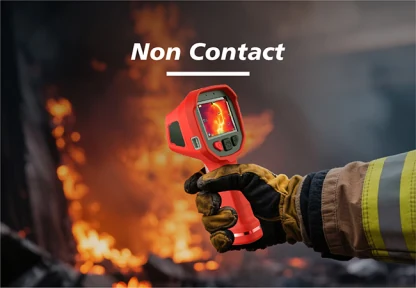
Figure 1. The LSJ TIG10 operated at a live-fire scene. The camera reads heat and gas at a distance — no contact with the source required.
|
Infrared detector
640×512 high-sensitivity long-wave sensor
|
Gas imaging
Methane (CH₄), SF₆, NO₂, SO₃ and more
|
|
Temperature range
−20 °C to 1200 °C, auto-switching
|
Ingress protection
IP67 waterproof and dustproof housing
|
|
Targeting & orientation
Laser pointer and electronic compass
|
Display & controls
Nano-coated screen, large glove-friendly keys
|
Thermal Imaging and Gas Leak Detection in One Handheld Unit
The TIG10 merges a thermal imaging camera with optical gas imaging in a single handheld device, so responders carry one instrument instead of two when they enter a fire scene or a suspected leak site.
Built on long-wave infrared detection, the camera renders gas movement that conventional cameras cannot show — including methane, sulfur hexafluoride, nitrogen dioxide and sulfur trioxide. The plume, its source and its path appear on screen in real time, narrowing the search from an entire plant area to the specific valve, flange or pipeline.
Because the scan is non-contact, operators hold back from pressurized fittings, toxic plumes and unstable structures. Optical gas imaging is already used to support fugitive-emission monitoring in oil and gas regulation; the U.S. EPA outlines the underlying leak-detection requirements in its oil and natural gas air pollution controls.
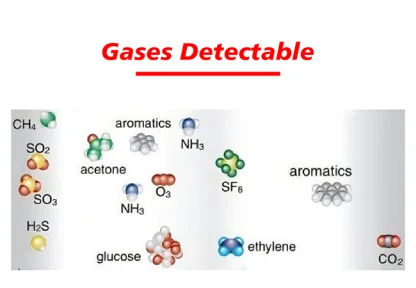
Figure 2. Compounds the TIG10 can render on screen, among them methane (CH₄), sulfur hexafluoride (SF₆), sulfur dioxide (SO₂) and ammonia (NH₃). Visible results vary by gas, background contrast and operating conditions.
A 640×512 Sensor That Reads Smoke-Filled Scenes
At the core of the TIG10 is a 640×512 high-sensitivity infrared detector, which captures 4.3× the thermal pixels of a common 320×240 sensor (327,680 versus 76,800 pixels).
The resolution earns its keep at the moment of entry. Rescue personnel, the seat of a fire and a small leak point remain distinguishable when smoke, steam or low light would wash out a lower-resolution image. A live temperature readout supports fixed-point measurement, letting crews track a hotspot instead of estimating its position.
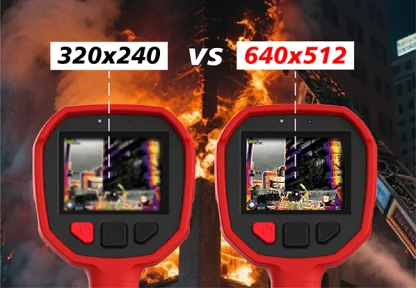
Figure 3. The TIG10’s 640×512 path (right) against a standard 320×240 image (left) in the same fire scene — 4.3× the thermal pixels for the same field of view.
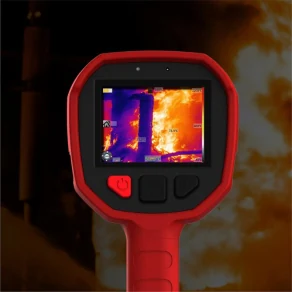
Figure 4. The TIG10 display during a fixed-point thermal scan, with a live temperature readout over the heat image.
−20 °C to 1200 °C with Automatic Range Switching
The TIG10 measures across −20 °C to 1200 °C and switches ranges automatically, so one device covers cold leak surveys and fully involved fires without a manual recalibration.
The screen shows maximum, minimum and central-spot temperatures at the same time. Inspectors use the same unit for fire-suppression support, equipment checks and post-incident fire-cause investigation, moving from a cold valve to a hot surface without swapping instruments.
IP67 Sealing and Controls Built for Gloved Hands
An IP67-rated housing, compact frame and oversized keys make the TIG10 operable in water, dust and heat while the operator wears structural firefighting gloves.
The nano-coated screen stays legible under high humidity and high ambient temperature. A laser pointer marks the exact target under discussion, and an electronic compass preserves orientation when smoke removes visual reference points. The ergonomic grip and simplified key layout keep attention on the scene rather than the device.
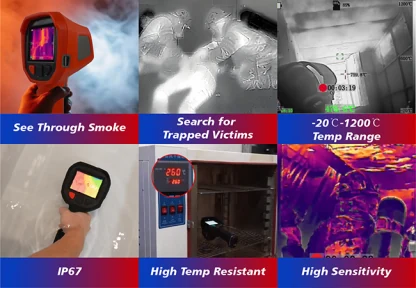
Figure 5. Field capabilities summarized: smoke penetration, trapped-victim search, −20 °C to 1200 °C range, IP67 sealing, high-temperature resistance and high thermal sensitivity.
Non-contact scanning keeps personnel back from flames, pressurized gas and unstable structures, while the on-screen plume shows exactly where the leak is moving.
Where the TIG10 Is Deployed
Fire departments, oil and gas producers, chemical plants, utility and infrastructure inspection teams, and fire investigation units use the TIG10 wherever heat and gas risk occur together.
- ✓Fire departments and emergency response teams — search through smoke, locate hidden fire sources and monitor residual fire.
- ✓Oil & gas operations — visualize fugitive methane and SF₆ leaks along pipelines, valves, flanges and tanks.
- ✓Chemical plants — trace hazardous gas movement without approaching the source.
- ✓Utility and infrastructure inspections — survey overheating equipment and enclosures before failure.
- ✓Fire investigation units — record fixed-point temperature evidence for cause-and-origin work.
Request TIG10 Specifications and a Field Demonstration
Procurement officers, safety managers and fleet commanders can request TIG10 specifications, pricing and a hands-on demonstration directly from LSJ Technology. One compact device now covers thermal imaging, gas visualization and field durability — the three capabilities teams currently split across separate tools.
Request a QuoteAbout LSJ Technology. LSJ Technology designs thermal imaging, detection and rescue equipment for fire services, emergency response teams and industrial safety applications.
