
 EN

- Description

Is there a problem?
Please contact us to serve you!


Warning Alarm Stability Protection Device LS-D01
Why Choose the LSJ LS-D01
✓0.1° Accuracy, 0.01° Resolution — 3-axis (X/Y/Z), full 360° tilt monitoring
✓Tilt + Vibration Dual Sensing — vibration channel covers 0.5 Hz–100 Hz
✓550 m LoRa Wireless, Up to 4 Nodes — multi-point linked alarms from one 8-inch terminal
✓95 dB Sound-and-Light Alarm — instant on-site audible and visual evacuation warning
✓5 Tool-Free Mounting Options — magnetic, suction-cup, strap, rope-tether or bracket; deployed in seconds
- Description
- Parameter
- Recommended Products
Description
LSJ LS-D01 Multifunction Aftershock Monitoring Alarm — Wireless Tilt & Vibration Structural Stability Warning Device
The LSJ LS-D01 is a wireless, battery-powered aftershock and structural stability monitoring alarm for urban search-and-rescue (USAR) teams. It continuously measures the tilt and vibration of damaged buildings, shoring, walls, concrete slabs, steel structures and chemical storage tanks, and triggers an automatic 95 dB sound-and-light alarm the moment movement exceeds the threshold you set. Tilt accuracy is 0.1° with 0.01° resolution across three axes; one 8-inch Android terminal links up to 4 monitoring nodes over 550 m LoRa wireless, keeping rescue personnel out of the danger zone.
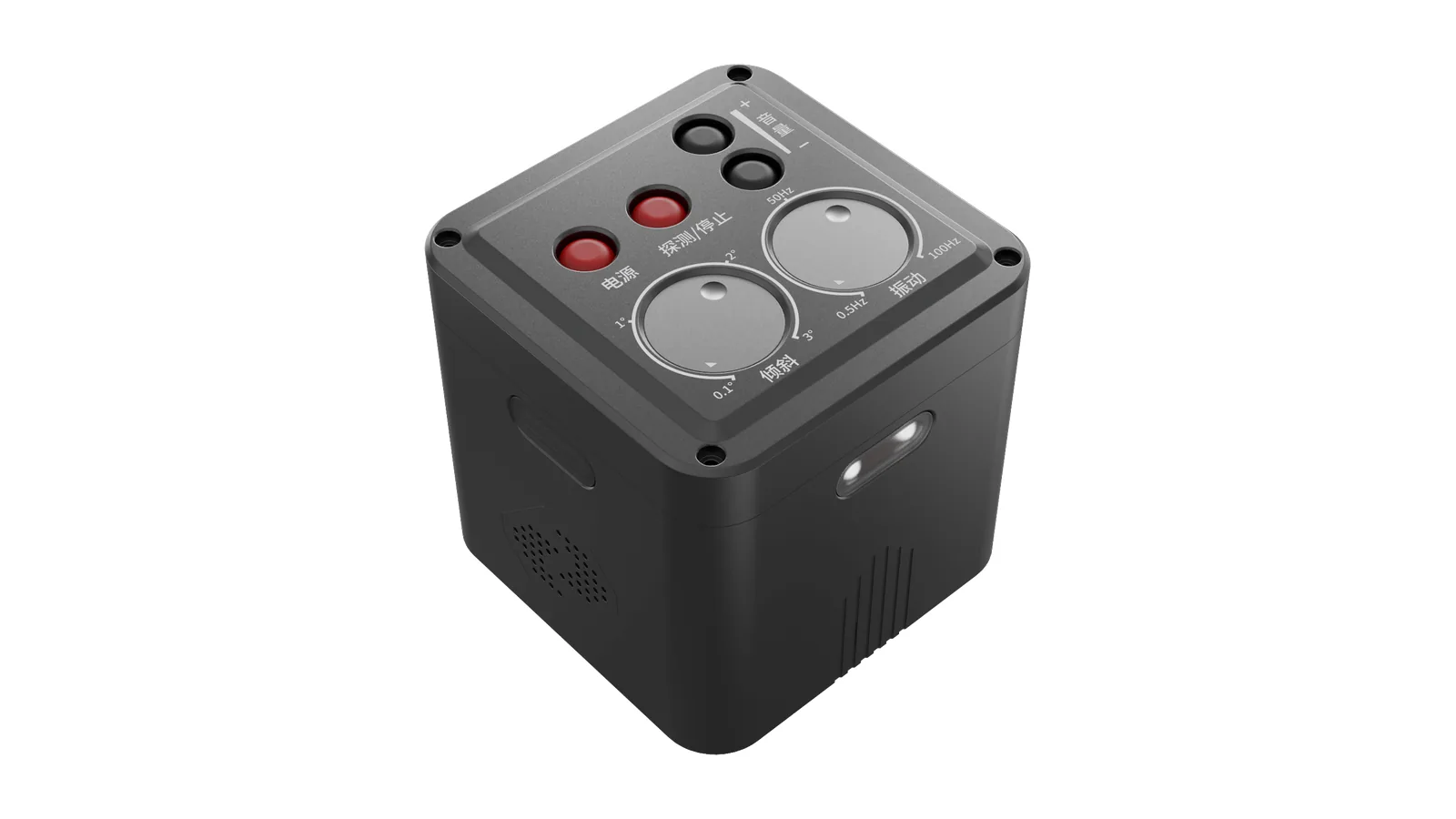
Figure: The LSJ LS-D01 monitoring node, with dedicated tilt and vibration setting dials, function buttons and an integrated sound-and-light alarm.
The Danger: Secondary Collapse After the Main Shock
After an earthquake, explosion or major fire, the standing structure is already wounded. Aftershocks can continue for days, months or longer depending on the main-shock magnitude, and even small tremors can bring a weakened wall, beam or slab down onto the rescue team. Manual contact inspection puts firefighters directly under the hazard — exactly where a secondary collapse is most likely.
Unstable structures
Cracked columns, tilted walls and broken beams can fail without visible warning during aftershocks.
Rescuers inside the kill zone
Teams cutting, shoring and extracting victims work directly beneath damaged concrete for hours.
Secondary disasters
Aftershocks also trigger landslides, debris flow and the failure of weakened chemical tanks and supports.
No time for wired systems
Rescue command needs an alarm that is deployed in seconds, with no cabling and no contact operation.
What Is the LSJ LS-D01?
The LS-D01 is a complete wireless monitoring kit built around high-sensitivity MEMS tilt sensing: each node records the reference angle when monitoring starts, compares every subsequent reading against that baseline, and alarms automatically when the difference exceeds the configured precision. The system ships as a ready-to-deploy rescue kit in a rugged hard case.
1. Monitoring node
3-axis tilt + vibration sensor with built-in 95 dB siren, strobe light, 1.8-inch display, dials and buttons; 3.7 V Li-ion battery for 10 h of operation.
2. Control terminal
8-inch IP65 Android tablet (EM-T81X) showing live X/Y/Z angles, thresholds, battery and link status for every node, from up to 550 m away.
3. Mounting kit & case
Antennas, dual suction-cup bracket, magnetic / strap / rope-tether accessories and charger, all held in custom foam inside a hard transport case.
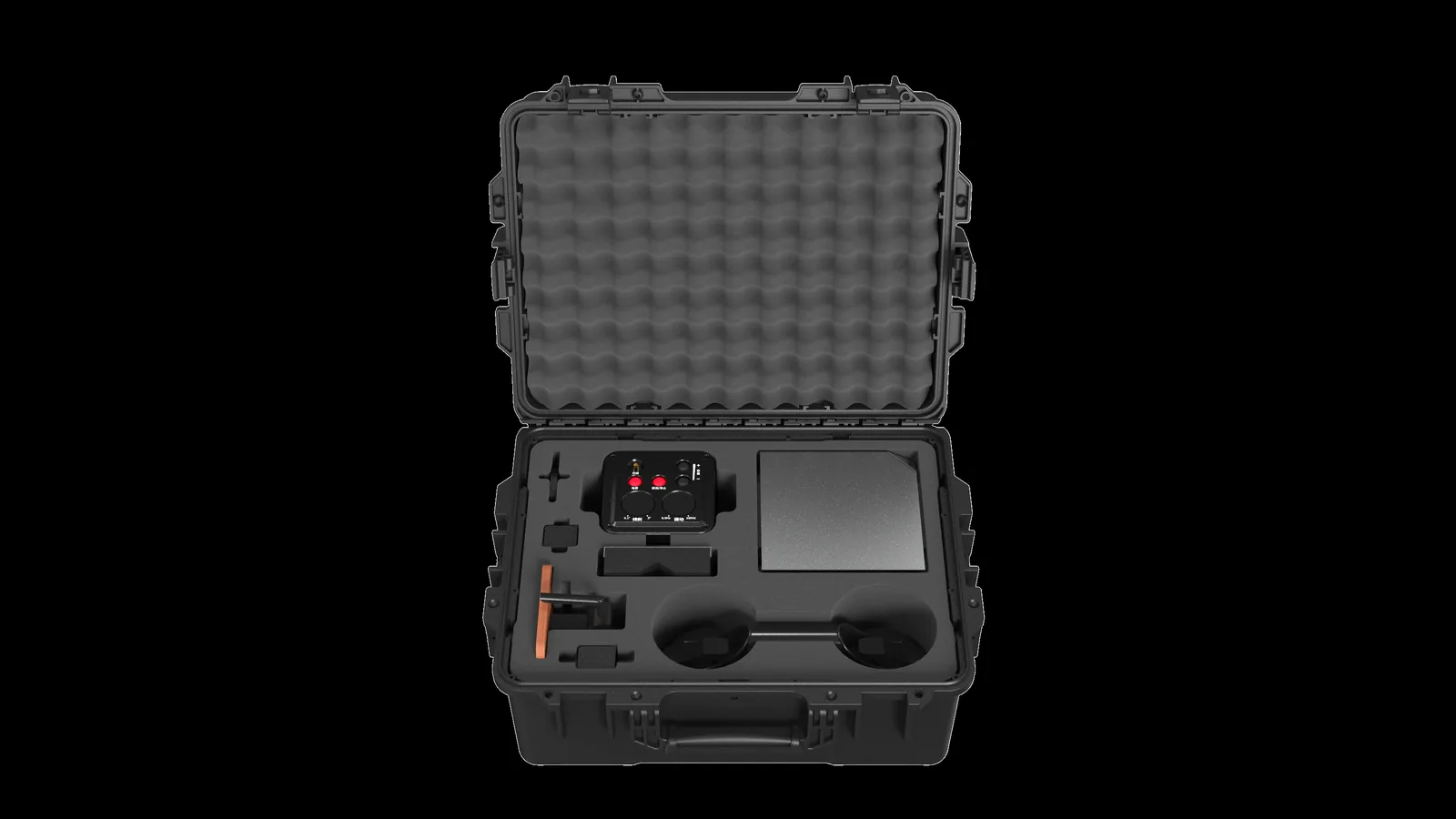
Figure: The complete LS-D01 kit — monitoring node, 8-inch control terminal, suction-cup mount and accessories — in a foam-lined hard transport case.
Dual Sensing: Tilt and Vibration in One Node
Unlike single-function inclinometers, the LS-D01 monitors two failure signatures at the same time:
- Tilt / inclination: real-time angle changes on the X, Y and Z axes over a full three-dimensional 360° range, with 0.01° resolution and 0.1° accuracy.
- Vibration: a dedicated vibration channel covering 0.5 Hz–100 Hz catches tremors and aftershock shaking before visible displacement develops.
- Stepless thresholds: set any alarm value from 0.1° to 9.9°, or use the quick 0.1° / 1° / 2° / 3° dial positions — fixed or fully custom, from the node or the terminal.
- Baseline logic: the first reading becomes the reference; only deviations above the alarm precision trigger a warning, and measurement precision is field-tuned to suppress false alarms.
- Automatic sound-and-light alarm: abnormal tilt or vibration instantly triggers the on-node siren and strobe — no operator has to watch a screen.
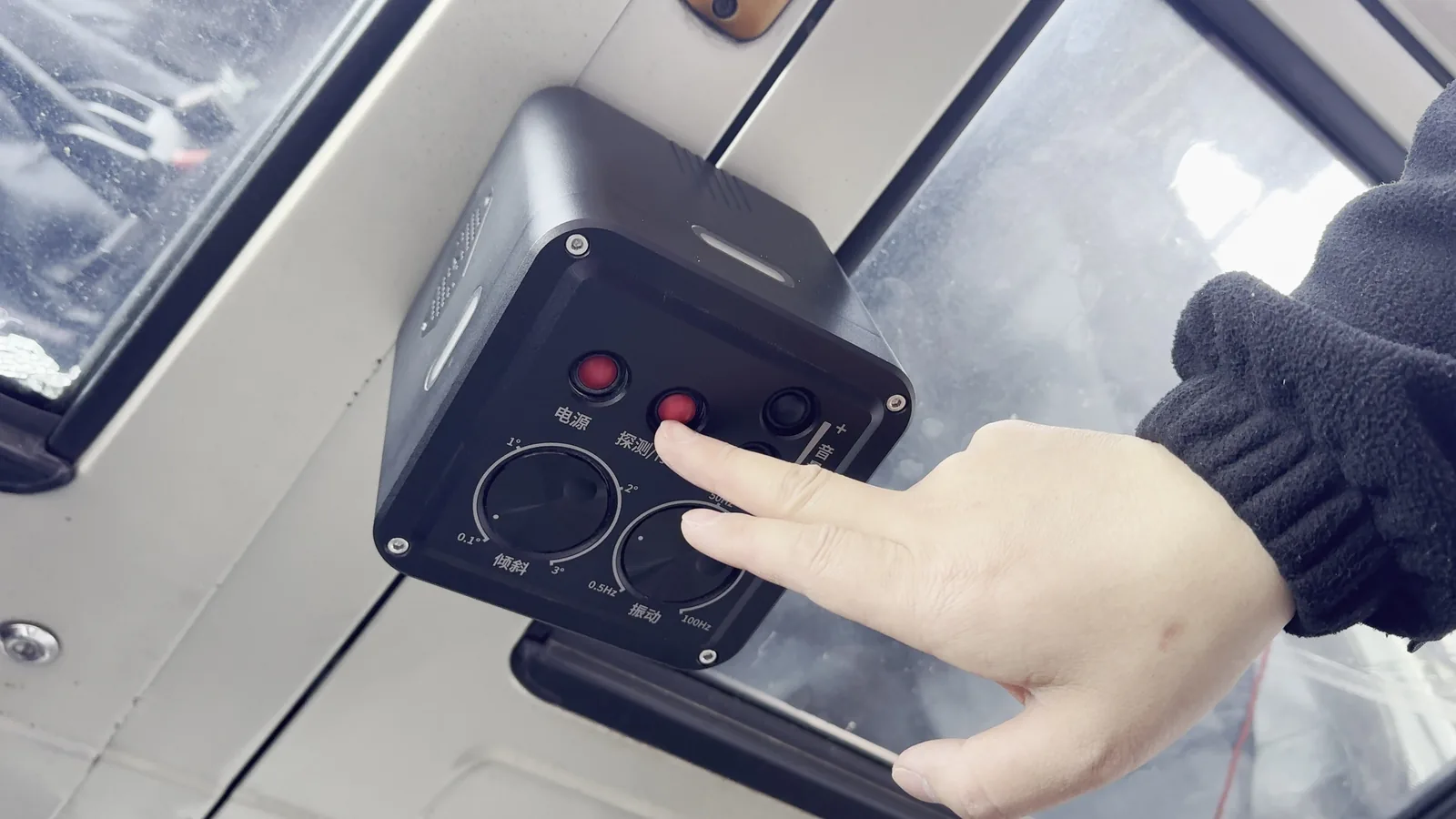
Figure: On-device setup — the tilt dial (0.1°–3° quick positions) and vibration dial (0.5 Hz–100 Hz) let crews arm the node without opening the terminal.
Wireless Multi-Point Monitoring Up to 550 Metres
One 8-inch Android terminal manages up to four LS-D01 nodes over LoRa long-range wireless (≥550 m line of sight) — low-power, robust against interference and free of cabling work. The command post sees every node’s live X/Y/Z angles, alarm threshold, battery and connection status on one screen; when any node trips, its number is displayed and all linked sound-and-light alarms fire together. A reverse-search function makes buried or misplaced nodes sound off for recovery. Wi-Fi is built in and 4G is optional on the terminal.
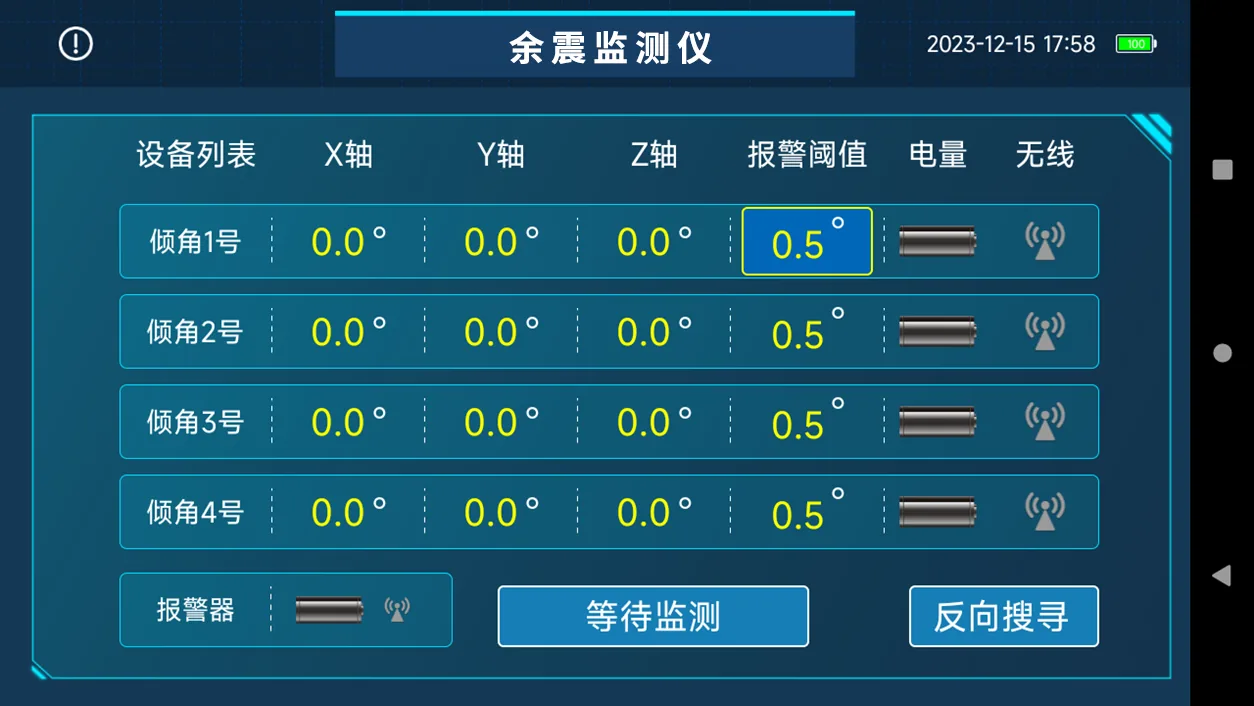
Figure: Terminal interface listing four linked nodes with live X/Y/Z angles, a 0.5° alarm threshold, battery levels and wireless link status.
Deploy in Seconds — Five Tool-Free Mounting Options
Every rescue scene is different. The LS-D01 attaches directly to the at-risk structure — magnetic, suction, strap, rope or bracket — with no drilling, no cabling and no tools, so monitoring can begin before the team enters the hazard zone.
Magnetic mount on structural steel
The node locks onto steel I-beams, columns, shoring frames and tank shells in one motion, ideal for industrial structures and heavy rescue supports.
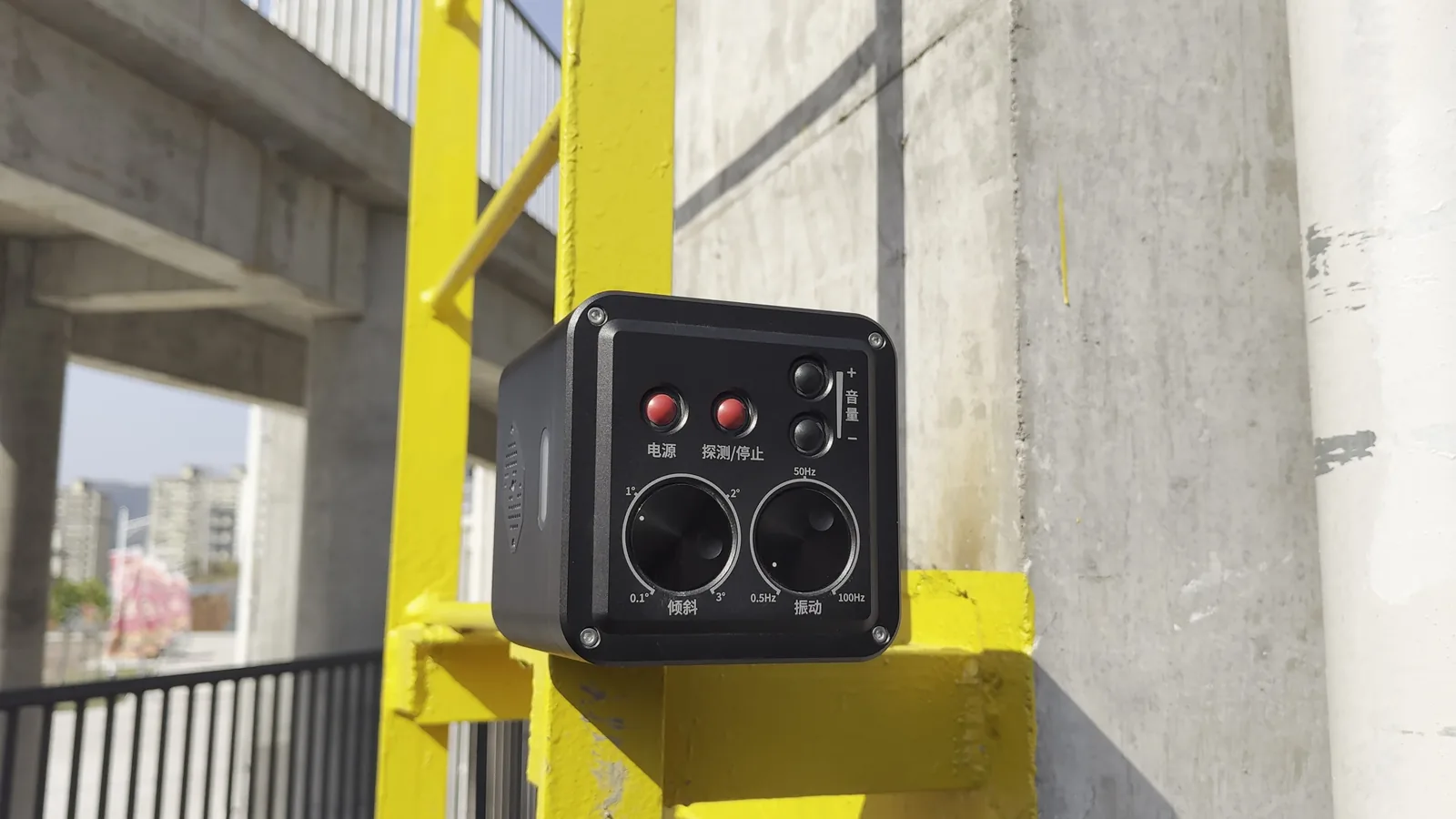
Figure: Tool-free magnetic attachment to a painted steel I-beam during a structural-collapse exercise.
Dual suction-cup mount on smooth surfaces
The included dual suction-cup bracket fixes the node to glass curtain walls, smooth panels and finished concrete without damage or residue.
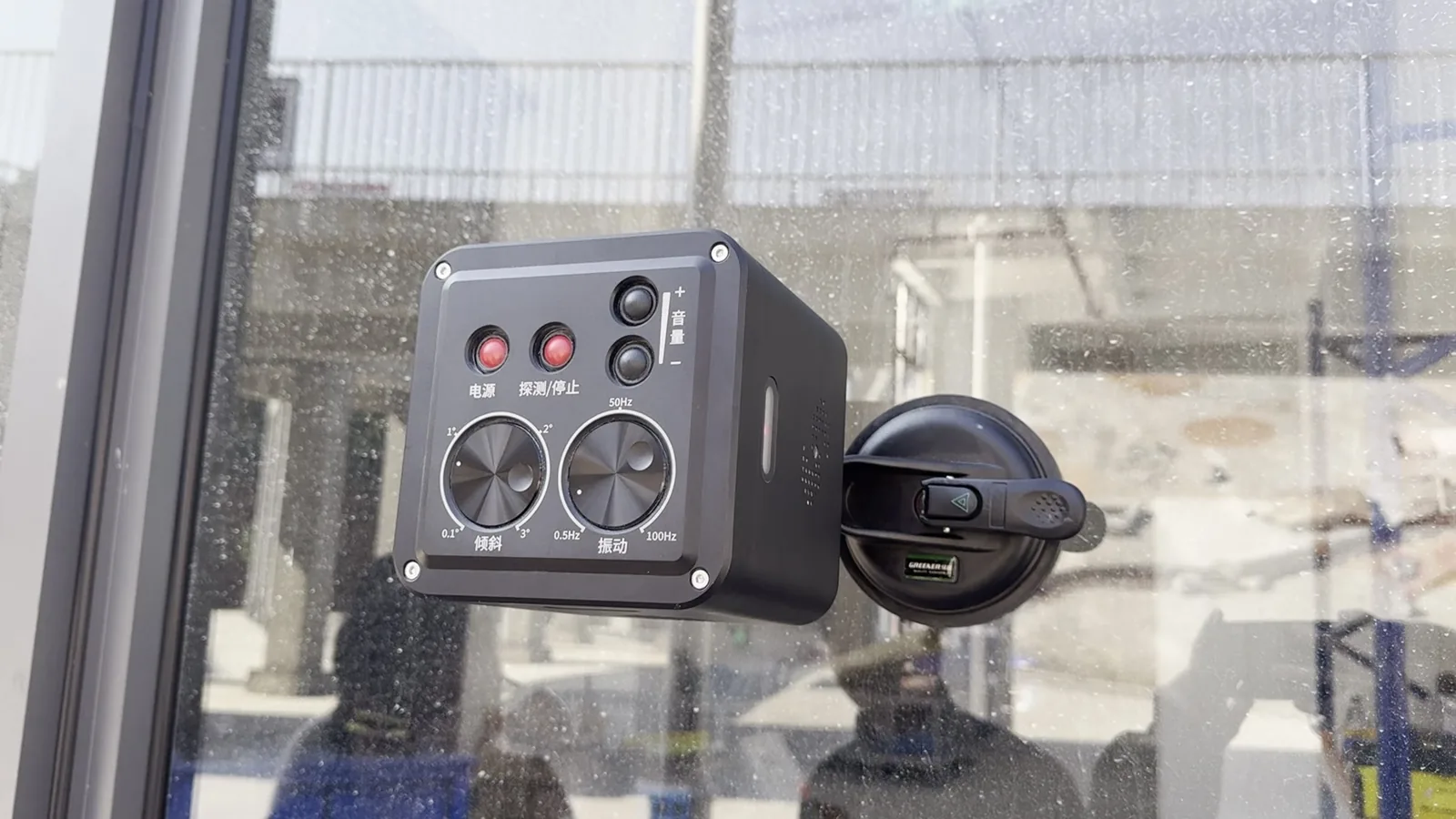
Figure: Non-destructive suction-cup installation on a glass facade — no drilling or surface preparation.
Strap mount on poles and scaffolding
A heavy woven strap secures the node to vertical pipes, poles, scaffolding and irregular columns where magnets and suction cups cannot grip.
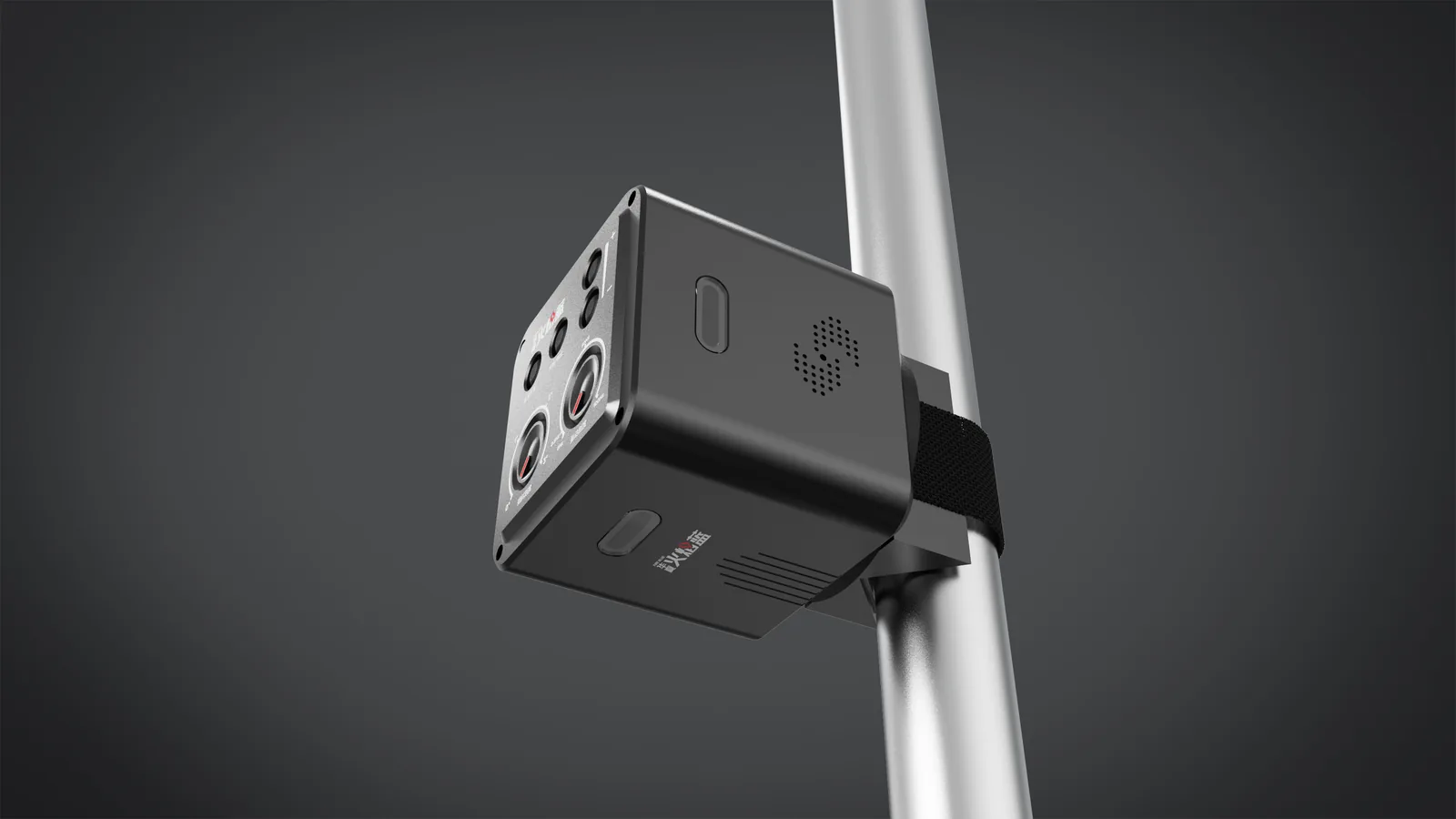
Figure: Strap mounting on a vertical pole — one of several attachment methods supplied with the kit.
Rope-tether and bracket mounting on debris
For broken slabs, rubble piles and timber shoring, the node bolts to a steel base plate and is anchored with a static rope, or fastens directly to wooden shores and brackets — the methods used most often in collapse and landslide rescue.
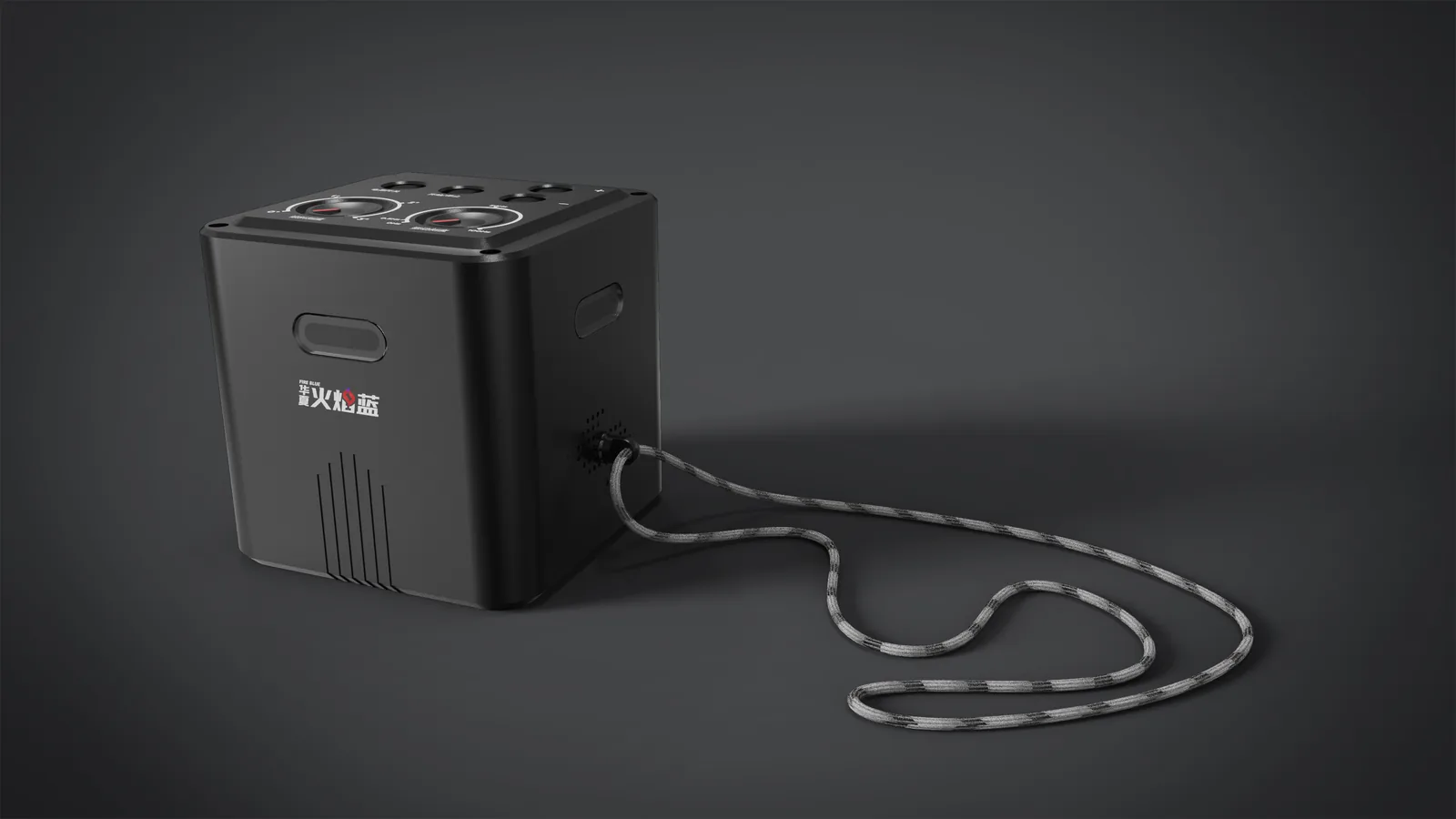
Figure: Static-rope tether attachment point on the node, used to secure the unit to unstable debris and slabs.
Built for Harsh Rescue Environments
The LS-D01 is designed for winter earthquakes, summer fires, dust, rain and rough handling: the node operates from -20 °C to +60 °C, survives a 1 m drop and runs for a full 10-hour shift on its built-in battery; the 8-inch terminal is rated IP65 and drop-tested to 1.2 m. Everything travels in one foam-lined hard case.
-20~60°C
Node operating temperature
10 h
Continuous runtime per charge
IP65
Terminal dust & water protection
1–1.2 m
Drop resistance (node / terminal)
Where the LS-D01 Is Deployed
The LS-D01 is purpose-built for continuous monitoring at earthquake, building-collapse, fire, explosion, tunnel-collapse and landslide emergency rescue scenes, and for hazardous-chemical environments where tanks and structures may shift.
Post-earthquake structural monitoring
Nodes are placed on damaged columns, beams and support structures while a linked wireless alarm unit stands with the command team. Any renewed tilt triggers an immediate evacuation warning.
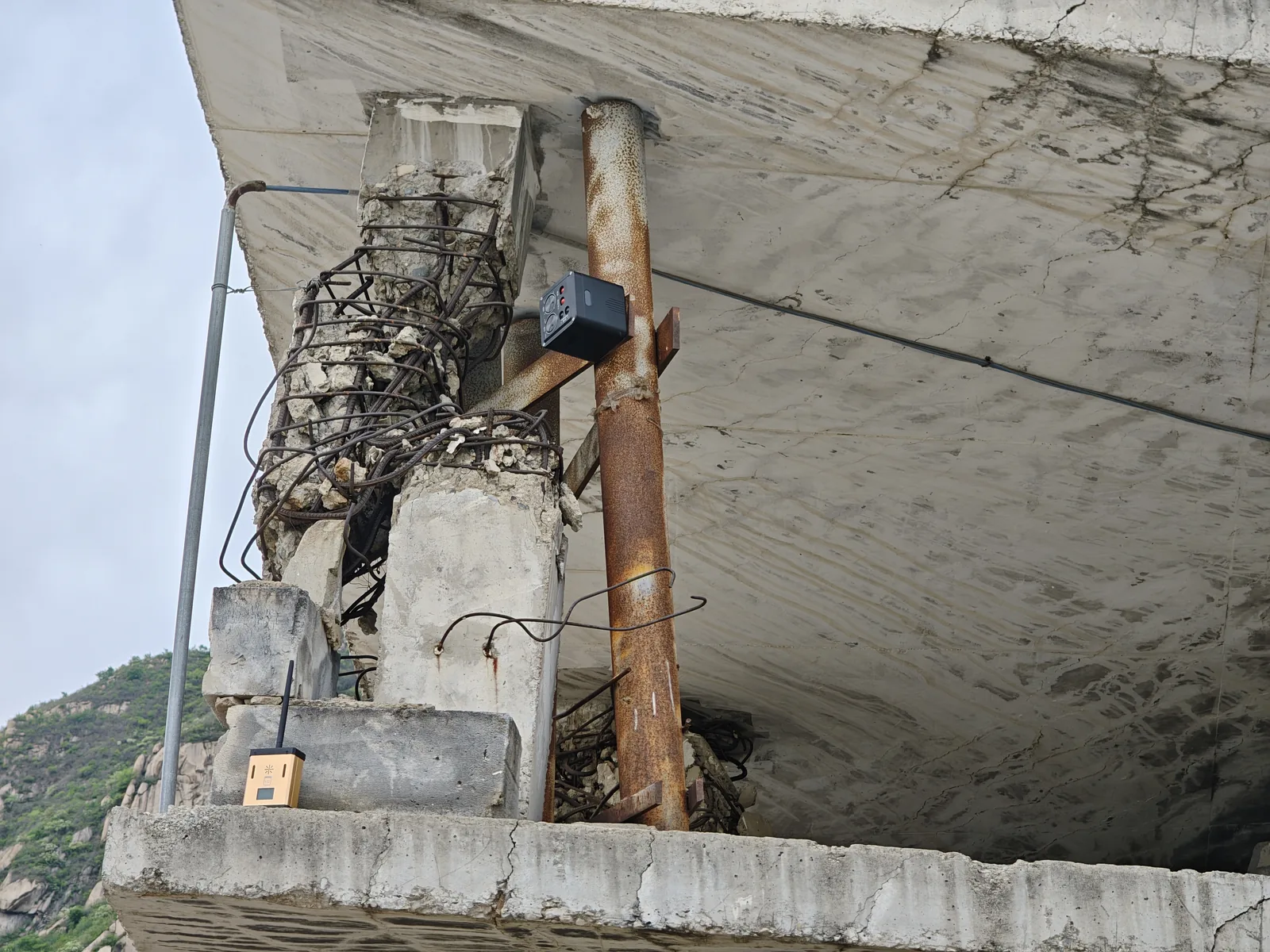
Figure: Field deployment on a destroyed reinforced-concrete support; the linked wireless alarm unit (foreground) relays warnings to the rescue team.
Collapse rescue and shoring monitoring
During extrication, timber shores and brackets carry the weight of unstable wreckage. Mounting the LS-D01 directly on the shore gives crews a real-time warning if their shoring shifts while cutting and lifting.
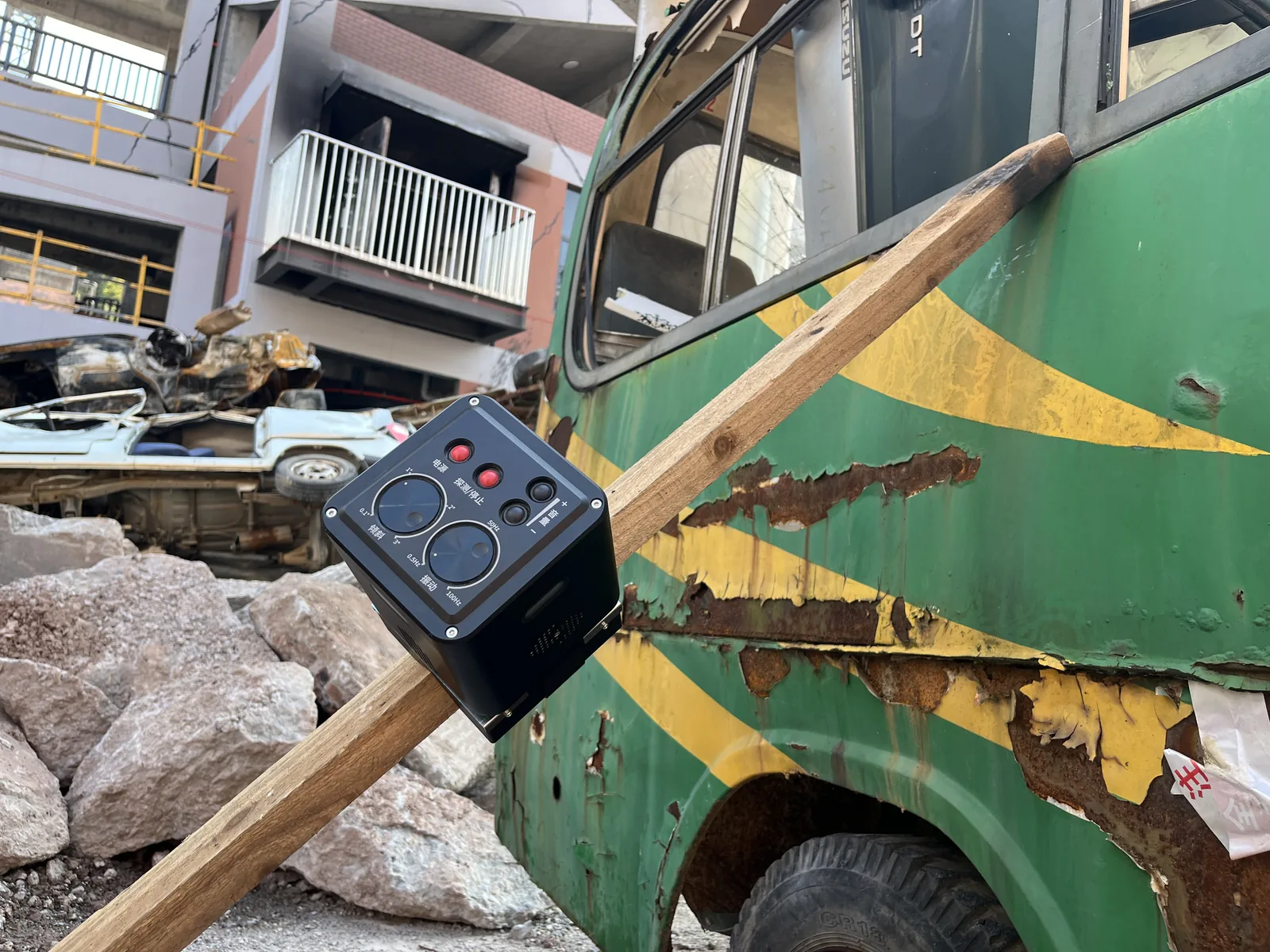
Figure: Node fixed to a timber shore supporting a crushed vehicle during urban search-and-rescue training.
Landslides and large concrete debris
On fractured slope slabs and broken bridge decks, the base-plate and rope-tether mount holds the node securely on tilted concrete, watching for renewed sliding that would bury access routes.
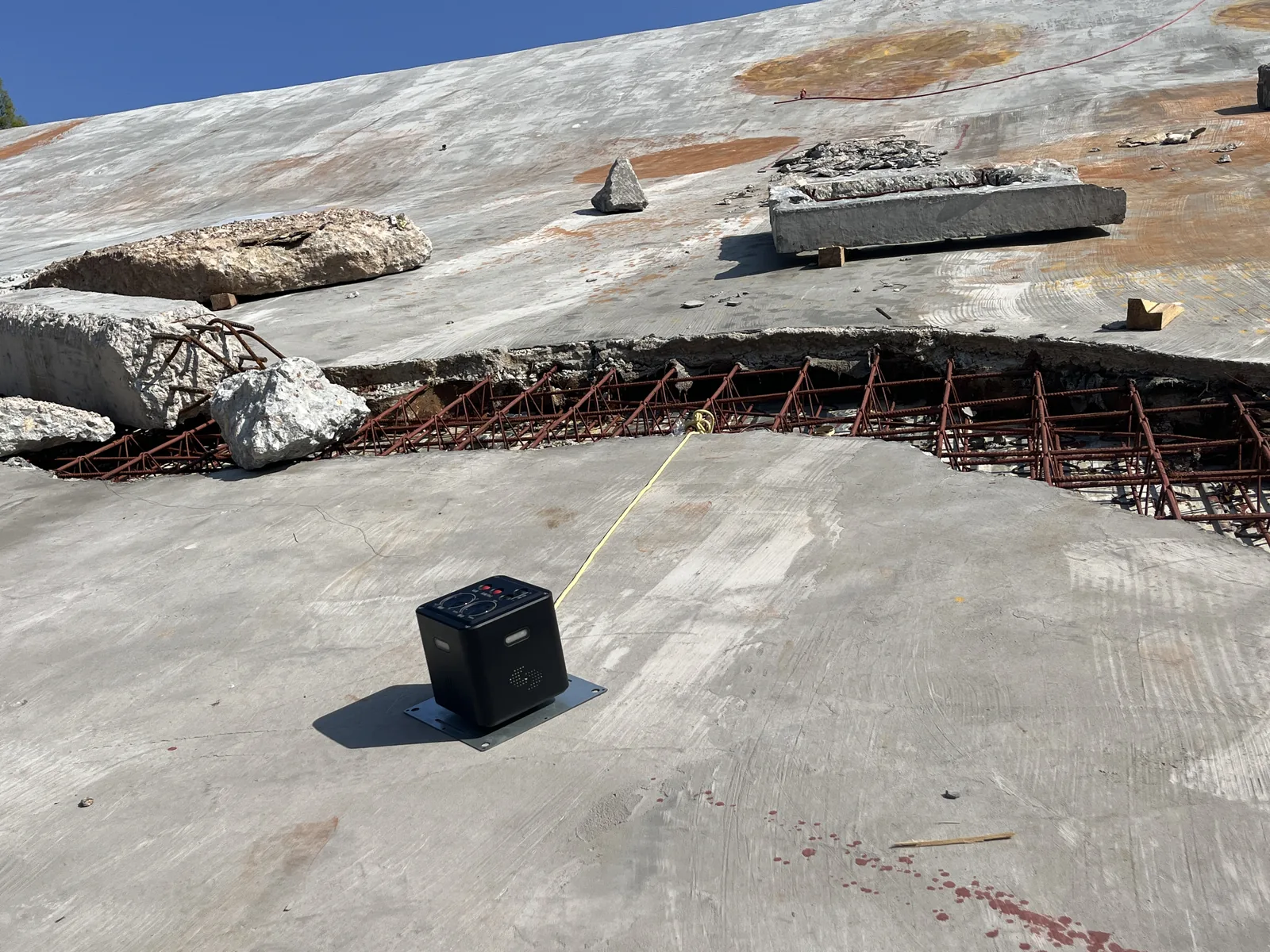
Figure: Rope-secured node on a cracked, tilted concrete slab with exposed rebar — a typical landslide / debris deployment.
Damaged buildings after earthquake and fire
Cracked masonry and fire-weakened facades can be monitored simply by resting or fixing a node on the wall itself, tracking whether the damage is propagating before re-entry.
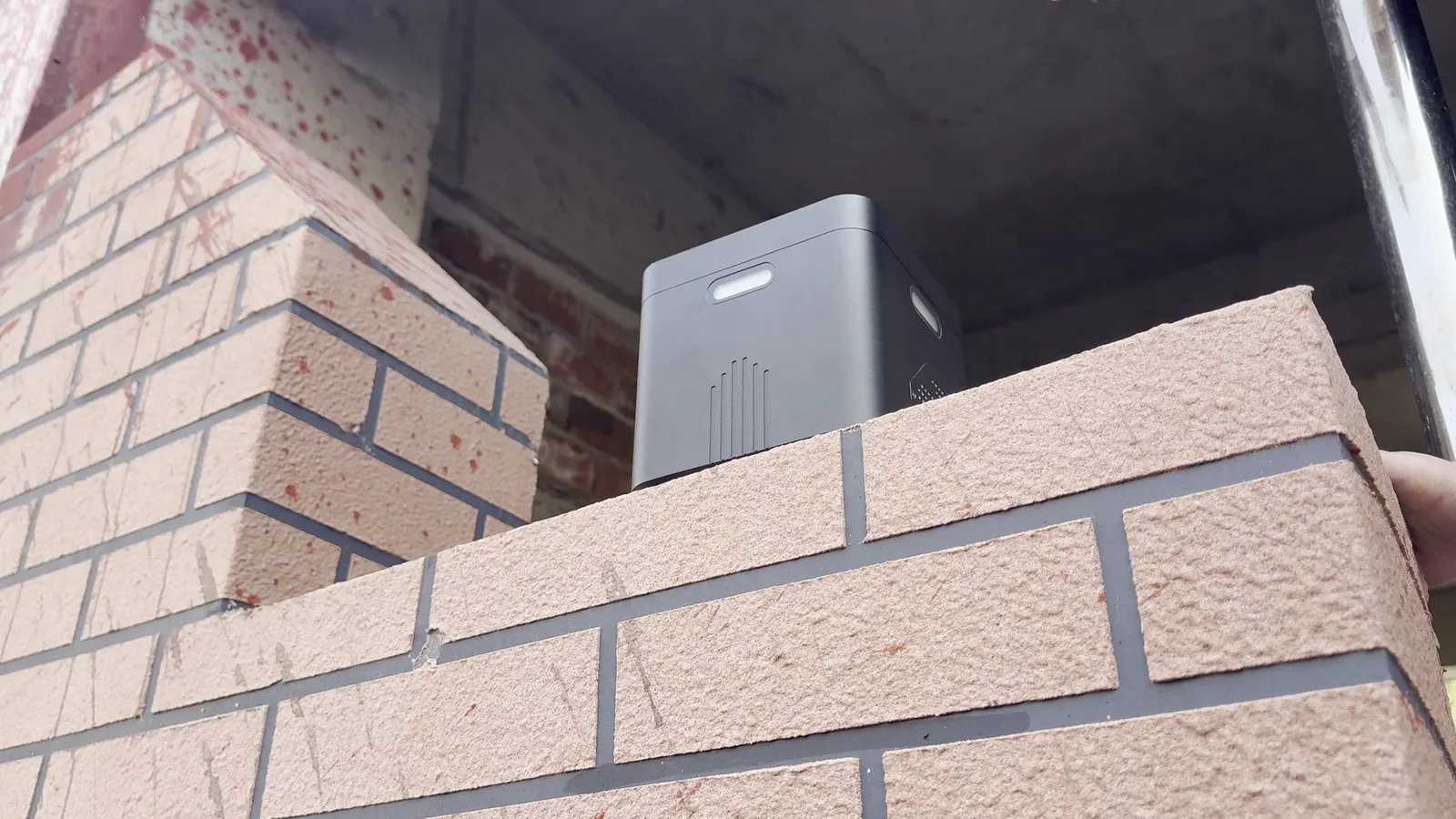
Figure: Node placed on a damaged brick facade to monitor wall movement after structural damage.
Hazardous chemical tanks and steel structures
At chemical leaks and warehouse fires, magnetic mounting lets crews monitor storage tanks and steel structures for tilting or deformation from a safe distance — early warning of tank overturn or rupture.
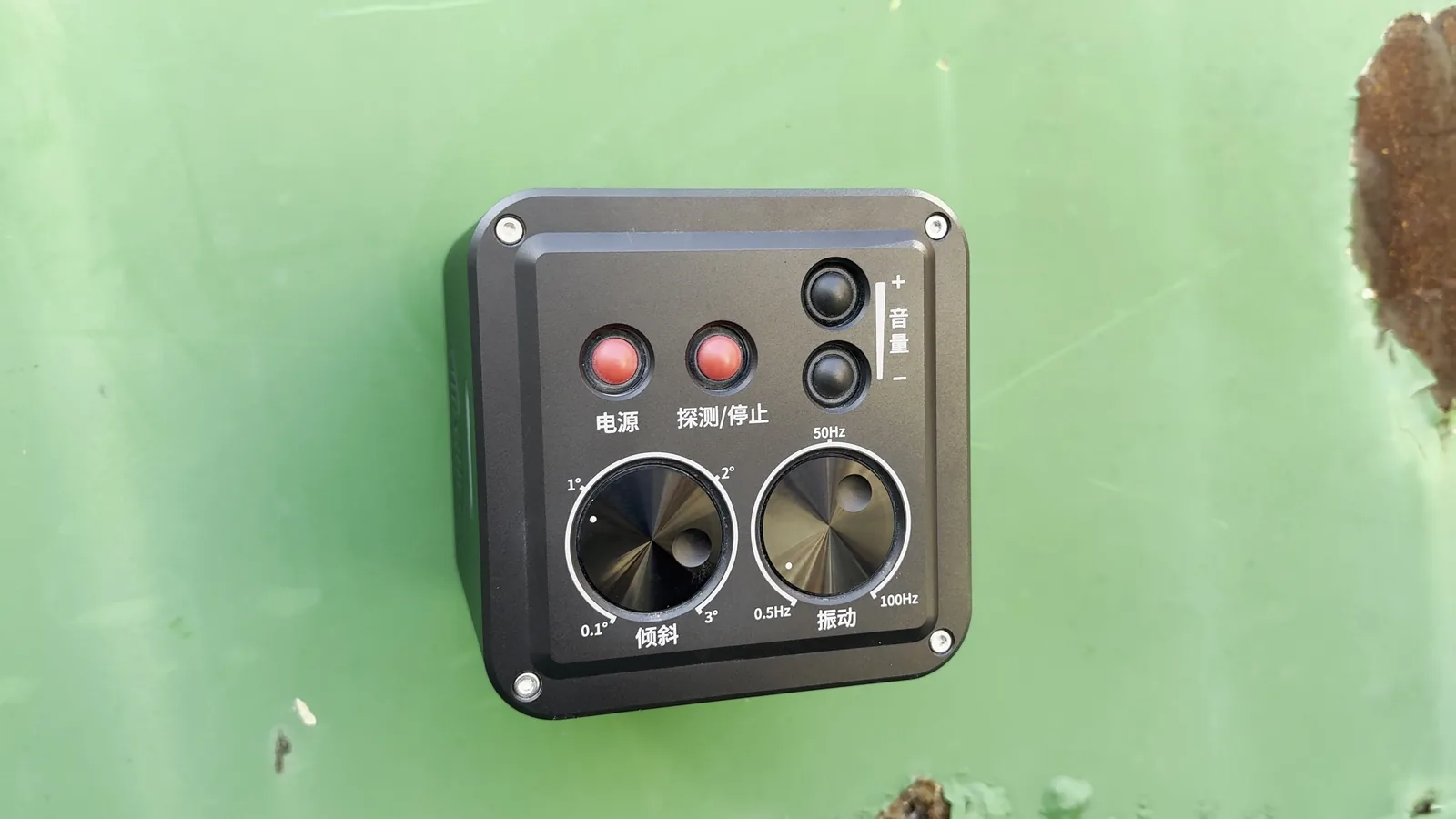
Figure: Instant magnetic attachment to a painted steel tank wall during hazardous-environment rescue training.
Field-Proven Rescue Technology from LSJ
The LS-D01 is manufactured by Beijing LSJ Technology Development Co., Ltd., a specialist in emergency-rescue detection and monitoring instruments with R&D centres in Wuhan and Shanghai. LSJ holds invention patents, utility-model patents, industrial-design patents and software copyrights, and its equipment is fielded by emergency rescue units across China.
- LSJ rescue monitoring equipment has been deployed in the Ya’an earthquake, the Quanzhou Xinjia Hotel collapse, the Sichuan Luding M6.8 earthquake and Gansu earthquake rescue operations.
- Every unit ships in a rugged hard case and is supported by 7×24 technical support, plus annual on-site inspection and operator training so teams are proficient before deployment.
- A built-in reverse-search function and pre-mission simulation test let crews verify every node before committing to a scene.
Frequently Asked Questions
Q: What is the LSJ LS-D01 and what does it monitor?
A: The LS-D01 is a wireless aftershock and structural stability alarm. It continuously monitors three-axis tilt (X/Y/Z, 360°, 0.1° accuracy, 0.01° resolution) and vibration (0.5 Hz–100 Hz) on damaged structures, and automatically triggers a 95 dB sound-and-light alarm when movement exceeds the set threshold.
Q: How many monitoring points can one system cover, and over what distance?
A: One 8-inch Android control terminal links up to four monitoring nodes using LoRa wireless, with a line-of-sight range of at least 550 metres. All linked nodes and alarms activate together when any single node trips.
Q: How fast can the LS-D01 be deployed on a rescue scene?
A: Deployment takes seconds per node, with no cabling or tools: attach it magnetically to steel, with the dual suction cup on smooth surfaces, with the strap on poles, with the rope tether on debris, or directly on timber shores and brackets. The node starts within about 7 seconds (factory tests measured 3.4 s).
Q: Can the alarm threshold be adjusted for different structures?
A: Yes. Thresholds are stepless and adjustable from 0.1° to 9.9°, with quick dial presets at 0.1°, 1°, 2° and 3°, supporting both fixed alarm values and fully custom values set on the node or the touchscreen terminal.
Q: How does the system avoid false alarms?
A: The first reading when monitoring starts is stored as the baseline angle; an alarm fires only when a later reading deviates beyond the configured alarm precision. Measurement and alarm precision are tuned for real field conditions to suppress nuisance alarms.
Q: How long does the battery last, and can it operate in extreme temperatures?
A: The node runs for 10 hours on its built-in 3.7 V Li-ion battery and operates from -20 °C to +60 °C (storage -40 °C to +70 °C). The terminal carries an IP65 rating and works across the same -20 °C to +60 °C range.
Q: Which rescue scenarios is the LS-D01 designed for?
A: Earthquake aftershock monitoring, building and tunnel collapse rescue, fire-scene structural monitoring, explosion scenes, landslides and debris flows, and hazardous-chemical tank and warehouse monitoring — anywhere rescue teams need continuous, remote structural stability warning.
Q: What is included in the standard kit?
A: Each kit contains the monitoring node(s) with integrated sound-and-light alarm, the 8-inch EM-T81X Android control terminal, antennas, dual suction-cup mount, magnetic / strap / rope-tether mounting accessories, a dedicated charger and a rugged hard transport case with custom foam.
Protect every rescue entry with continuous structural monitoring
Request a quotation, kit configuration and delivery schedule for the LSJ LS-D01 from LSJ Technology.