
 EN

- Description

Is there a problem?
Please contact us to serve you!


- Description
- Parameter
- Recommended Products
Description
LSJ TWR-III 3D Through-Wall Radar Life Detector — See Who Is Behind the Wall Before You Enter
The LSJ TWR-III is a tactical-grade portable 3D through-wall radar (UWB radar life detector) that locates moving and stationary people through concrete and solid-brick walls. Designed for military, police, SWAT, border-defense and search-and-rescue teams, it detects moving targets up to 20 m and stationary targets up to 10 m away, displays exact 3D X/Y/Z coordinates (≤1 m error) on an 8-inch wireless terminal, tracks at least 3 targets simultaneously, and recognizes standing/crouching postures — with a detection probability of at least 90%.
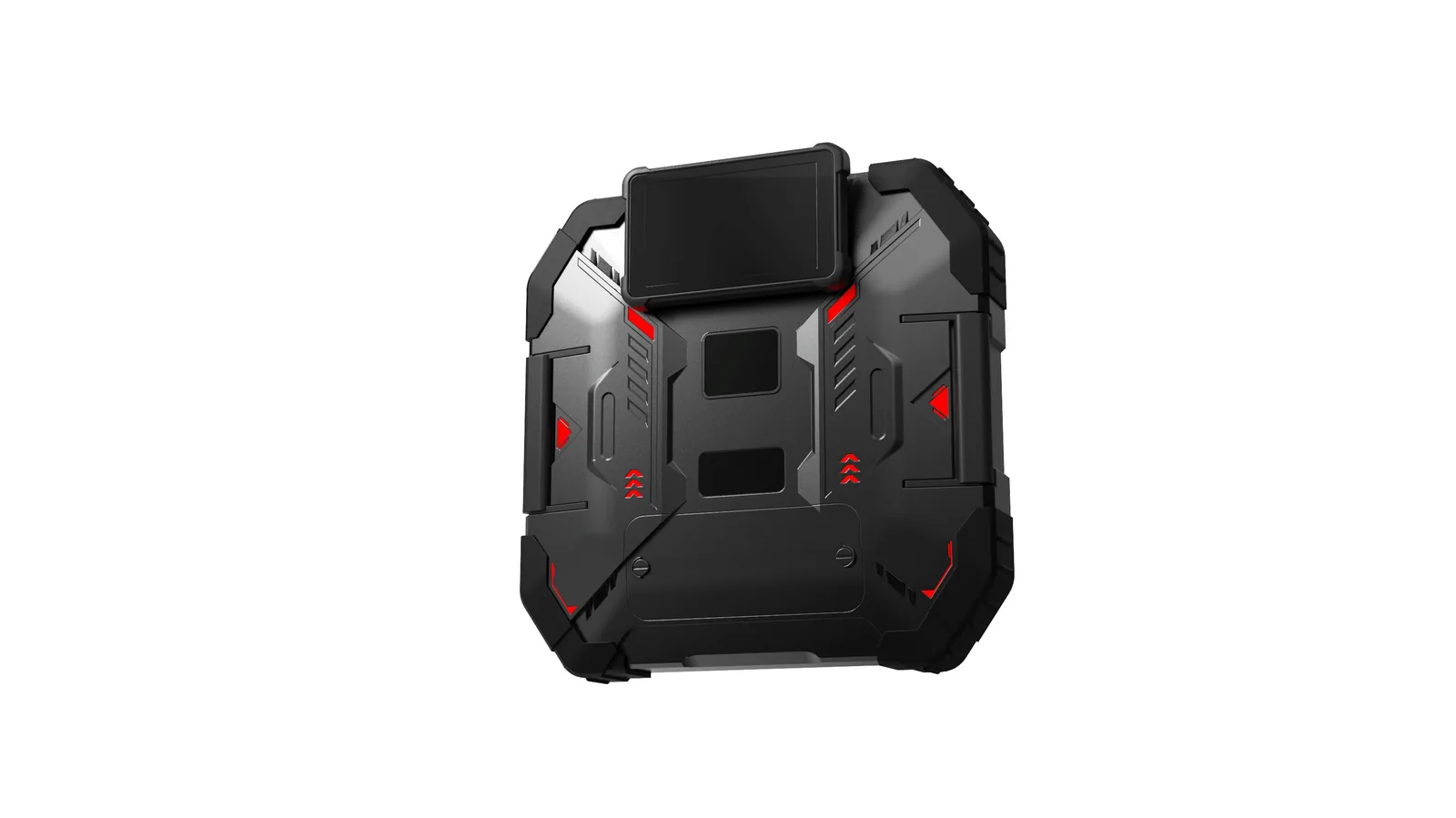
Figure 1: The LSJ TWR-III 3D through-wall radar life detector with its integrated 8-inch display & control terminal.
20 m
Moving Targets
10 m
Static Targets
≤1 m
3D Position Error
≥120°
Detection Angle
≥90%
Detection Rate
The Problem: Every Second Behind a Blind Wall Costs Lives
During counter-terrorism raids, barricade and hostage incidents, armed-police reconnaissance and post-disaster searches, walls and rubble deny line of sight. Teams that enter without knowing the number, location and posture of the people inside face unacceptable risk:
- Unknown occupancy — no reliable way to tell if a room or corridor holds people, or how many.
- Static victims missed — optical and thermal cameras cannot see through concrete, brick or smoke; unconscious or crouching persons give no visual cue.
- No spatial reference — distance-only beeps cannot tell commanders where a target sits in X/Y/Z space, slowing room-clearing and rescue decisions.
- Heavy, slow equipment — multi-person setup and fragile cabling delay deployment in fast-moving tactical and emergency timelines.
How the LSJ TWR-III Through-Wall Radar Works
The TWR-III is built around a low-power Ultra-Wideband (UWB) sensor. The flat rear antenna panel is placed flush against the wall; UWB pulses penetrate common masonry while remaining safe for operators and bystanders, then dedicated signal-processing and human-posture-recognition algorithms turn the echoes into an intuitive 3D tactical picture.
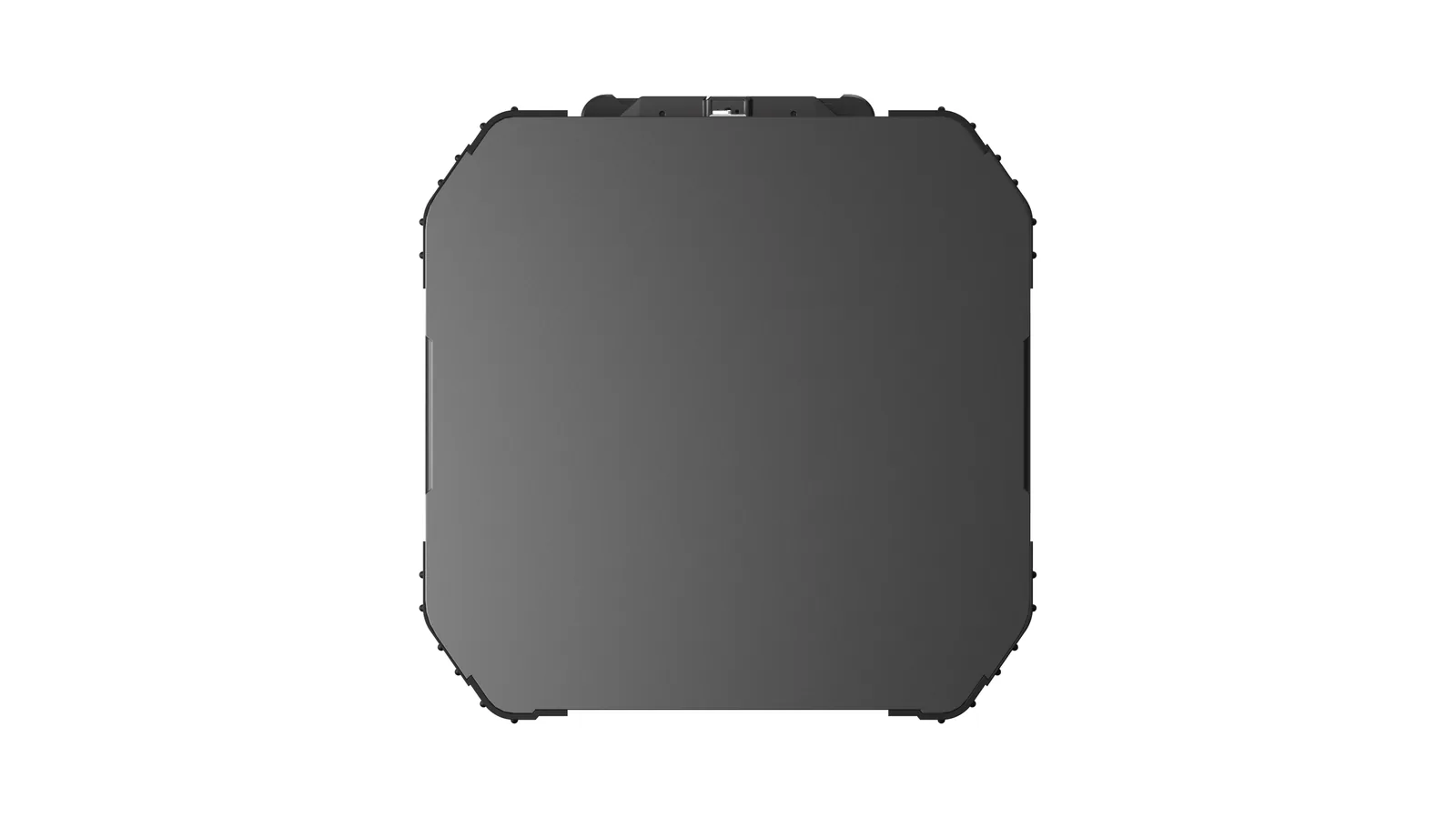
Figure 2: The flat rear UWB antenna panel — the side held flush against the wall during scanning.
- Transmit — penetrate the wall. The radar host emits low-power UWB electromagnetic signals that pass through concrete, solid brick and common masonry walls to reach the space beyond.
- Receive — filter the clutter. Echoes reflected from human bodies are captured in real time while wall reflections and environmental noise are suppressed by clutter-filtering algorithms.
- Locate — 3D X/Y/Z imaging. Time- and frequency-domain analysis computes each target’s three-dimensional position and renders it as a live 3D grid image with a real-time motion trajectory.
- Classify — posture recognition. A human-pose algorithm compares echo signatures to distinguish standing from crouching persons (≥80% recognition within 5 m), so commanders see not only where people are, but what state they are in.
The result is shown on the 8-inch terminal as a live 3D scene: target count, X/Y/Z coordinates, movement tracks and posture tags update continuously, with moving targets reported within 5 s and stationary targets within 10 s.
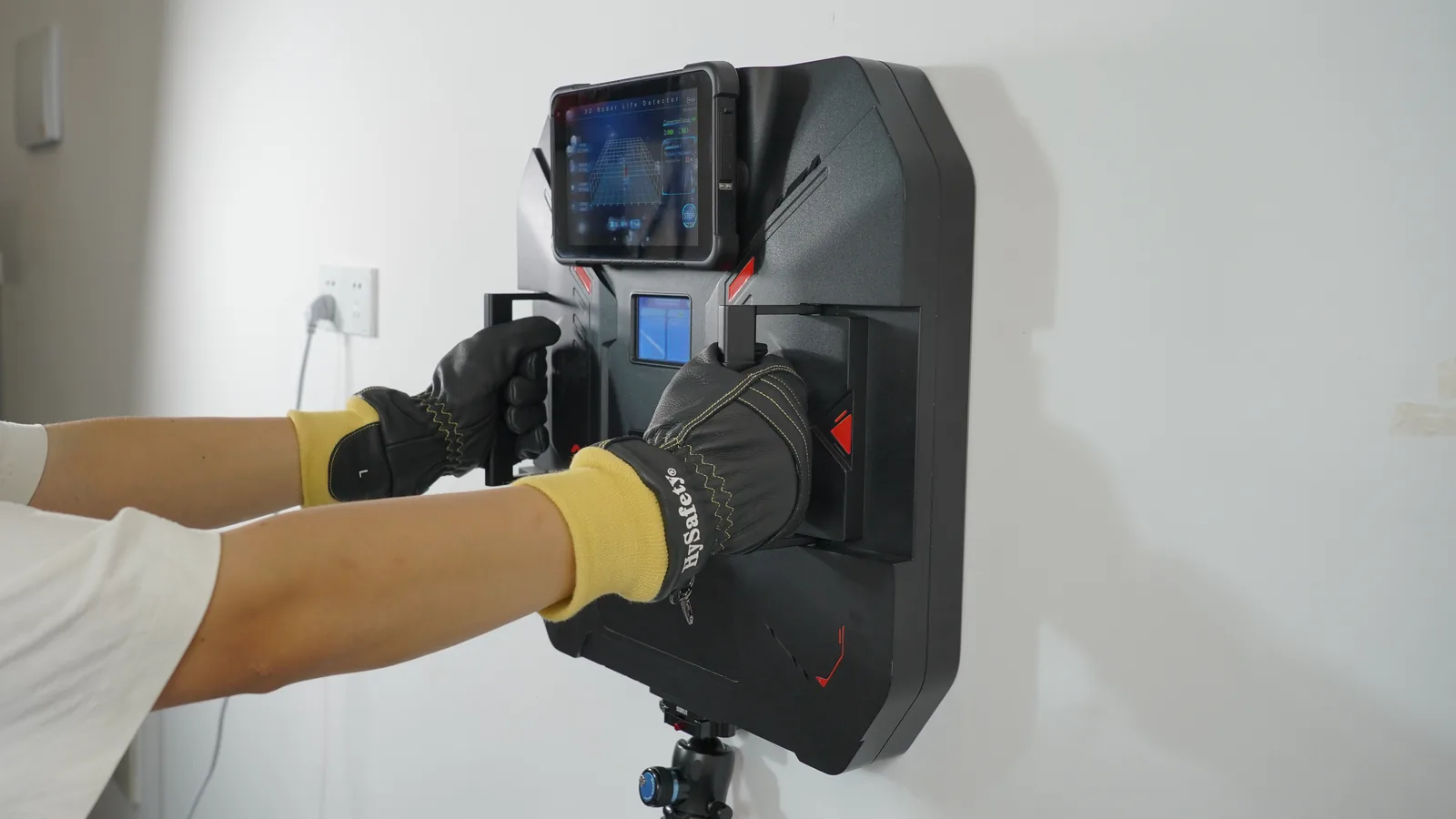
Figure 3: Live wall scan — the English-language 3D interface shows target count and X/Y/Z coordinates in real time.
Core Advantages of the TWR-III Life Detection Radar
Long-range, wall-penetrating detection
Moving targets at ≥20 m, stationary living persons at ≥10 m, through concrete solid-brick masonry — with a ≥120° wide field of view.
True 3D positioning, not just distance
Live X/Y/Z coordinates with ≤1 m horizontal accuracy, 3D visualization and moving-target trajectory tracking for at least 3 simultaneous targets.
Fast, trustworthy alarms
Alerts within ≤5 s (moving) / ≤10 s (static); ≥90% detection probability and a controlled ≤10% false-alarm rate reduce hesitation and wasted entries.
Lightweight single-soldier portability
Host weighs ≤8 kg including battery and terminal; compact 505×495×120 mm footprint, dual grip handles, hard transit case — one operator carries and deploys it.
Wireless 8-inch command display
The ≤1 kg, 8-inch terminal links wirelessly over ≥20 m line-of-sight, showing position, count, trajectory, posture and battery — keep the radar on the wall and the screen with the team.
Built for harsh field conditions
IP55 dust and water-jet resistance, shock-absorbing corner armor and wide-temperature tolerance for high-temperature, low-temperature and dusty outdoor operations.
Two Deployment Modes, One Operator
A single operator can run the complete scan. The wireless display terminal stays with the operator or commander up to 20 m away, while the radar host works in either of two modes.
Mode 1 — Tripod-mounted stand-off monitoring
Set the TWR-III on its lightweight tripod facing a doorway, corridor or structure for hands-free, continuous monitoring during barricade incidents and perimeter control — the team stays behind cover while the radar watches the wall.
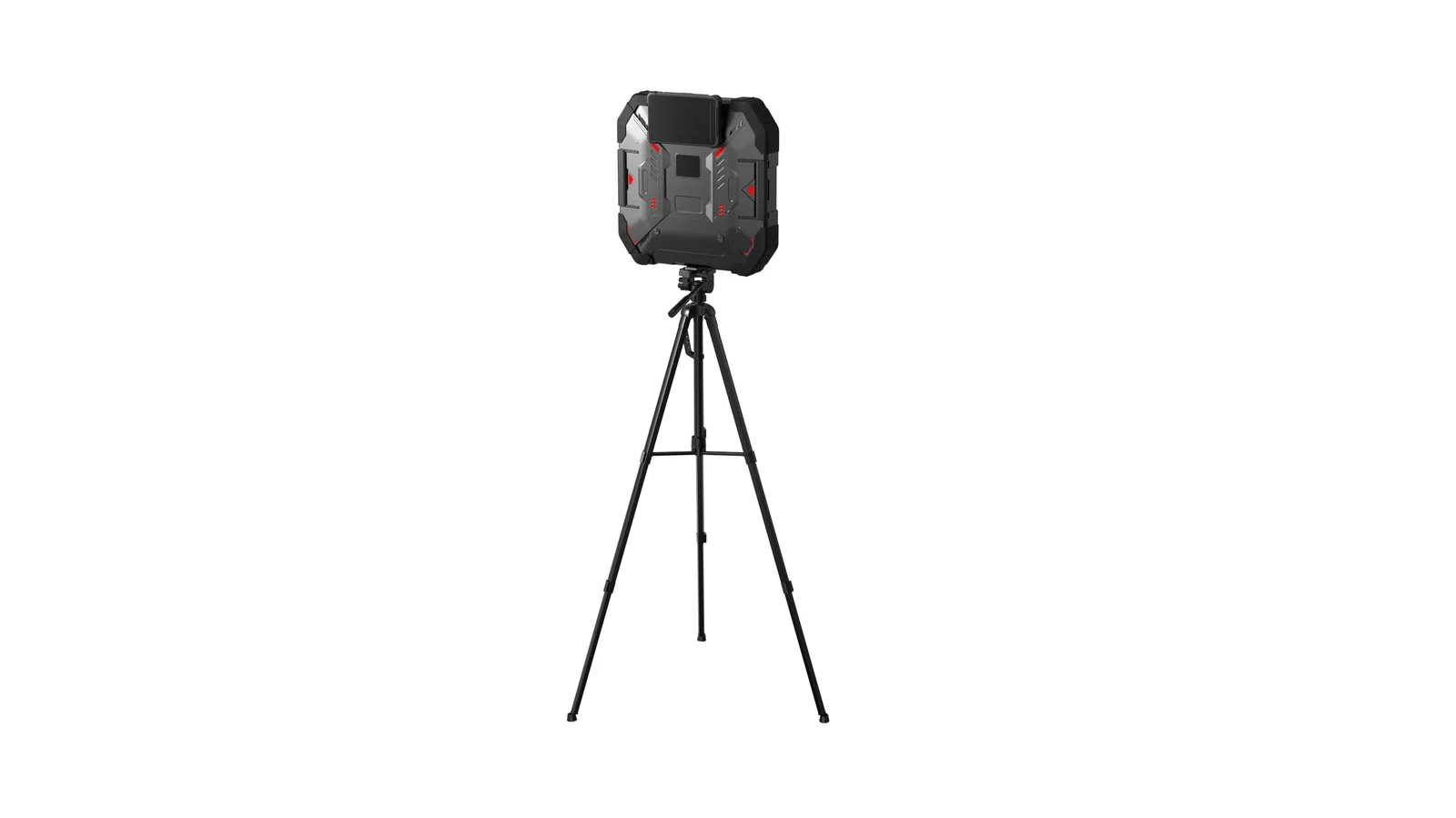
Figure 4: Mode 1 — tripod deployment for hands-free stand-off scanning of a doorway or structure.
Mode 2 — Handheld wall-press scanning
For rapid room-by-room movement, hold the host flush against the wall with the dual grip handles for immediate scanning, then move to the next position — no cabling, no setup time between rooms.
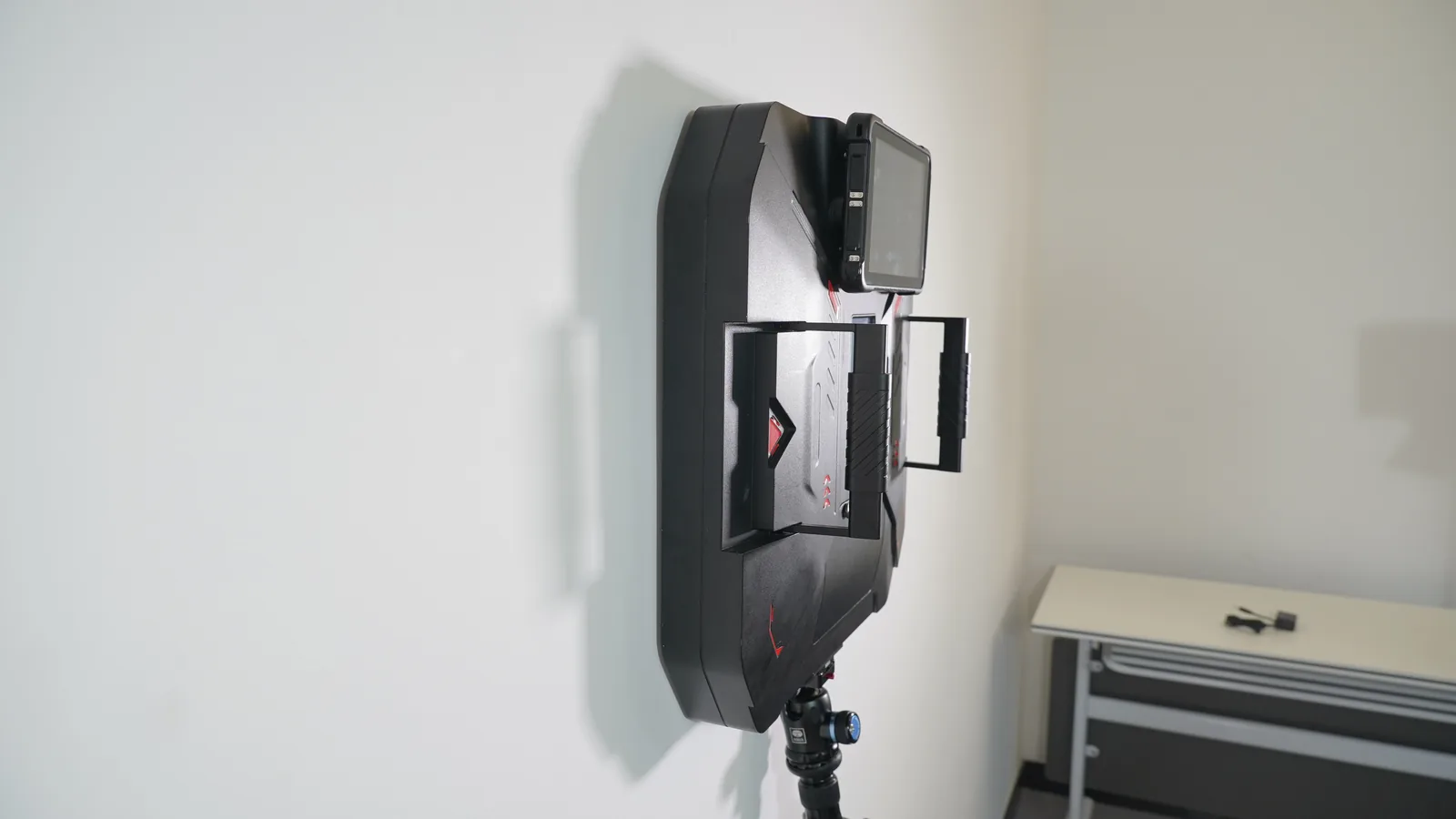
Figure 5: Mode 2 — handheld dual-grip operation pressed directly against the wall for room-by-room movement.
Ready Out of the Case: Standard Configuration
Every TWR-III system ships as a complete, mission-ready kit. The figure below shows every item listed in the delivery scope:
- Radar host with integrated battery
- 8-inch display & control terminal
- Lightweight deployment tripod
- Hard waterproof carrying case
- 1 × spare battery
- Battery charger and cabling
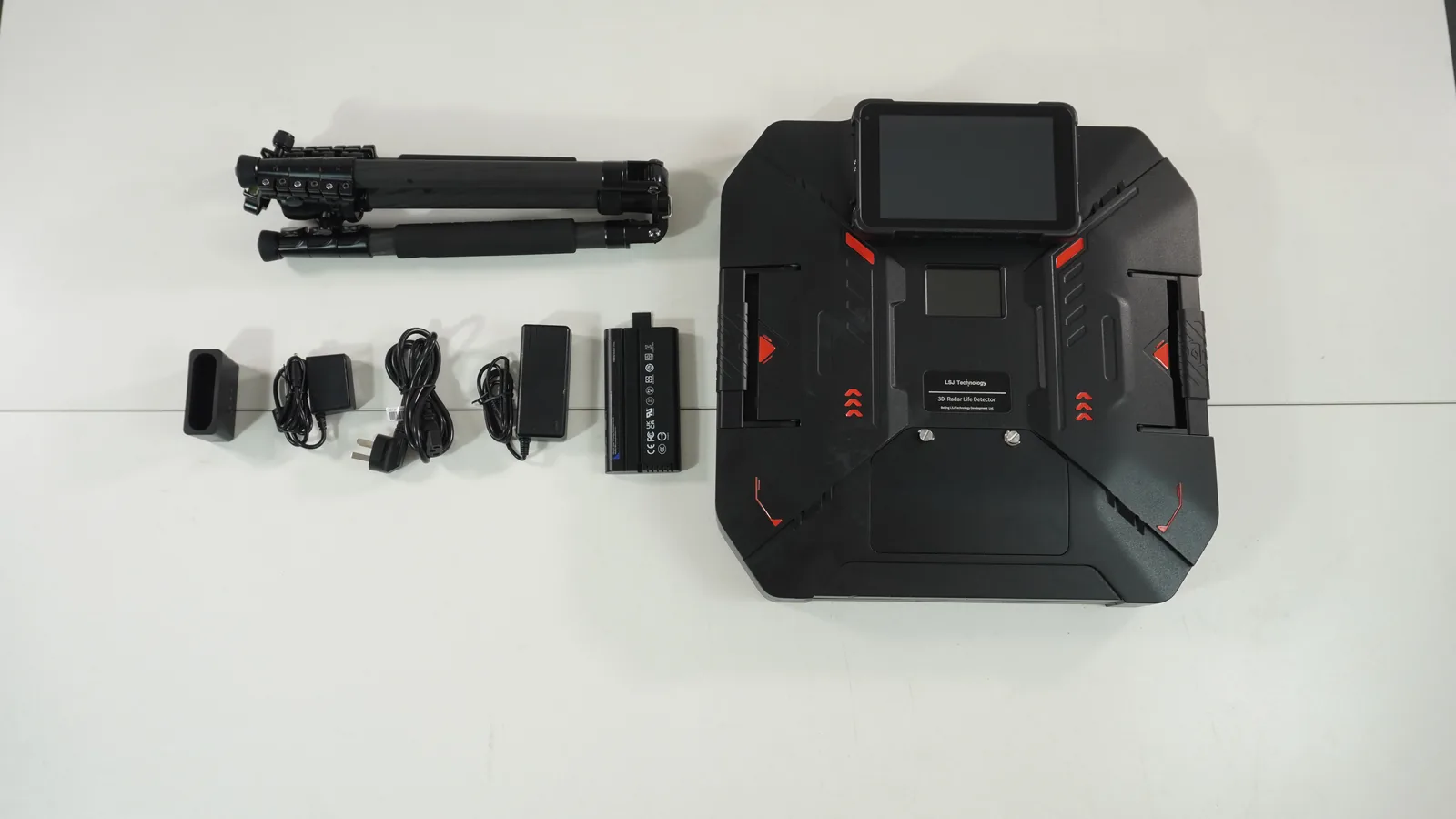
Figure 6: Standard delivery kit — radar host, 8-inch terminal, tripod, spare battery, charger and cabling.
For transport and storage, every component is secured in a foam-fitted hard-shell transit case that protects the radar from dust, rain and impact in vehicle transport and field carry.
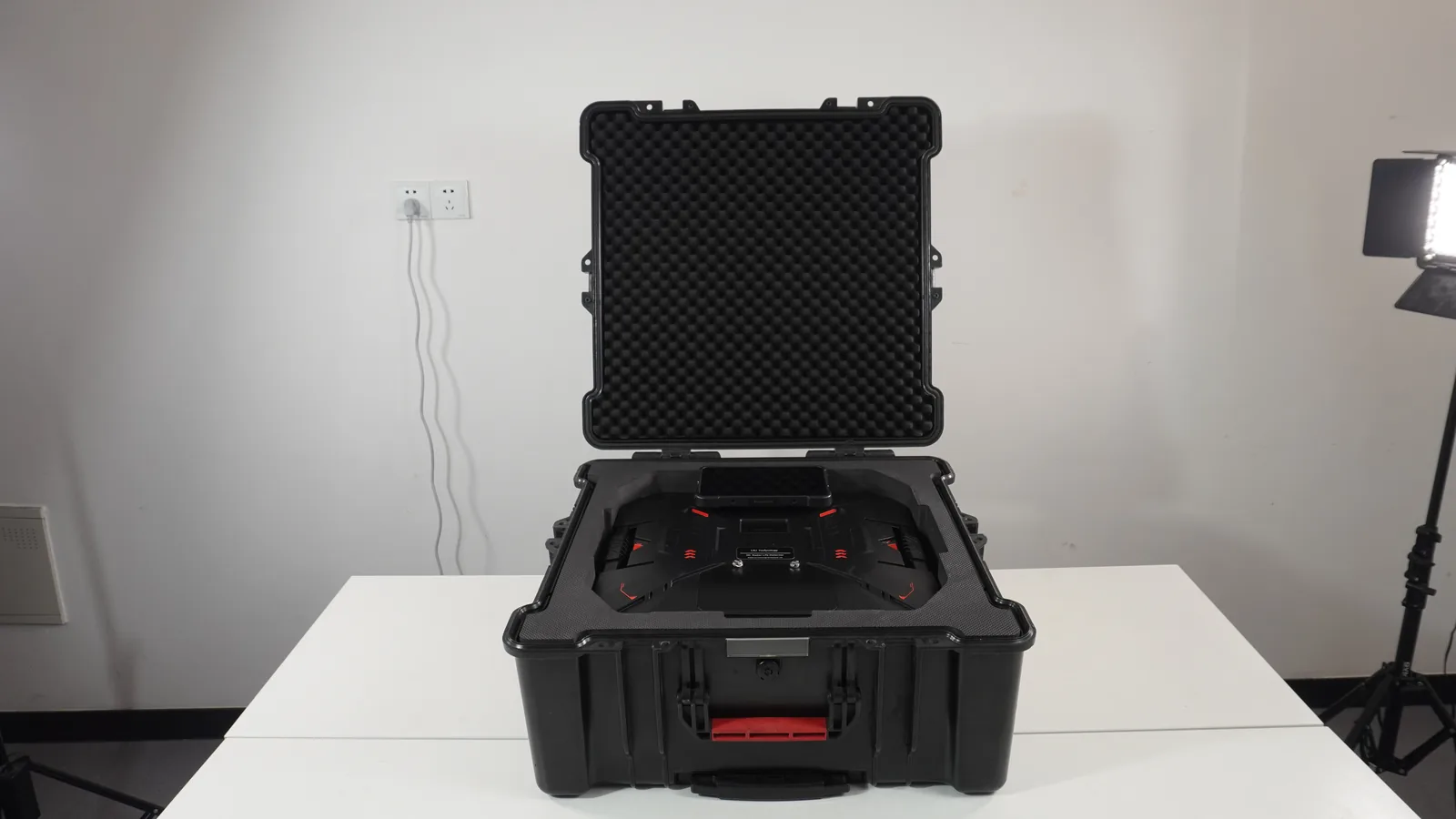
Figure 7: The complete system travels in a waterproof hard-shell case with custom protective foam.
Applications: Who Uses the LSJ TWR-III
Counter-Terrorism & High-Risk Entry
Confirm room occupancy, count and posture before breaching — reduce surprise and protect assault teams.
Hostage & Barricade Incidents
Stand-off monitoring through walls tracks suspect and hostage movement for negotiation and tactical planning.
Armed-Police Tactical Reconnaissance
Rapid, silent reconnaissance of enclosed spaces during raids, arrests and building-clearance operations.
Border & Perimeter Control
Detect persons hidden behind walls, inside structures or confined spaces at checkpoints and border facilities.
Urban Search & Rescue (USAR)
Locate stationary living persons after earthquakes, collapses and structural failures where vision and thermal imaging cannot reach.
Fire & Emergency Rescue Survey
Scene assessment through smoke, fire-rated walls and debris before committing rescue personnel inside.
Frequently Asked Questions About the LSJ TWR-III
Q: What is the LSJ TWR-III, and what can it detect through walls?
A: The LSJ TWR-III is a portable Ultra-Wideband (UWB) 3D through-wall radar life detector. It detects both moving and stationary living persons behind concrete, solid-brick and common masonry walls, showing their number, 3D X/Y/Z position, motion trajectory and standing/crouching posture on an 8-inch wireless display.
Q: How far can the TWR-III detect people, and how accurate is it?
A: Through standard concrete solid-brick walls, it detects moving targets at distances up to 20 m or more and stationary targets up to 10 m or more, across a field of view of at least 120°. Three-dimensional positioning error is no more than 1 m on the horizontal azimuth (X) and range (Y) axes.
Q: Can it detect people who are not moving, such as an unconscious victim?
A: Yes. The TWR-III is a life detector, not only a motion sensor: it acquires stationary human targets within 10 m (response time ≤10 s) and classifies standing versus crouching postures with a recognition rate of at least 80% within 5 m.
Q: How many people are needed to deploy it, and how long does setup take?
A: The system is designed for a single operator. The ≤8 kg host can be held against a wall with its dual grip handles for immediate scanning, or mounted on the included tripod; the 8-inch terminal connects wirelessly, with no signal cables between the operator and the radar.
Q: What wall materials can the TWR-III penetrate?
A: The UWB signal penetrates concrete, solid brick and other common masonry building walls. Actual range varies with wall thickness, reinforcement and internal clutter; LSJ provides application testing support for specific building types.
Q: Can the display be operated away from the radar host?
A: Yes. The 8-inch display & control terminal weighs no more than 1 kg and communicates with the radar host wirelessly over at least 20 m in line-of-sight conditions, letting the team view target data from a covered position while the radar stays on the wall.
Q: How reliable are the alarms in a cluttered environment?
A: Clutter-filtering and target-recognition algorithms deliver a human-target detection probability of at least 90% and a false-alarm rate no higher than 10%. Moving targets are typically reported within 5 s and stationary targets within 10 s.
Q: What environmental protection does it have, and what is included in the package?
A: The host is rated IP55 (dust-protected, water-jet resistant) with shock-absorbing armor and wide-temperature tolerance. The standard package includes the radar host with battery, 8-inch terminal, tripod, hard carrying case, one spare battery and charger.
Q: Is the TWR-III available for export, and can it be supplied under our own brand?
A: Yes. LSJ Technology supplies the TWR-III to defense, law-enforcement and rescue customers worldwide and supports OEM/ODM branding. Contact the LSJ export team for configuration, lead time, export documentation and dealer pricing.
Request Pricing & a Live Demo of the LSJ TWR-III
Tell us your wall type and operational scenario — our engineers will confirm configuration, export documentation and delivery schedule.
SEND INQUIRY NOWLSJ Technology • 3D Through-Wall Radar Life Detector • Model: TWR-III
LSJ TWR-III Technical Specifications
Core parameters of the LSJ TWR-III 3D through-wall radar life detector. All figures are manufacturer test values for concrete solid-brick masonry; performance varies with wall thickness and structure.
Note: Detection distance is measured through standard concrete solid-brick masonry and varies with wall thickness, reinforcement density and internal clutter. Contact LSJ Technology for application testing on your specific wall type.