 EN
EN
- Description

Is there a problem?
Please contact us to serve you!
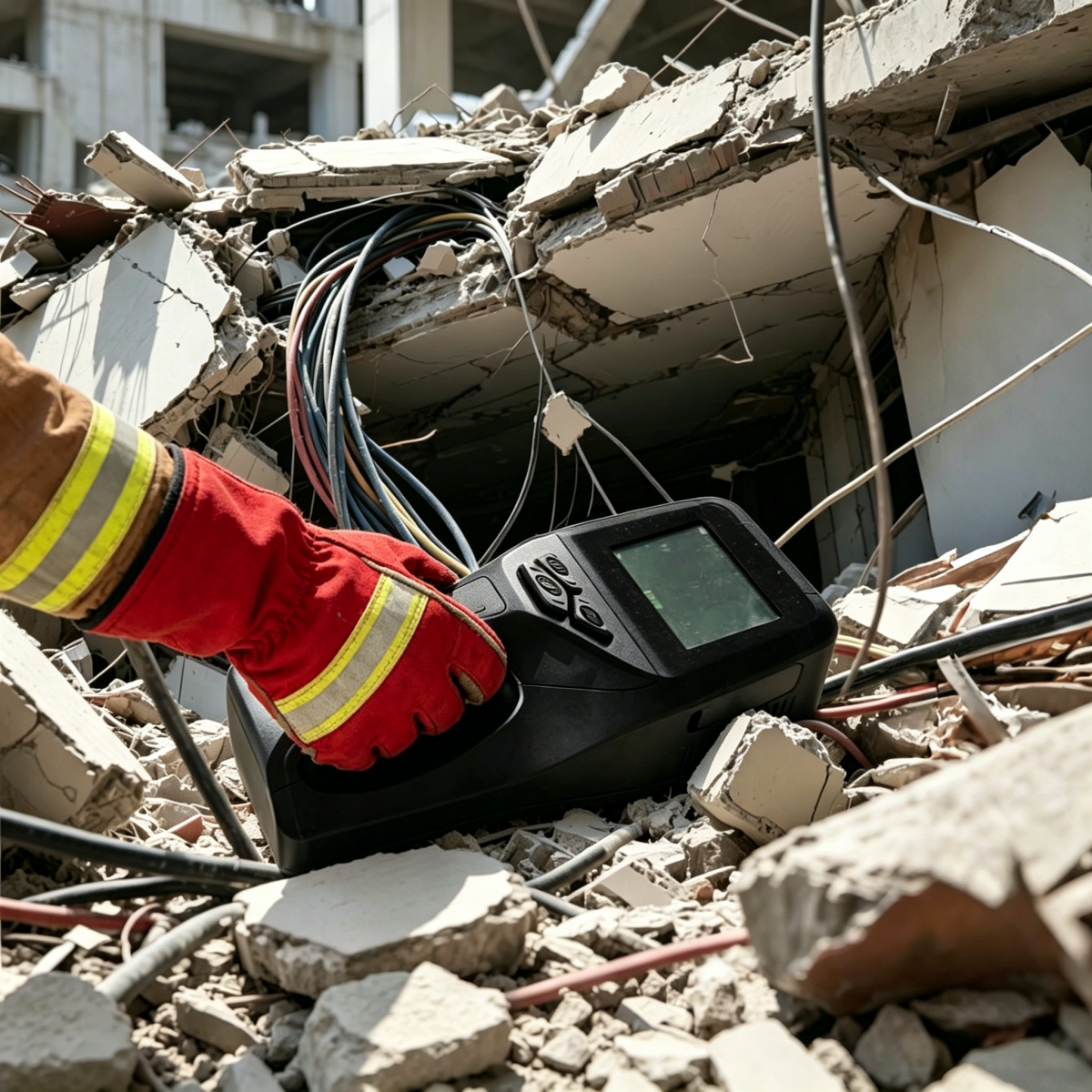
Handheld Mini Through Wall Imaging System
Through-Wall L-Band Radar + 384x288 Uncooled Thermal Imager + 1080P Low-Light Camera in One <=3 kg Handheld Unit
- Description
- Parameter
- Recommended Products
Description
One Handheld Unit, Two Detection Modes for the Golden 72 Hours
After an earthquake, explosion or building collapse, survival is measured in hours: rescue statistics show trapped-victim survival rates falling from 81% on day one to 7.4% on day five. Narrow rubble voids often exclude both rescuers and search dogs, while smoke, darkness and dust strip away normal vision. The LSJ Multi-Band Composite Life Detector answers that gap by fusing an L-band through-wall radar life detector, an uncooled thermal imaging life detector and a 1080P low-light camera in a single ≤3 kg handheld body.
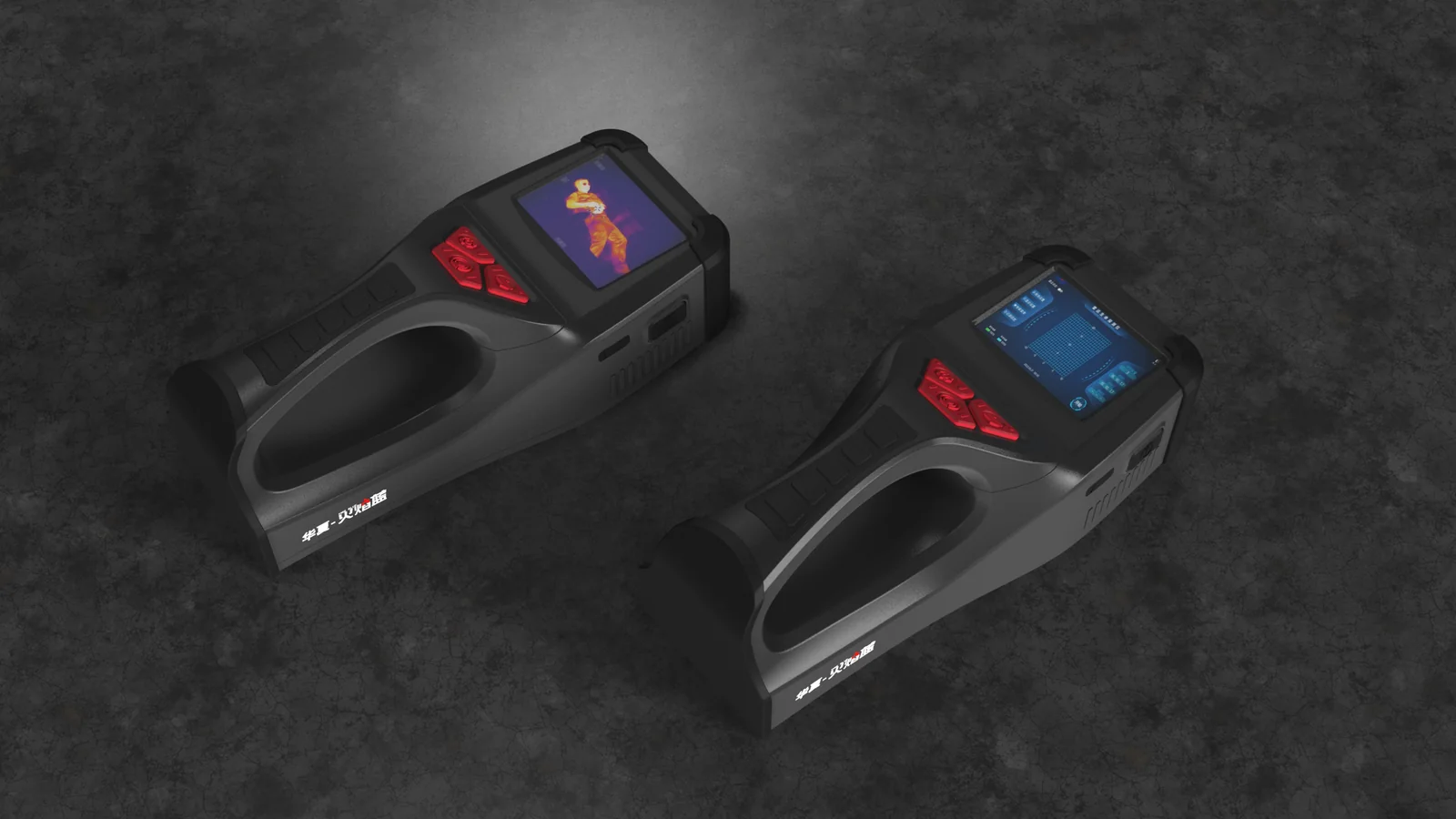
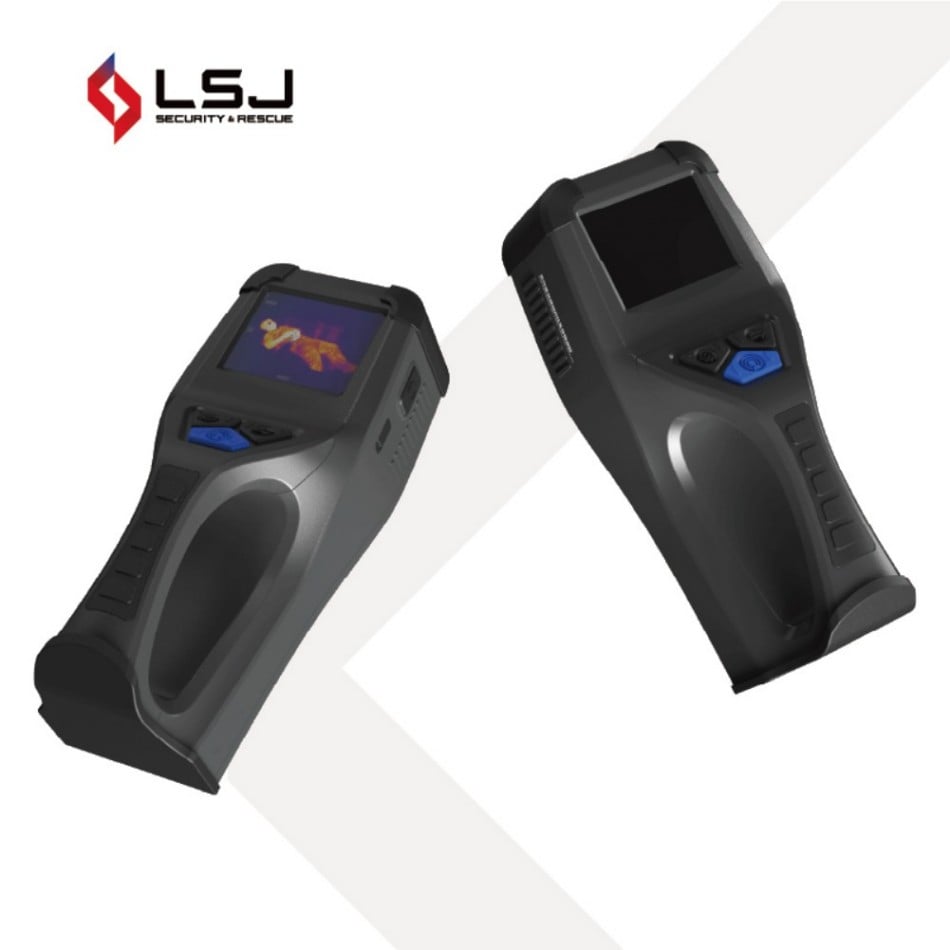
Figure: Two LSJ multi-band life detectors in thermal mode (victim heat signature) and radar mode (target grid). Modes switch with one key press — no module swapping on the rescue site.
One operator can run a rapid surface thermal sweep, then press the same unit flat against a wall or rubble pile to scan for buried, motionless victims. The 3.5-inch display shows target coordinates, target count, live video, battery and status on one screen, keeping decisions fast inside the critical first 72 hours.
L-Band Radar Sees Through Rubble Where Eyes and Dogs Cannot Reach
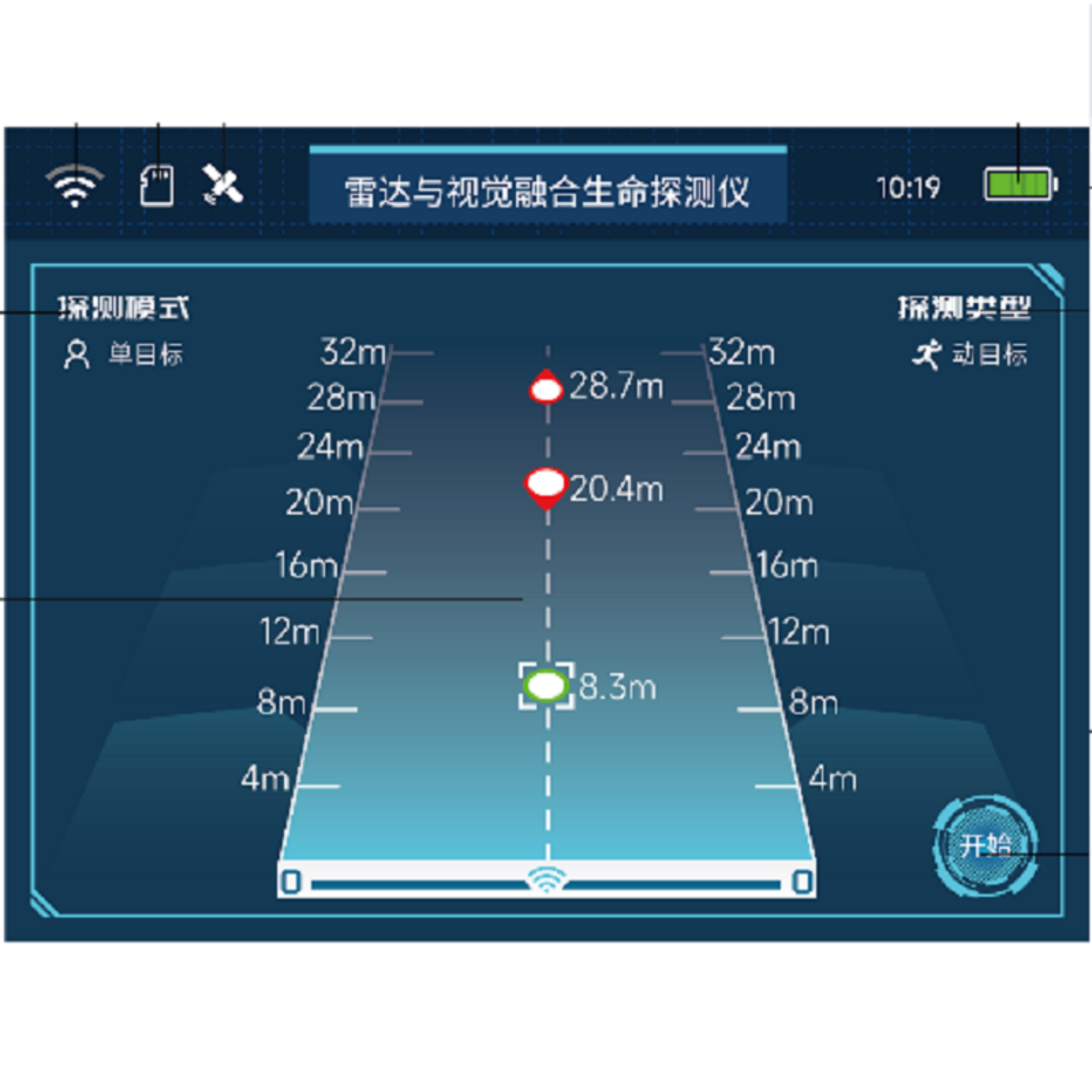
The radar module uses a low-power L-band continuous-wave architecture tuned for high target stability and a low false-alarm rate. Through a solid brick wall at least 24 cm thick, it locates moving targets at 12 m or more and stationary, breathing victims at 10 m or more, with location accuracy within ±30 cm and a target recognition probability above 90%. A 120° (±60°) detection cone covers an entire room from one stance, and both moving and static targets are tagged with distinct symbols for strong anti-interference in cluttered collapse sites.
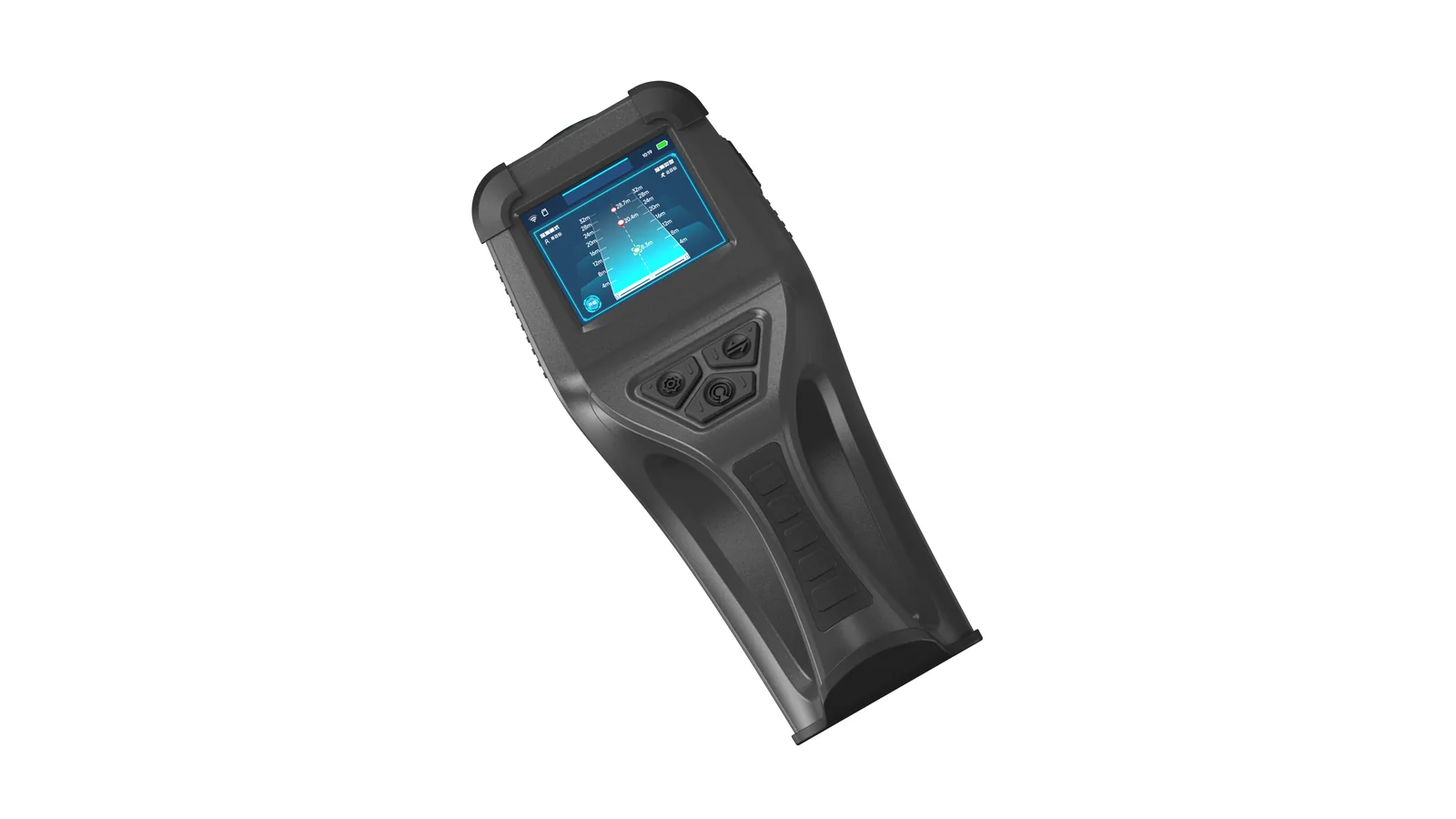
Figure: Radar interface with distance rings to 32 m, live target markers and the ±60° scanning cone. Coordinates and target count update on the same screen as the video feed.
Penetration adapts to the obstacle in front of the operator — three medium presets cover air, through-wall and rubble:
- Building walls, concrete and brick-mixed structures for urban collapse and hotel/building failure searches;
- Rock, soil and rubble with low moisture content for earthquake and landslide response;
- Open-air surface sweep for fast area screening before close-in penetration scans.
Moving targets are reported within 5 seconds; completely stationary, unconscious victims are detected by respiratory micro-motion within 20 seconds — no body movement required.
384×288 Thermal Imaging Cuts Through Smoke, Darkness and Fire
When smoke, dust or nightfall blinds the naked eye, the uncooled thermal module keeps the search moving. Its 384×288 detector with NETD ≤50 mK sensitivity resolves human heat signatures at long range, while a -20 °C to 1200 °C measurement range lets crews read fire-ground temperatures and stay clear of flashover and hot-zone hazards.
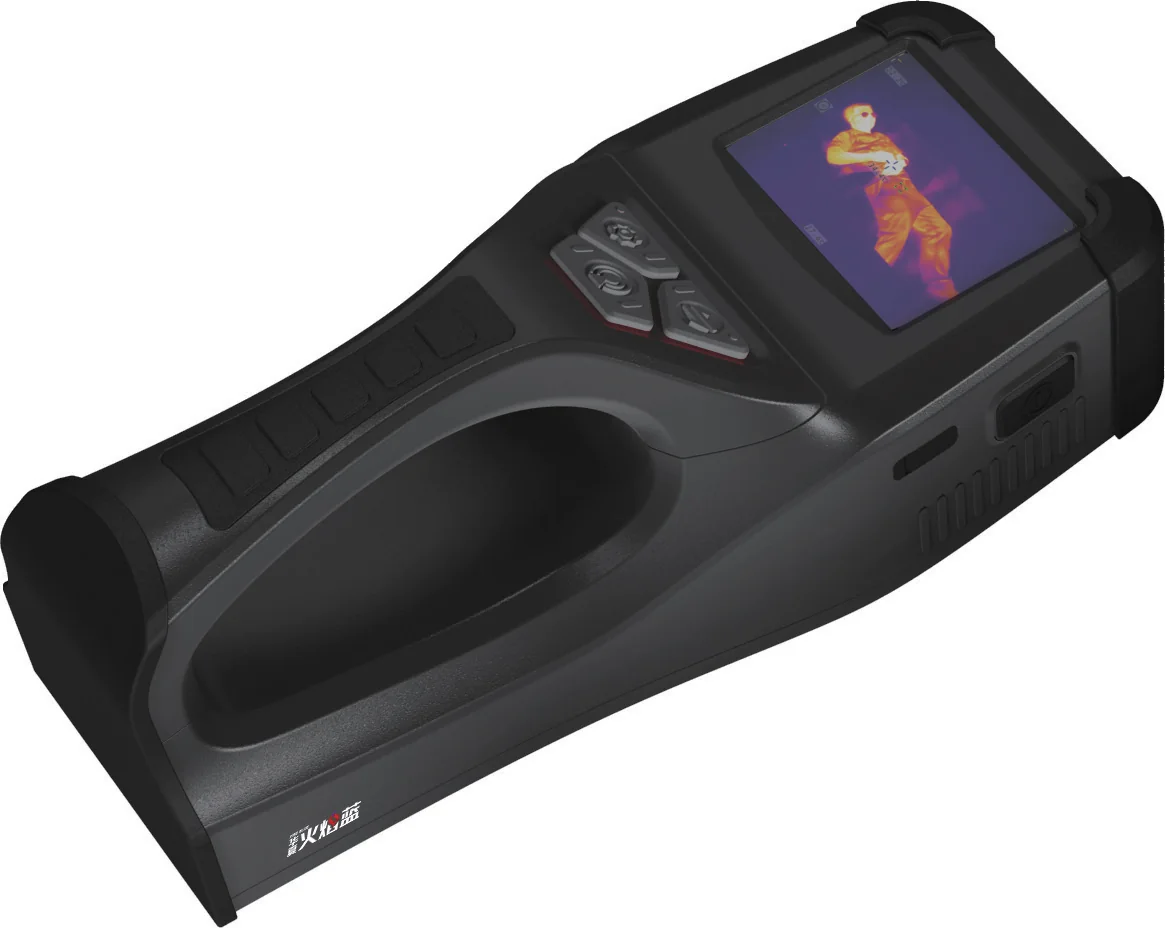
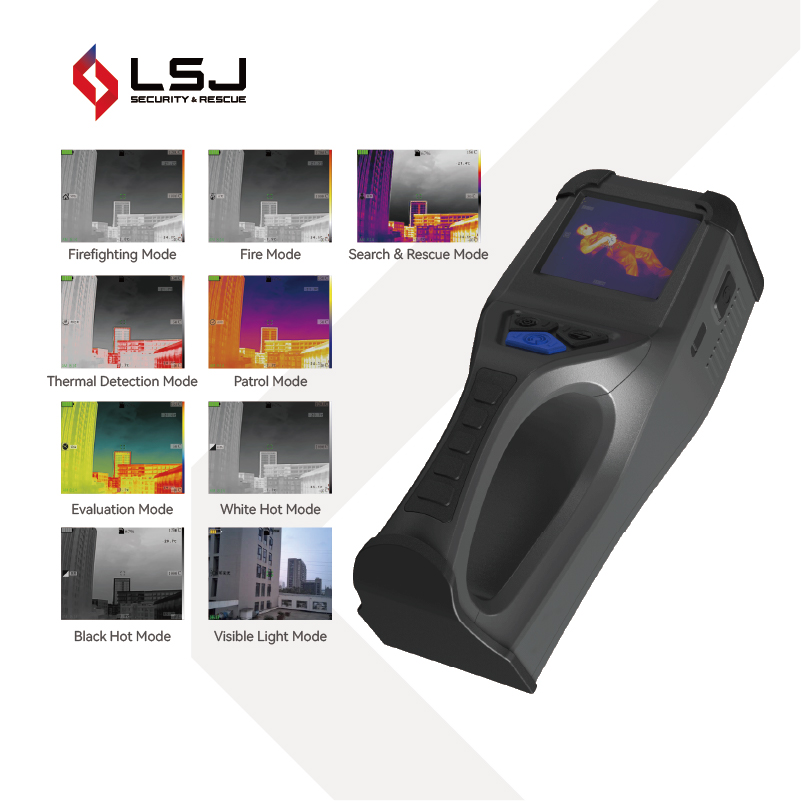
Figure: Thermal mode rendering a trapped person on the 3.5-inch display. Automatic maximum/minimum temperature pointers lock onto hot and cold spots for heat-source tracking in fire scenes.
Five imaging profiles match each phase of an operation — firefighting, fire, search-and-rescue, heat-detection and fused multi-band — with center-spot, maximum and minimum temperature readouts, 2×/4× digital zoom and one-key photo or video capture for command records.
Three Sensors, One Screen: Multi-Band Fusion in Real Time
Radar, thermal and visible-light channels are deep-integrated into one housing rather than bolted together as separate instruments. The sensor head pairs the uncooled infrared lens with a low-noise, low-light CMOS camera above 1920×1080 resolution, so the same screen can present pure infrared, pure visible or fused imagery depending on visibility.
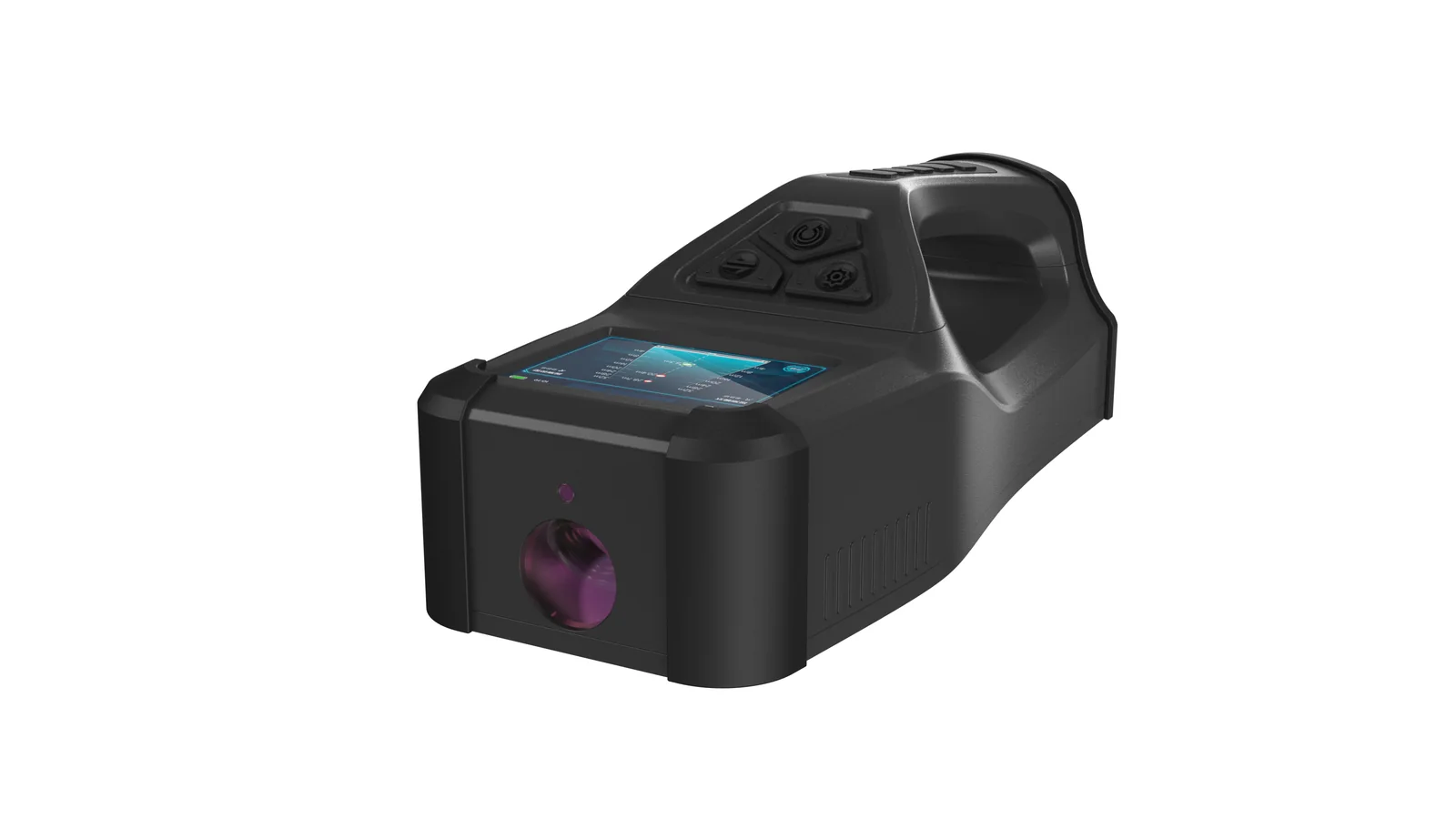
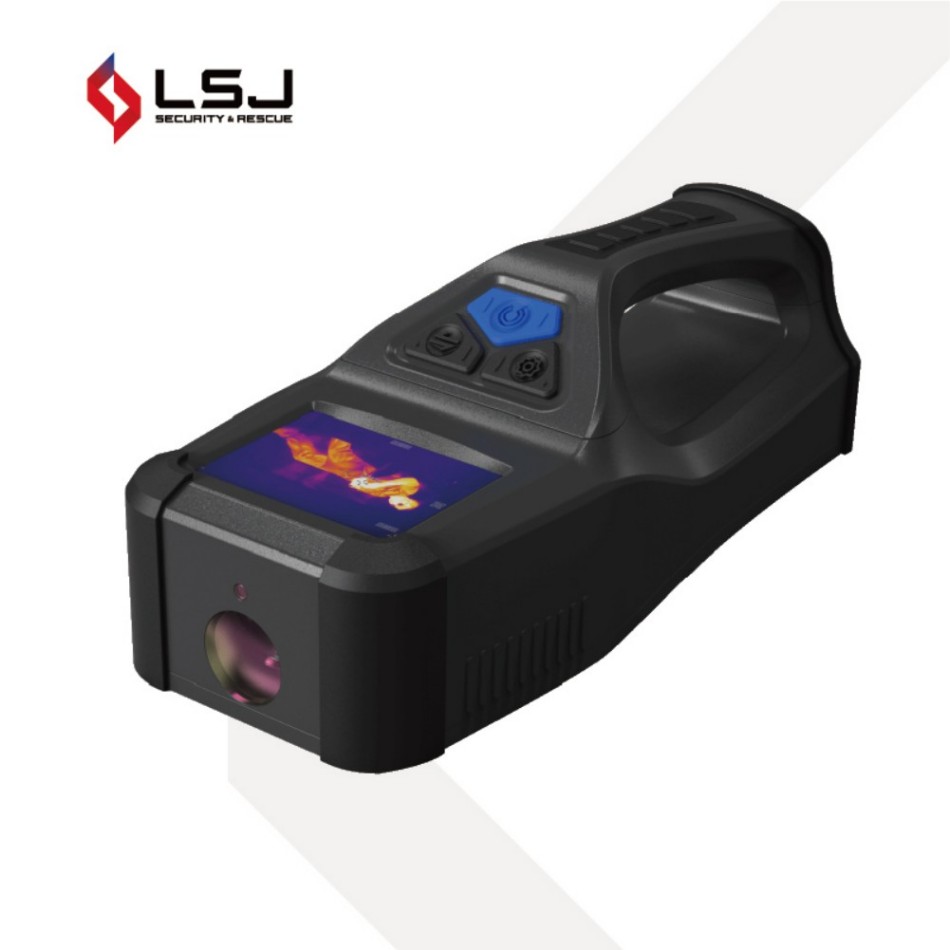
Figure: Integrated sensor head — thermal lens, low-light CMOS window and status indicator behind rubberized corner protection.
Fusion matters operationally: radar tells crews where a victim is behind cover, thermal confirms the heat signature in smoke or darkness, and the visible camera records the approach path for team planning. One display simultaneously shows radar coordinates, target quantity, live video, battery and working status, and it auto-rotates for overhead, prone or cramped-void search postures.
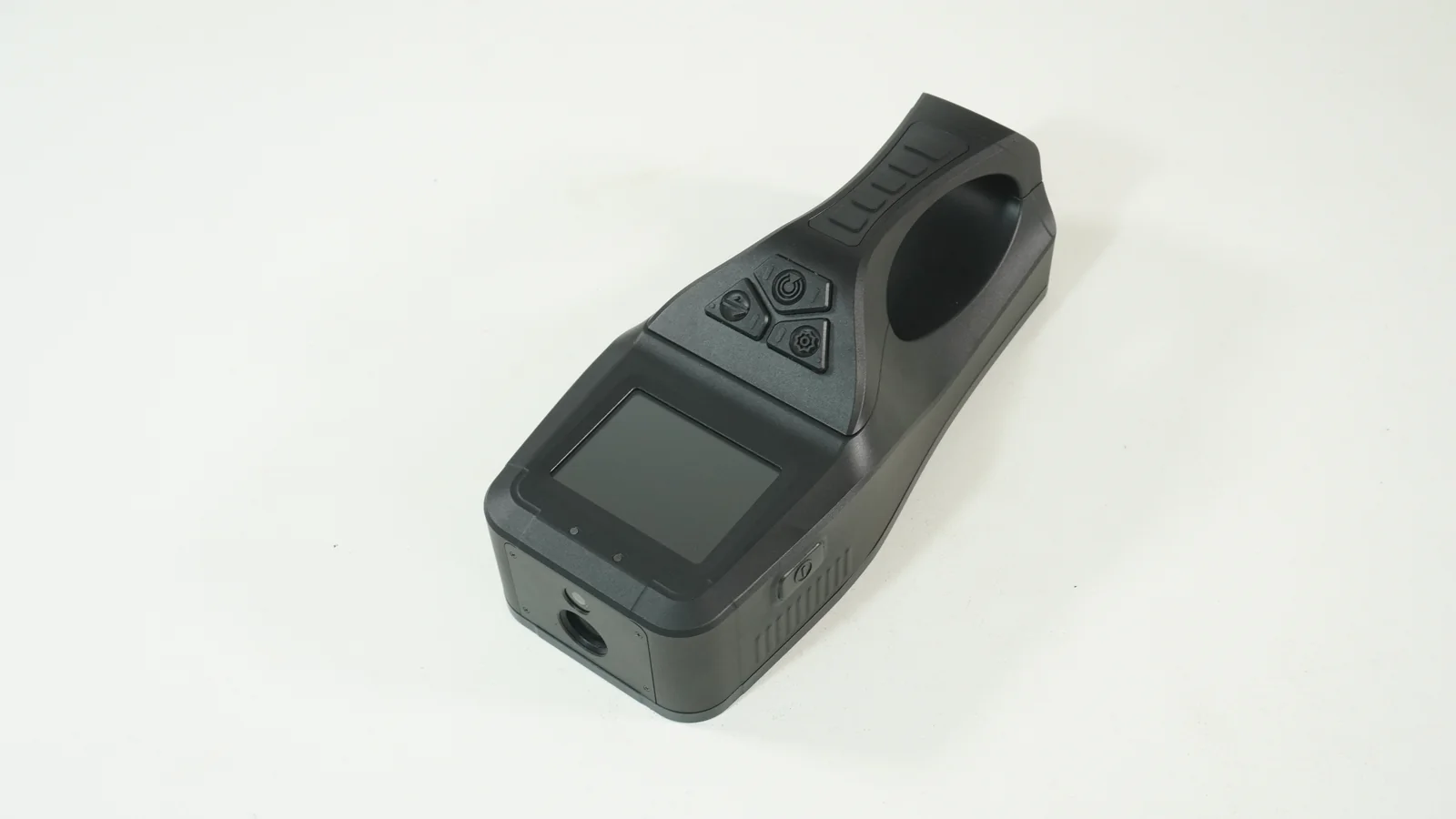
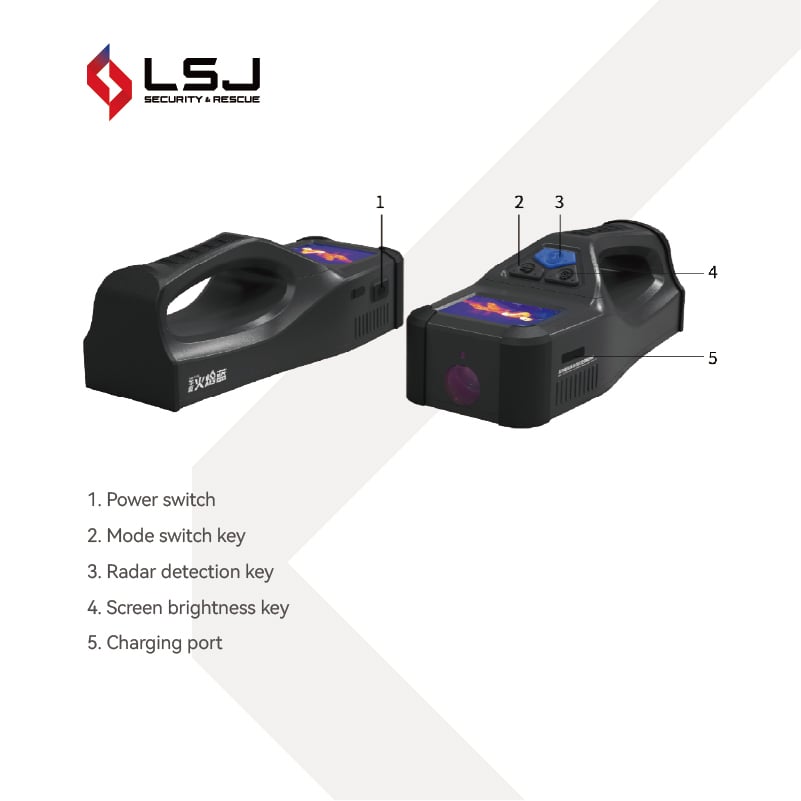
Figure: Production unit (factory photograph) — four large glove-friendly keys, sealed 3.5-inch display and ergonomic through-handle with replaceable anti-slip antenna pad.
Deploy in Seconds — Press, Scan, Locate
There is no tripod to level, no control box to boot and no cable to unreel. Power on, choose the medium preset, place the flat antenna face against the wall or rubble surface, and sweep. At under 3 kg and within a 310×140×120 mm envelope, the detector goes wherever a rescuer can crawl.
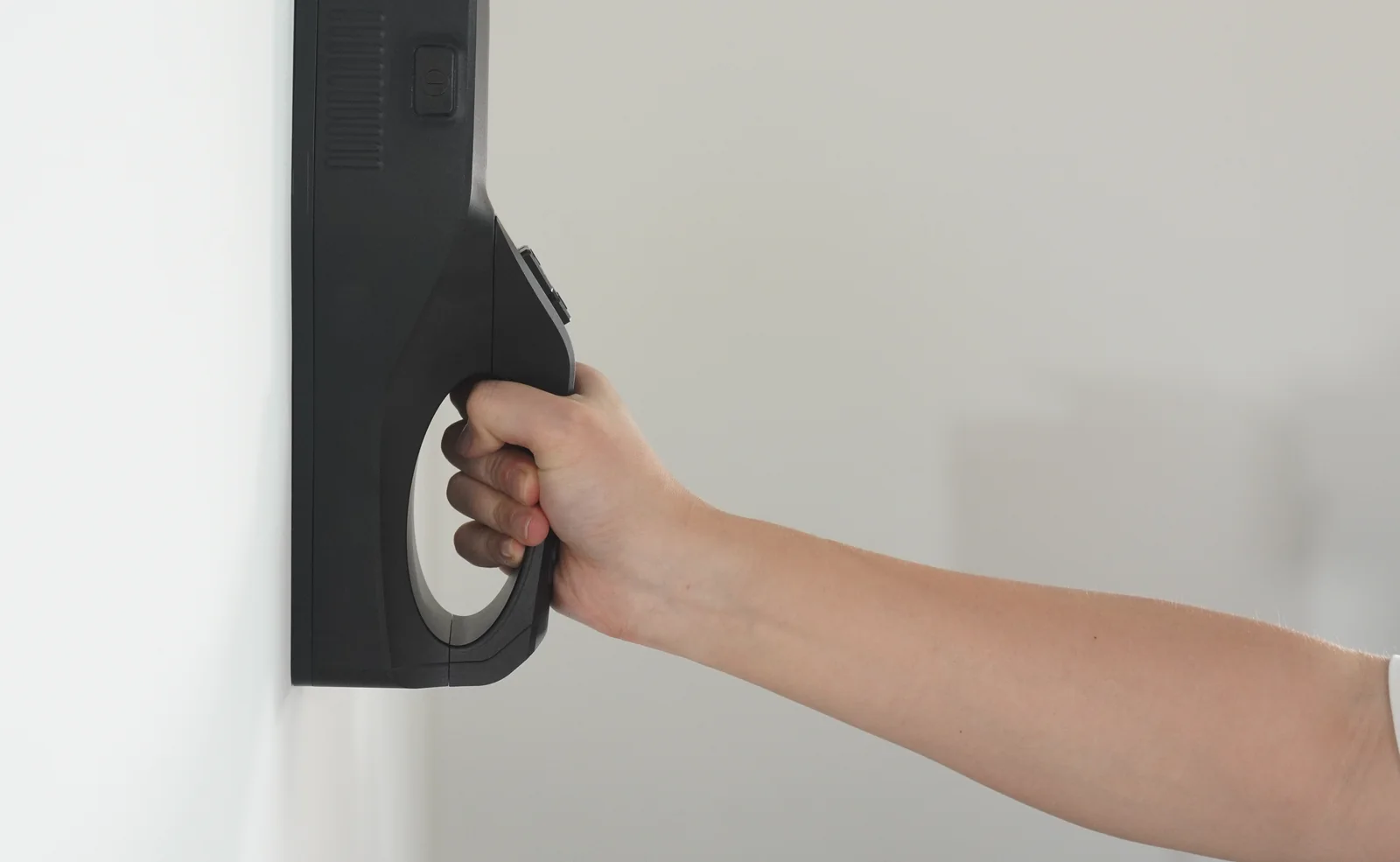
Figure: One-handed press-to-scan posture against a wall — the antenna panel sits flush on the surface for a stable penetration scan.
A built-in vibration safeguard automatically pauses detection and raises an on-screen anomaly warning if the host is shaken, preventing false readings during unstable rubble operations. Screen brightness adjusts automatically or manually for glare and night work, and every search is logged with one-key photo, video and playback to the 32 GB removable storage.
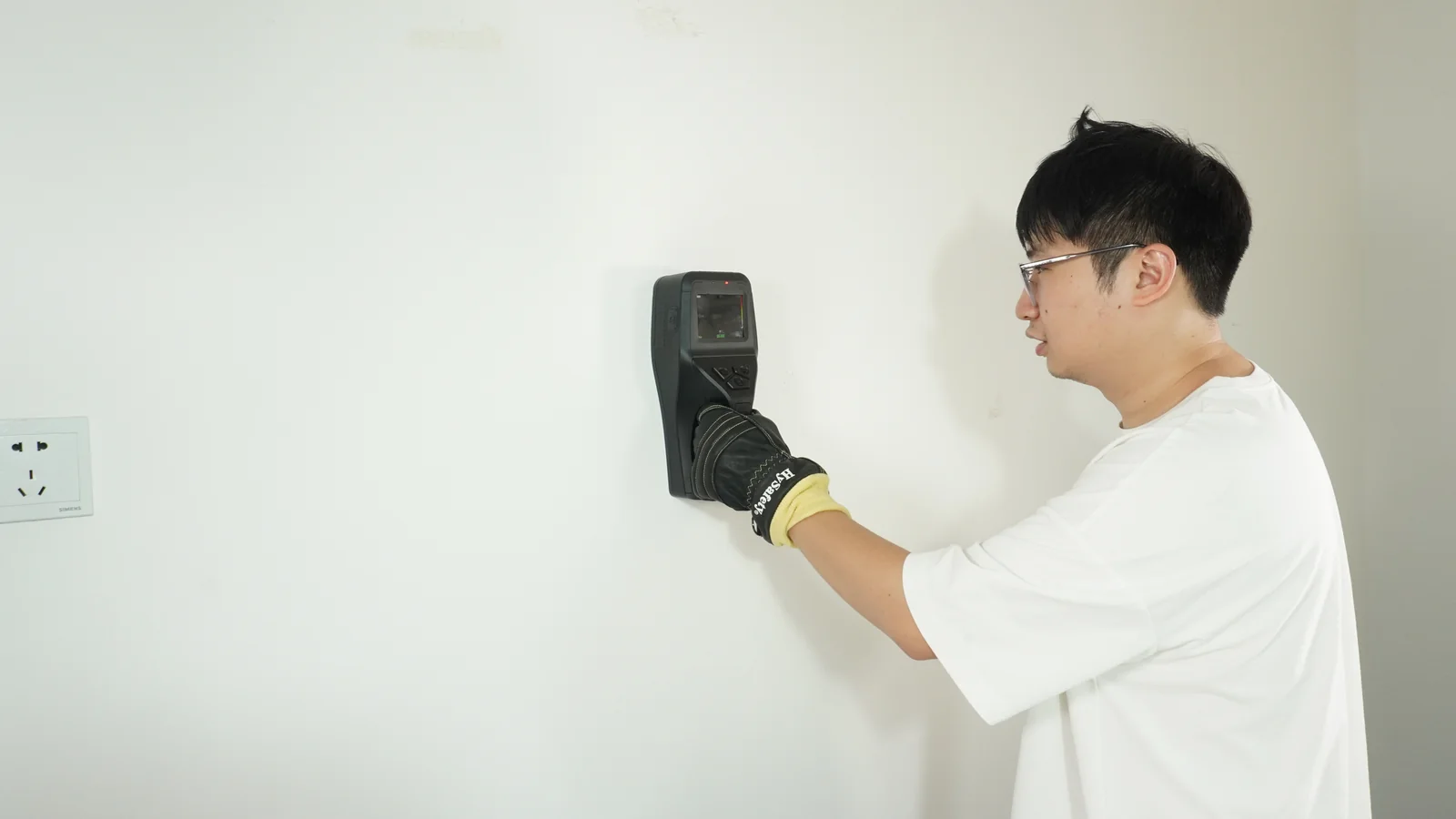
Figure: Full rescue-glove operation. Large sealed keys and the through-handle keep the detector controllable in structural gloves, rain and dust.
Built for Collapse Zones: IP66, 1 m Drop, -20 °C to +60 °C
The housing carries IP66 ingress protection against water jets and dust, operates from -20 °C to +60 °C, survives a 1 m drop and passed 10–150 Hz / 2 g vibration sweeps on every axis plus 95±3% humidity damp-heat testing. Rubberized corner bumpers, a sealed Type-C charging port and ≥4 hours of continuous battery life complete a tool designed to be carried first into the worst conditions.
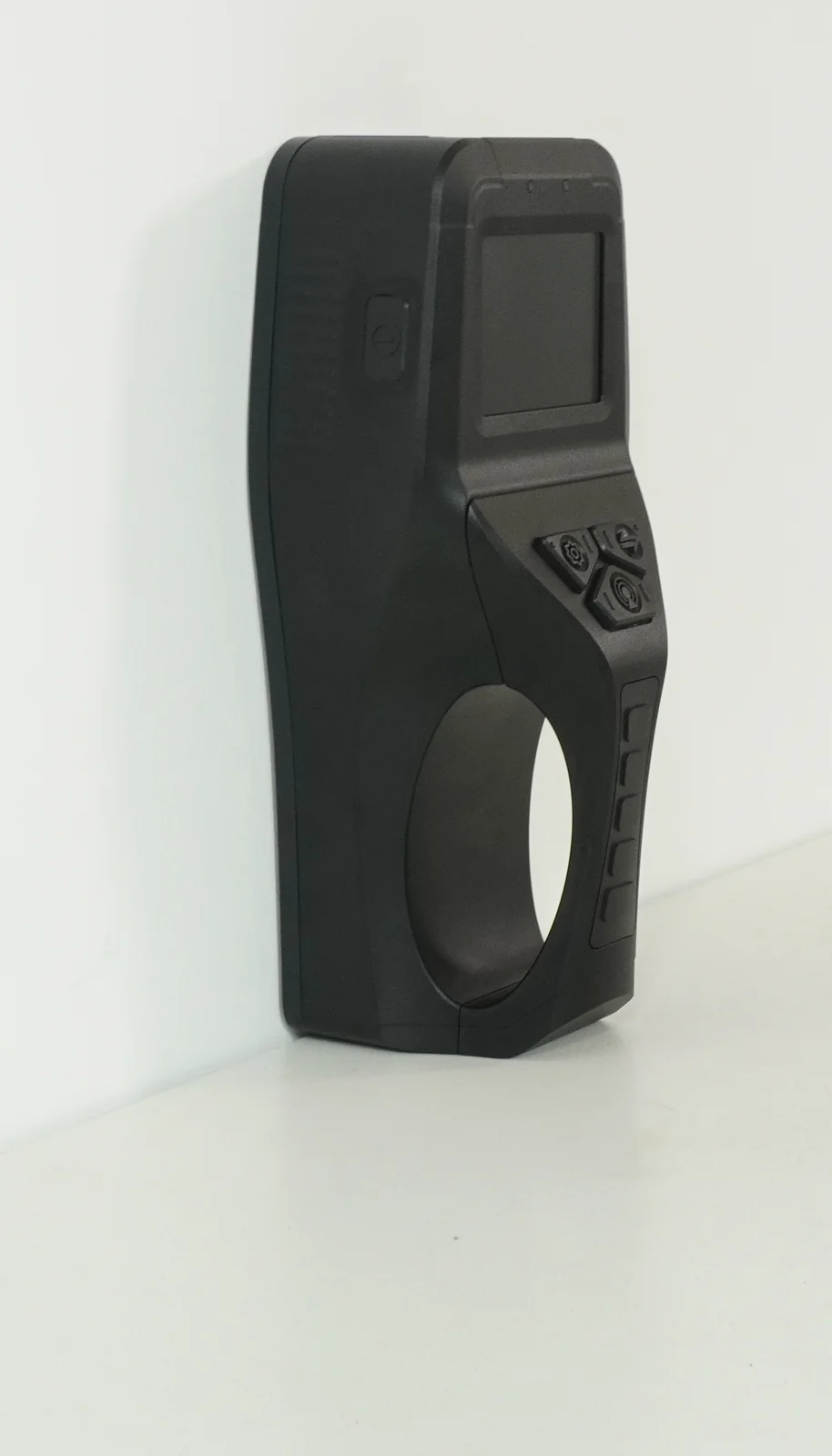
Figure: Self-standing 310 mm body with sealed side control — compact enough for a rescue pack, ready instantly without assembly.
Where the LSJ Multi-Band Life Detector Works
Proven in Real Disaster Responses
The LSJ multi-band life detection platform has supported professional search-and-rescue teams across major domestic disaster responses, including the Ya'an and Luding earthquake operations, the Gansu earthquake response and the Quanzhou hotel collapse rescue.
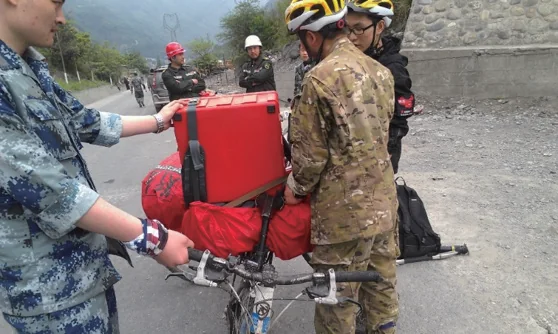
Ya'an earthquake: equipment moved on foot where roads were destroyed.
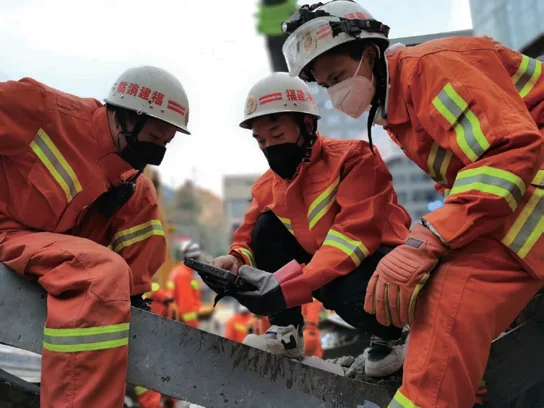
Quanzhou hotel collapse: handheld detection over concrete rubble.
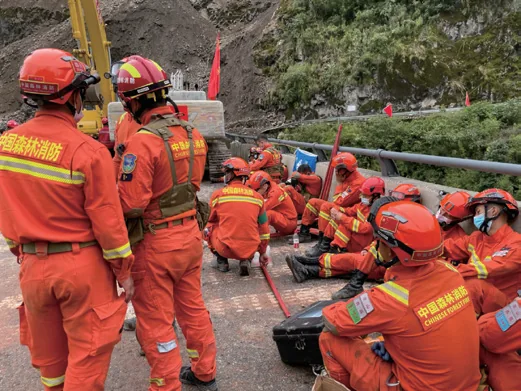
Luding earthquake: landslide-blocked mountain-road response.
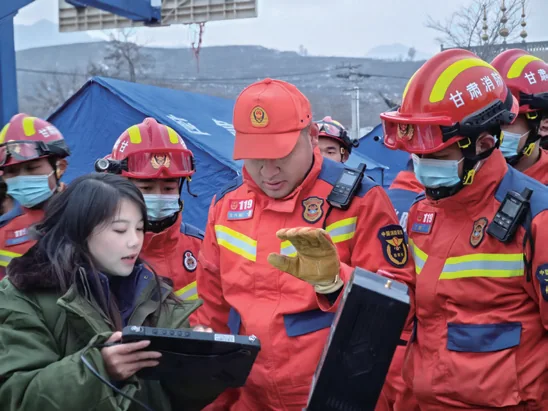
Gansu earthquake: command-post review of detector data.
Frequently Asked Questions
Q: How far can the LSJ Multi-Band Composite Life Detector detect through walls?
A: Through a solid brick wall at least 24 cm thick, it detects moving targets at ≥12 m and stationary victims at ≥10 m, with location accuracy within ±30 cm. It also penetrates concrete, brick-mixed walls, rock, soil and rubble with low moisture content.
Q: Can it find victims who are completely still or unconscious?
A: Yes. The L-band continuous-wave radar senses respiratory micro-motion, so no visible body movement is required. Stationary targets are reported within 20 s and moving targets within 5 s, with target recognition probability above 90% and a low false-alarm rate.
Q: Does it work in smoke, darkness or fire scenes?
A: Yes. The uncooled 384×288 thermal module (NETD ≤50 mK) operates in total darkness and smoke, measures temperatures from -20 °C to 1200 °C, and offers firefighting, fire, search-and-rescue, heat-detection and fusion modes with automatic hot/cold-spot tracking.
Q: How long does deployment take? Is a tripod or control box needed?
A: Deployment is instant — power on, select the medium preset (air, through-wall or rubble), place the antenna face against the surface and scan. The ≤3 kg handheld unit needs no tripod or external control box, and the large keys operate with rescue gloves while the display auto-rotates for cramped search postures.
Q: What harsh environments is the detector rated for?
A: It carries IP66 ingress protection, operates from -20 °C to +60 °C, survives a 1 m drop and 10–150 Hz / 2 g vibration testing, and passed 95±3% humidity damp-heat tests — waterproof, dustproof, shock-resistant and cold-resistant.
Q: Can search evidence be recorded and reviewed afterward?
A: Yes. One-key photo, video and playback are built in, and every search is stored on the included 32 GB removable storage. The 3.5-inch 640×480 display simultaneously shows target coordinates, target count, live video, battery and working status.
Q: How long does the battery last, and how is it charged?
A: A full charge supports at least 4 hours of continuous operation, and the unit charges through a sealed standard Type-C interface — enough for sustained multi-shift search operations with standard power-bank top-ups.
Q: In which real operations has this LSJ detector been used?
A: The LSJ multi-band life detection platform has supported the Ya'an earthquake, Luding earthquake and landslide, Gansu earthquake and Quanzhou hotel collapse responses, working with fire-rescue, forest-fire and military search-and-rescue teams.
Tell us your wall/rubble scenarios and tender requirements — an LSJ rescue-equipment engineer will reply with configuration, performance verification and delivery details.
Send Inquiry & Request DatasheetIP66 rated | 1 m drop tested | ≥4 h runtime | 32 GB storage | factory-tested specifications
Technical Specifications
Every figure below is the factory-tested specification of the LSJ Multi-Band Composite Life Detector. Core performance values are highlighted for quick engineering review.
Need a tender-ready specification sheet or OEM configuration? Send your mission profile through the Inquiry form and an LSJ rescue-equipment engineer will reply with configuration details.