 EN
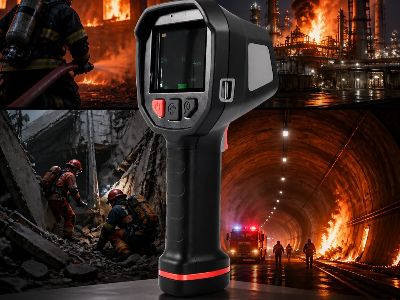
Understanding the differences in thermal imaging resolutions is crucial for professionals in various industries, especially when evaluating devices like thermal cameras. The primary keyword, "What Are the Key Differences Between 160×120 and 384×288 Thermal Imaging Resolutions?" addresses a common concern for purchasing managers, engineers, and product managers who need to select the right equipment for their applications. This article will clarify key specifications, help you choose the appropriate resolution for your needs, and discuss potential issues and applications related to these two resolutions.
What Are the Key Specifications of 160×120 vs. 384×288 Resolutions?
The specifications of thermal imaging resolutions significantly impact their performance and suitability for various applications. The two common resolutions, 160×120 and 384×288, differ primarily in the number of pixels they provide.
160×120 Resolution: This resolution consists of 19,200 pixels, which is sufficient for basic thermal imaging tasks. It offers a lower level of detail and is generally adequate for applications like building inspections or simple temperature monitoring where precision is not critical.
384×288 Resolution: Featuring 110,592 pixels, this higher resolution offers significantly improved detail and clarity. It is ideal for more demanding applications such as search and rescue operations, where identifying subtle temperature variations can be crucial.
In summary, the key specifications that differentiate these resolutions are pixel count and image clarity. Higher pixel counts result in better image detail, which is essential for professional use, particularly in critical environments like urban search and rescue operations.
How to Choose Between 160×120 and 384×288 Thermal Imaging Options?
Choosing between 160×120 and 384×288 thermal imaging cameras hinges on understanding your specific requirements. Here are some considerations:
Application Requirements: Assess the application for which you need the thermal camera. For general building maintenance or non-critical inspections, a 160×120 resolution may suffice. However, for applications such as firefighting, civil defense, or search and rescue, the enhanced detail provided by a 384×288 camera is essential.
Budget Constraints: android thermal imaging camera thermal cameras are typically more cost-effective, making them suitable for budget-conscious buyers. In contrast, investing in a 384×288 camera may be justified by the need for higher accuracy and reliability in specialized tasks.
Environmental Conditions: Consider the operational environment. If the camera will be used in harsh conditions, ensure it is built for durability. Both resolutions can be offered in robust designs, but always confirm the manufacturer’s specifications regarding environmental resilience.
Long-Term Use: Evaluate how the camera will be used over time. If you anticipate needing higher resolution for future projects or applications, it may be wise to invest in a 384×288 camera from the start.
160×120 vs. 384×288 Thermal Imaging Cameras
When comparing 160×120 and 384×288 thermal imaging cameras, several factors come into play:
Image Quality: Higher resolution cameras not only provide clearer images but also allow for more detailed analysis of thermal patterns. This is particularly vital in search and rescue scenarios where every detail can impact decision-making.
Processing Power: Cameras with higher resolutions often require more advanced processing capabilities. Ensure that your team is equipped with the necessary technology to handle the data output from a thermal camera android camera.
Weight and Size: Higher resolution cameras can be bulkier and heavier due to more advanced components. Consider the physical demands of your application and whether portability or compactness is a priority.
Battery Life: Higher resolution cameras may consume more power, potentially affecting battery life during extended use. Check the specifications for battery performance to ensure it meets your operational needs.
Common Problems with 160×120 and 384×288 Thermal Imaging Resolutions
Both thermal imaging resolutions come with their own set of challenges:
160×120 Cameras: Users may experience limitations in identifying small thermal anomalies due to lower pixel counts. This can lead to missed detections in critical applications, such as locating victims in search and rescue operations.
384×288 Cameras: While these cameras provide superior detail, they can also be more complex to operate. Users may require additional training to interpret the more detailed images effectively, and the higher data output may necessitate more robust analytical tools.
Additionally, buyers should be aware of potential calibration issues and the importance of regular maintenance for both types of cameras to ensure consistent performance.
Applications for 160×120 vs. 384×288 Thermal Imaging in Industry
The applications for thermal imaging cameras are diverse, and the choice of resolution will depend on the industry and specific use cases:
160×120 Applications: Ideal for general-purpose inspections, such as HVAC system checks, electrical inspections, and basic building diagnostics. These cameras are effective for routine maintenance tasks where detailed thermal analysis is not critical.
384×288 Applications: Best suited for specialized fields like urban search and rescue, fire response, and industrial safety inspections. The enhanced resolution allows responders to detect body heat through smoke or locate hot spots in electrical systems with greater accuracy.
In summary, the choice between cheap thermal camera android and 384×288 thermal imaging cameras directly correlates with the specific requirements of the application, the need for precision, and the operational context in which the cameras will be utilized. Understanding these differences will aid in making informed purchasing decisions that align with operational goals and budget considerations.
Table of Contents
- What Are the Key Specifications of 160×120 vs. 384×288 Resolutions?
- How to Choose Between 160×120 and 384×288 Thermal Imaging Options?
- 160×120 vs. 384×288 Thermal Imaging Cameras
- Common Problems with 160×120 and 384×288 Thermal Imaging Resolutions
- Applications for 160×120 vs. 384×288 Thermal Imaging in Industry