 EN
EN
- Description

Is there a problem?
Please contact us to serve you!

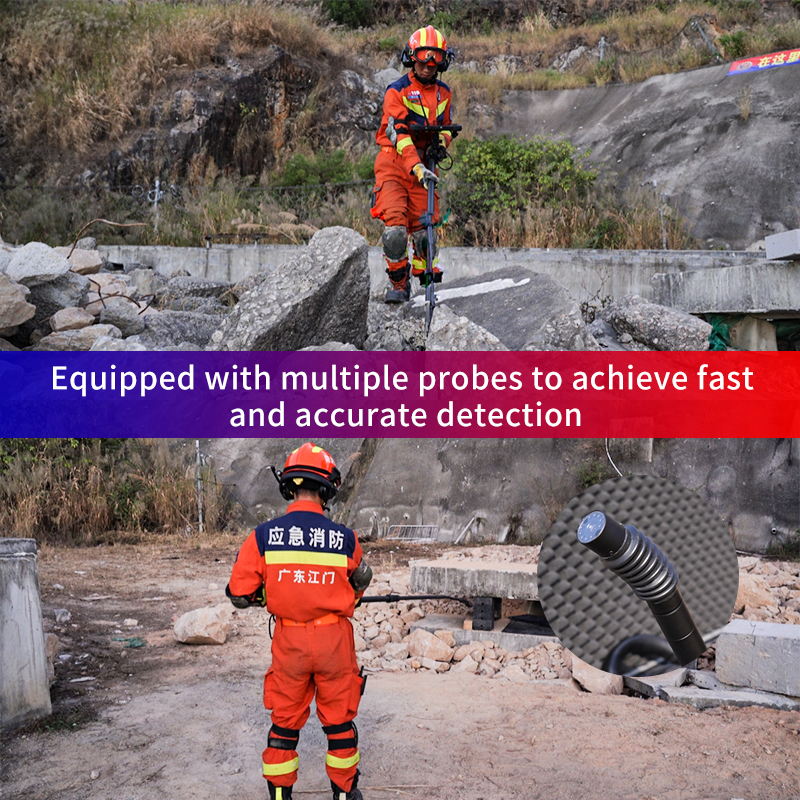
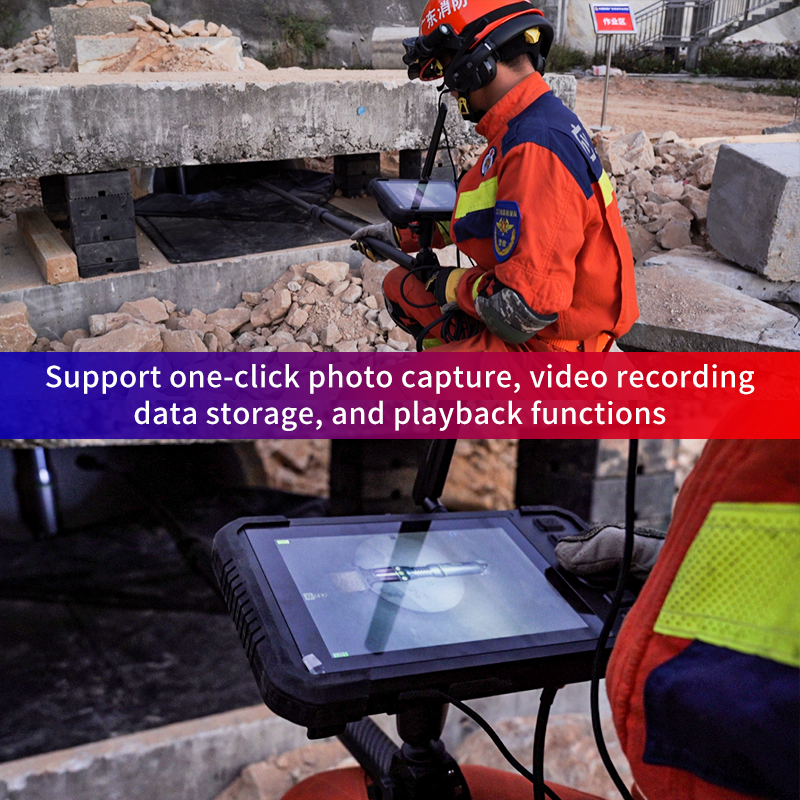
Rod Type Search And Rescue Camera LSJ-C-E
Telescopic Through-Gap Search Camera with 1080P Video, Thermal Imaging and Two-Way Voice
Why rescue teams choose the LSJ-C-E
- Description
- Parameter
- Recommended Products
Description
LSJ-C-E Pole-Mounted Audio Video Life Detector — See Into Collapse Voids and Speak to Survivors
The LSJ-C-E is a pole-mounted audio video life detector — also known as a through-gap search camera or snake-eye life detector — built for urban search and rescue (USAR), fire services and emergency-response teams. Its 1.0–3.6 m carbon-fiber telescopic rod carries interchangeable 1080P video, infrared thermal and IP68 waterproof probes into gaps, voids and flooded spaces that rescuers cannot safely enter, while a full-duplex two-way voice intercom lets operators hear trapped survivors and talk to them directly.
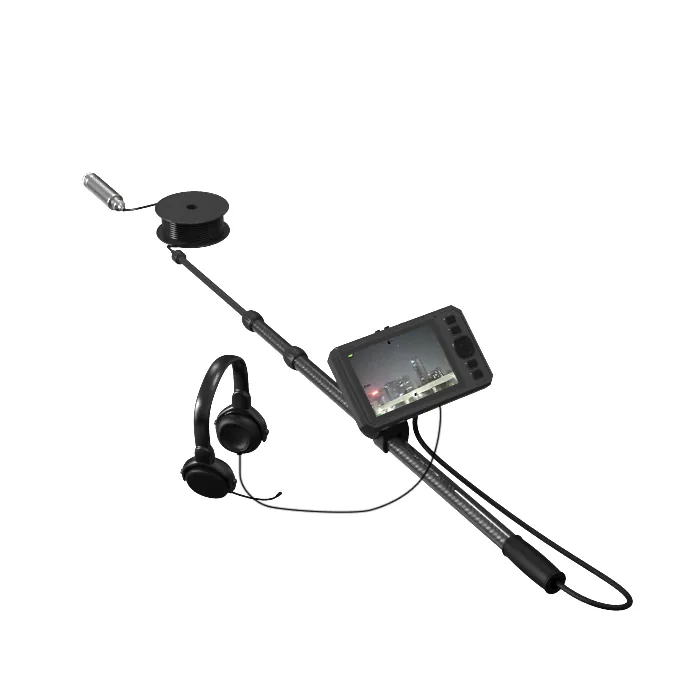
Figure: The LSJ-C-E integrated system — telescopic rod, 8-inch wired display terminal, noise-cancelling headphones and 20 m cable reel ship as one field-ready kit.
The Search Problem: Voids You Cannot Enter, See Into, or Hear Through
After an earthquake, explosion or building collapse, survivors are typically trapped in small cavities behind broken concrete, beneath slabs or inside narrow pipe and wall gaps. Rescue teams face three problems at the same time:
- They cannot see into the void without moving unstable debris.
- They cannot hear faint groans, shouts or knocks over wind, machinery and crowd noise.
- Walking or digging blind risks secondary collapse that can injure both the survivor and the crew.
The LSJ-C-E gives one safe, repeatable workflow: extend the rod, feed the probe through the existing gap, inspect the void on the 8-inch screen, listen through the noise-cancelling headphones, and open a voice link — before any shoring, breaking or lifting begins.
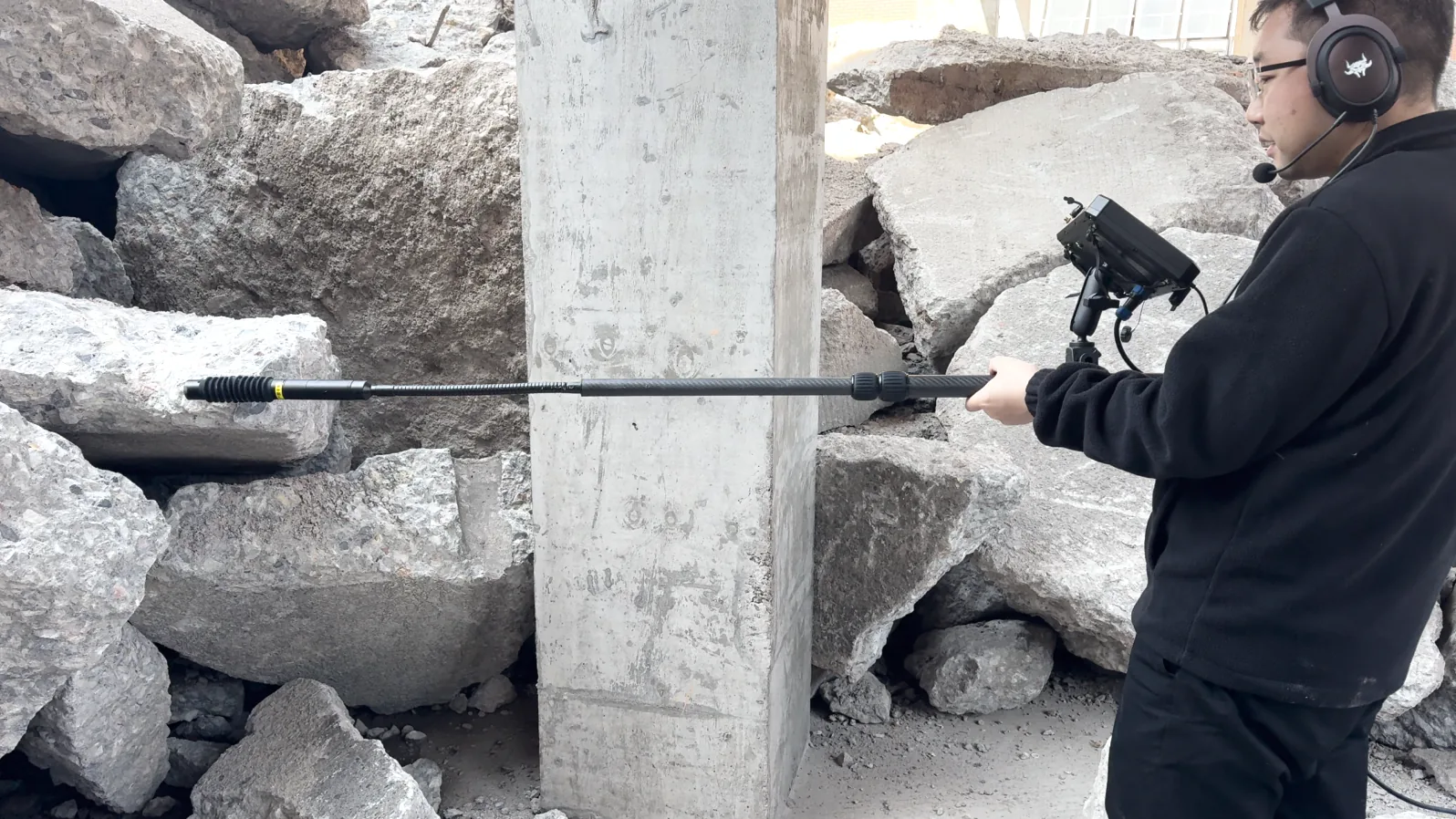
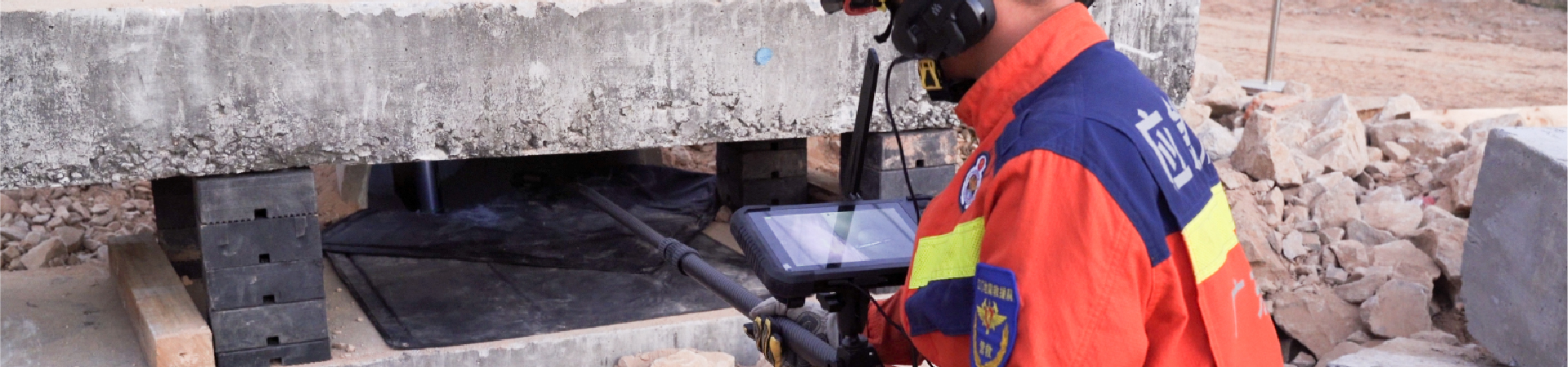
Figure: The slim probe is fed through an existing gap in collapsed concrete, giving a visual and audio check of the void without shifting unstable debris.
1.0–3.6 m Carbon-Fiber Telescopic Rod with a 30 cm Flexible Neck
- Ultralight carbon-fiber sections lock with twist collars and adjust continuously from 1.0 m to 3.6 m, covering both close wall holes and deep slab voids.
- A 30 cm waterproof flexible hose at the tip bends around corners and over slab edges while the operator stays outside the danger zone.
- Anti-slip rubber grip, wrist strap and hanging strap support one-handed operation in horizontal, vertical and overhead reach positions.
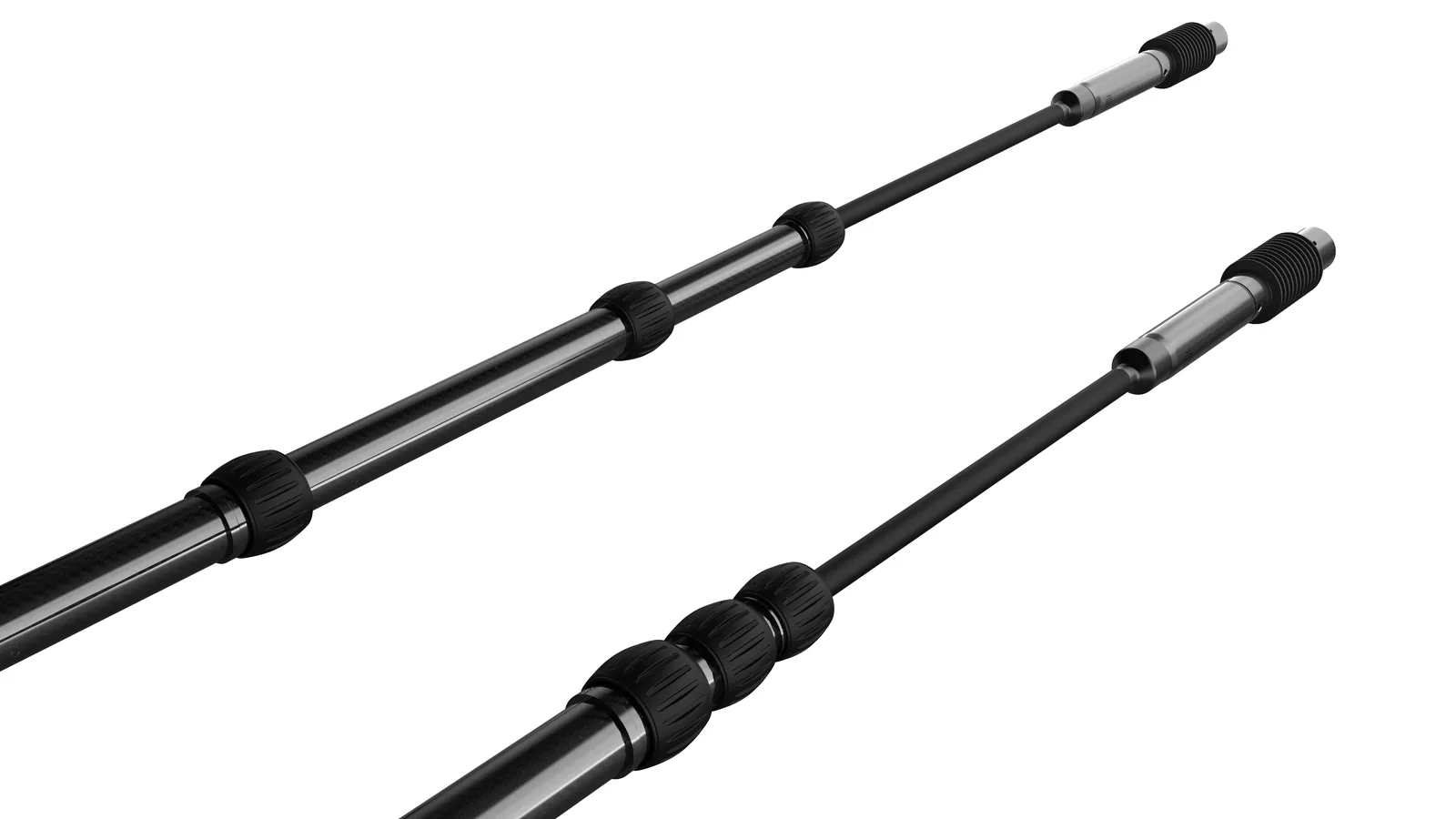
Figure: Twist-lock carbon-fiber sections extend from 1.0 m to 3.6 m and collapse back down for single-rescuer carry in the rugged case.
A Modular Probe Suite — One Rod for Every Search Condition
Probes swap by hand (always with the power off) and the kit is configured to mission at order. Every optical probe records at 1920×1080 full HD.
Motorized rotating audio/video intercom probe
A Φ29 mm head (Φ40 mm version optional) with 10 high-brightness LED lights and a dimmable fill light. The motorized head performs 360° horizontal pan and ±90° vertical tilt directly from the terminal keypad, and the built-in microphone and speaker carry full-duplex two-way voice.
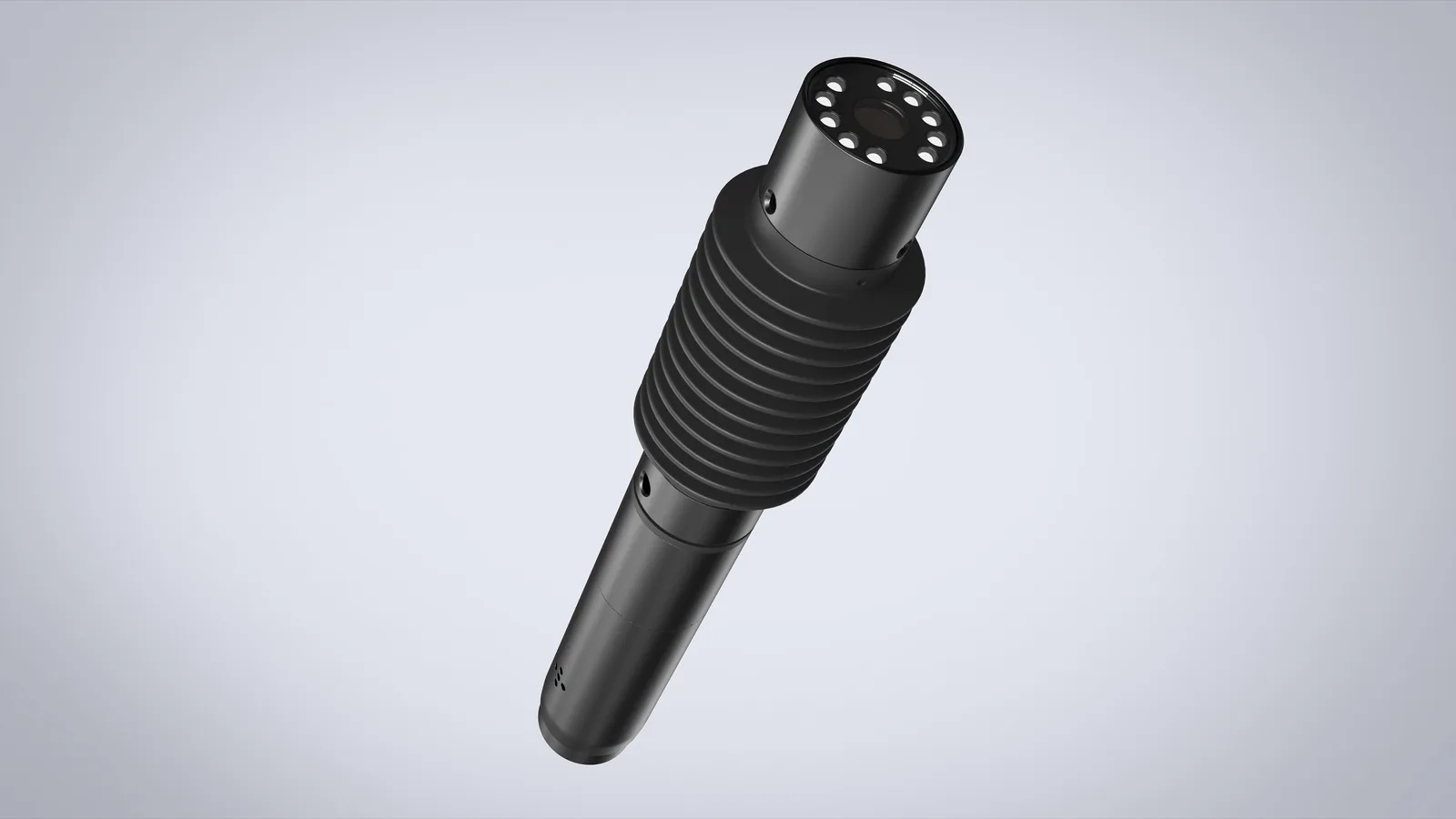
Figure: The motorized probe head — ring of 10 LEDs around the 1080P lens, 360° pan and ±90° tilt, with integrated intercom.
Snake-eye flexible probe for the narrowest gaps
The Φ8 mm / Φ6 mm snake-eye camera carries 10 LED lights and articulates 140° through a pistol-grip controller. It threads into drilled inspection holes, pipe runs and tiny cavities where the rigid probe cannot turn — the classic “gastroscope” search technique that gives this detector family its snake-eye name.
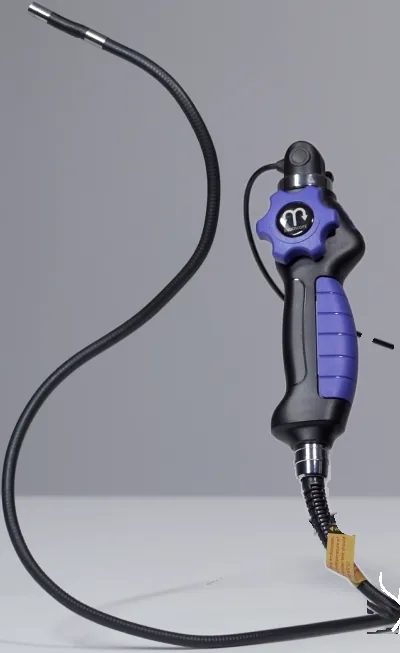
Figure: The Φ8/6 mm snake-eye probe bends 140° through drilled holes and pipe gaps that no rigid camera can enter.
IP68 waterproof probes for flood and water-filled voids
The fixed Φ27 mm waterproof video probe is IP68 rated and verified at 1.1 m water depth for 45 minutes; the motorized Φ40 mm rotating waterproof probe adds 360°/±90° movement underwater. A dedicated stainless underwater probe on the 20 m cable reel extends the search into flooded basements, culverts and sludge — the LSJ-C-E is genuinely amphibious.
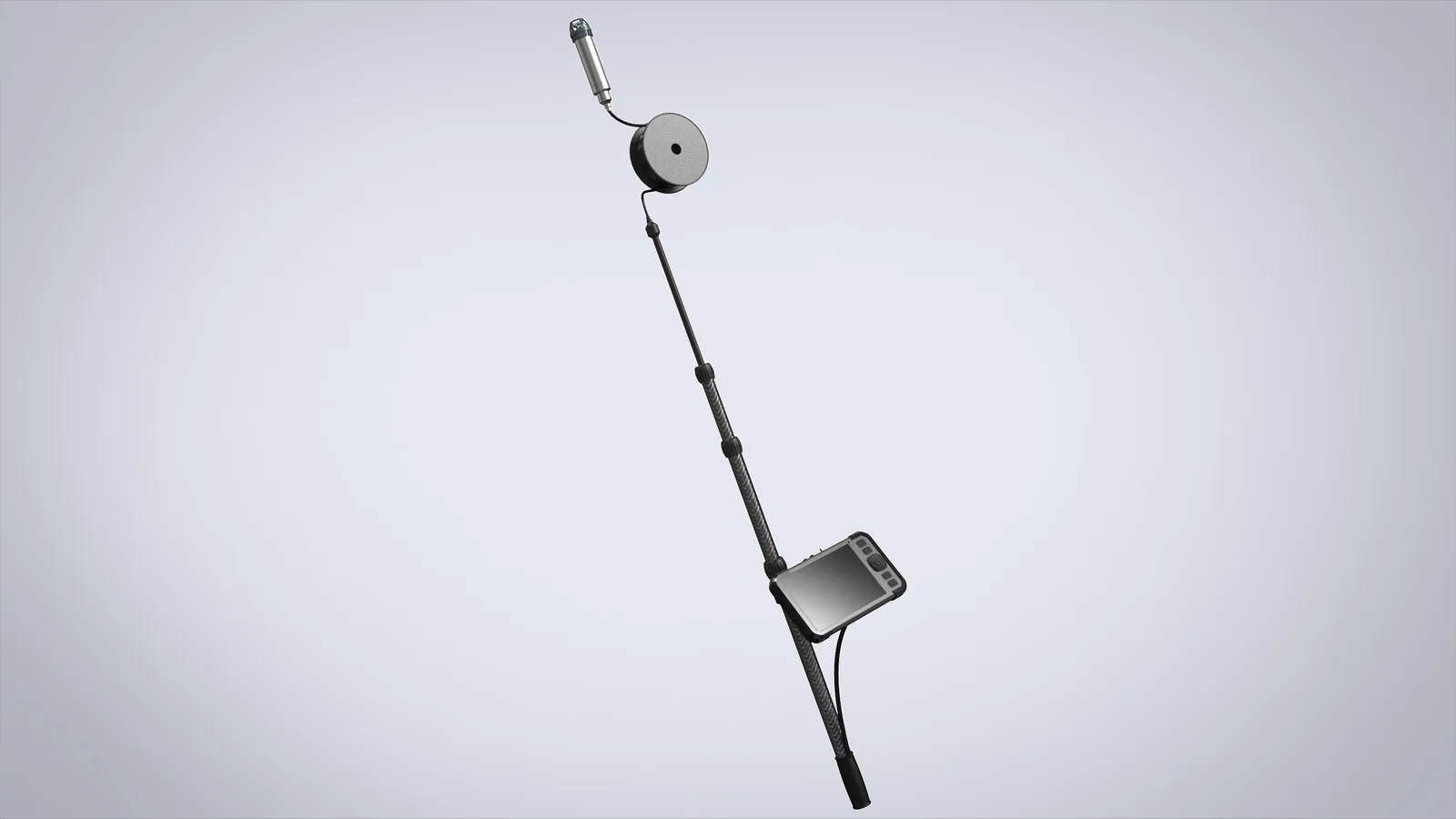
Figure: Underwater probe and cable-reel configuration for flood rescue and water-filled collapse voids (IP68, 1.1 m / 45 min).
Thermal Imaging for Darkness, Smoke and Fire-Ground Search
The infrared thermal imaging intercom probe (Φ28 mm; rotatable Φ40 mm version) uses a 256×192 sensor with selectable ranges of −20–150 °C, 0–450 °C and 0–650 °C. Maximum, minimum and center-point temperatures are measured automatically with hot/cold spot tracking — finding both living victims and post-fire re-ignition hot spots.
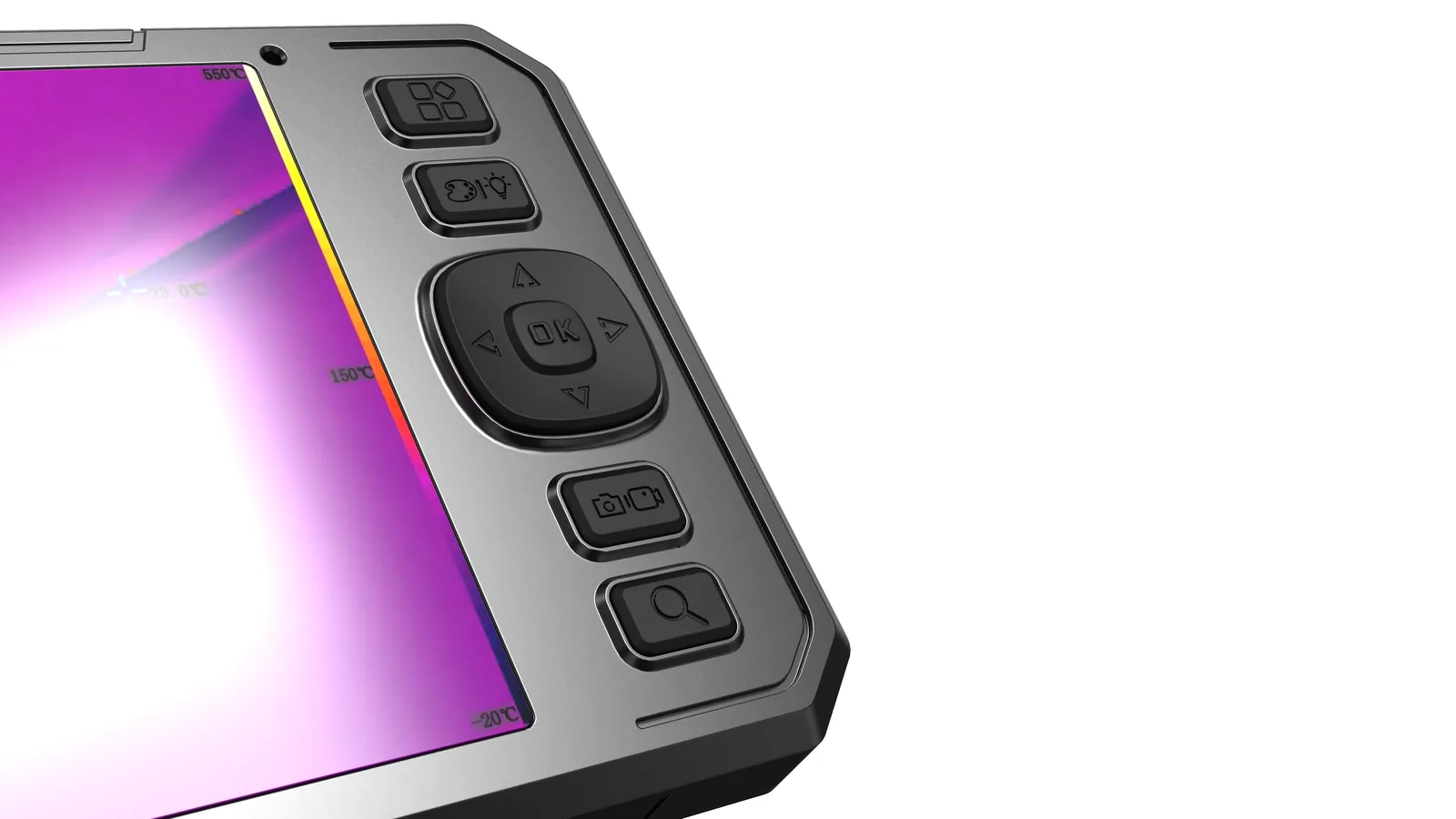
Figure: Thermal view on the 8-inch terminal with the glove-friendly physical keypad — temperature scale, hot/cold tracking and palette switching are one click away.
Two-Way Voice: Listen First, Then Reassure the Trapped Person
In the LSJ-C-E, the “audio” in audio/video is a true rescue channel. A sensitive pickup detects groans, shouts and tapping, while the stereo noise-cancelling headphones isolate faint sounds at loud, windy collapse sites. Once contact is made, the full-duplex intercom lets the operator calm the survivor, ask about injuries and hazards (gas, fire, water), and coordinate shoring — information that video alone can never provide.
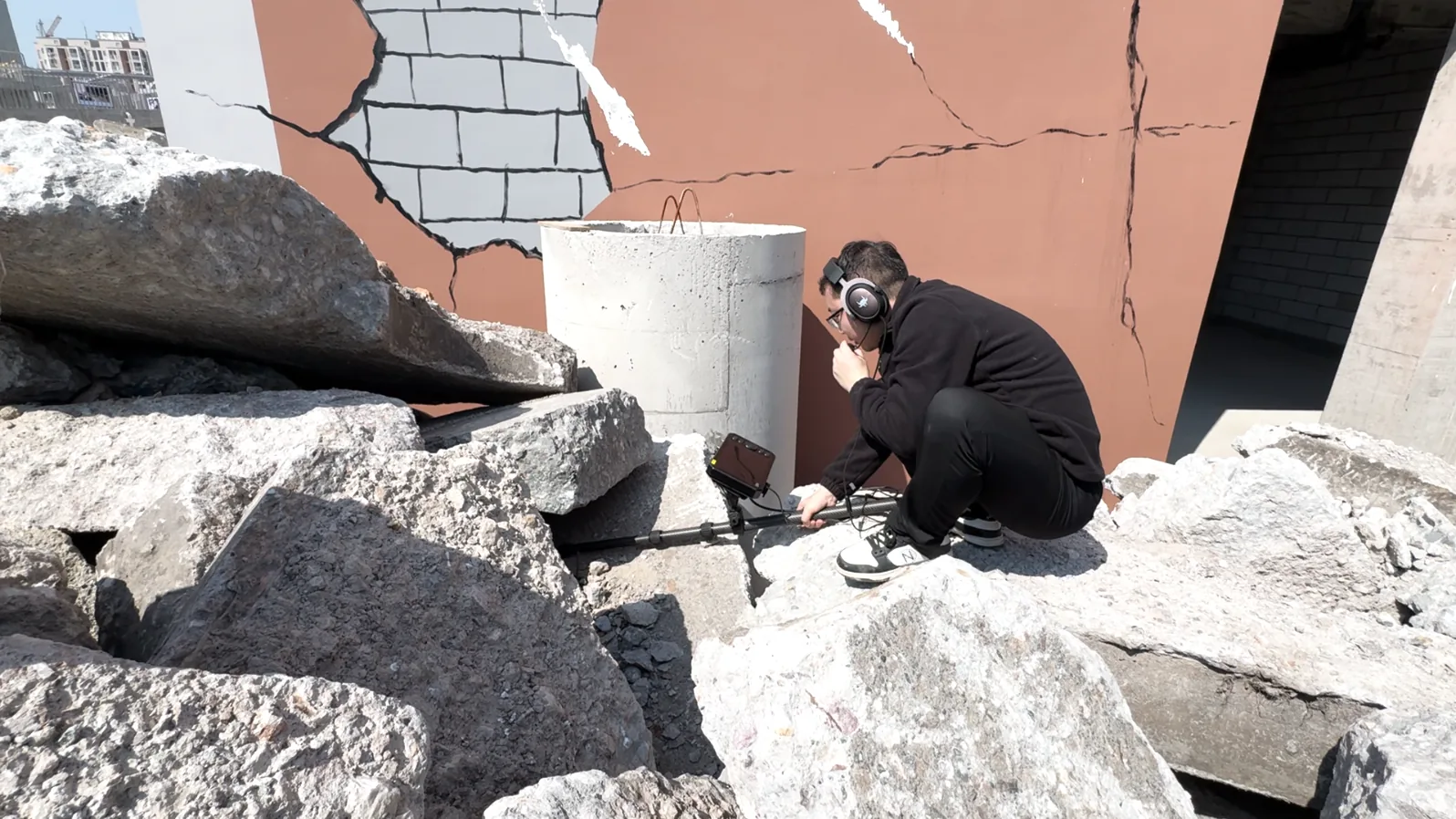
Figure: The operator listens for survivor sounds and opens the voice link directly from the collapse edge using the intercom probe and noise-cancelling headphones.
Wired 8-Inch 1080P Terminal, With Optional 4G/Wi-Fi Command Link
- 8-inch 1920×1080 color LCD with adjustable brightness and glove-friendly physical keys: mode/fill-light, D-pad with OK push-to-talk, one-key photo, long-press video and 2×/4× digital zoom.
- The wired rod-to-terminal link keeps video stable inside steel-and-concrete ruins where wireless signals drop.
- 32 GB built-in storage (expandable) saves photos and video on-device for immediate playback and post-incident review.
- Optional 4G and Wi-Fi modules stream the live picture to the rear command post or an optional remote PAD through the LSJ cloud platform.
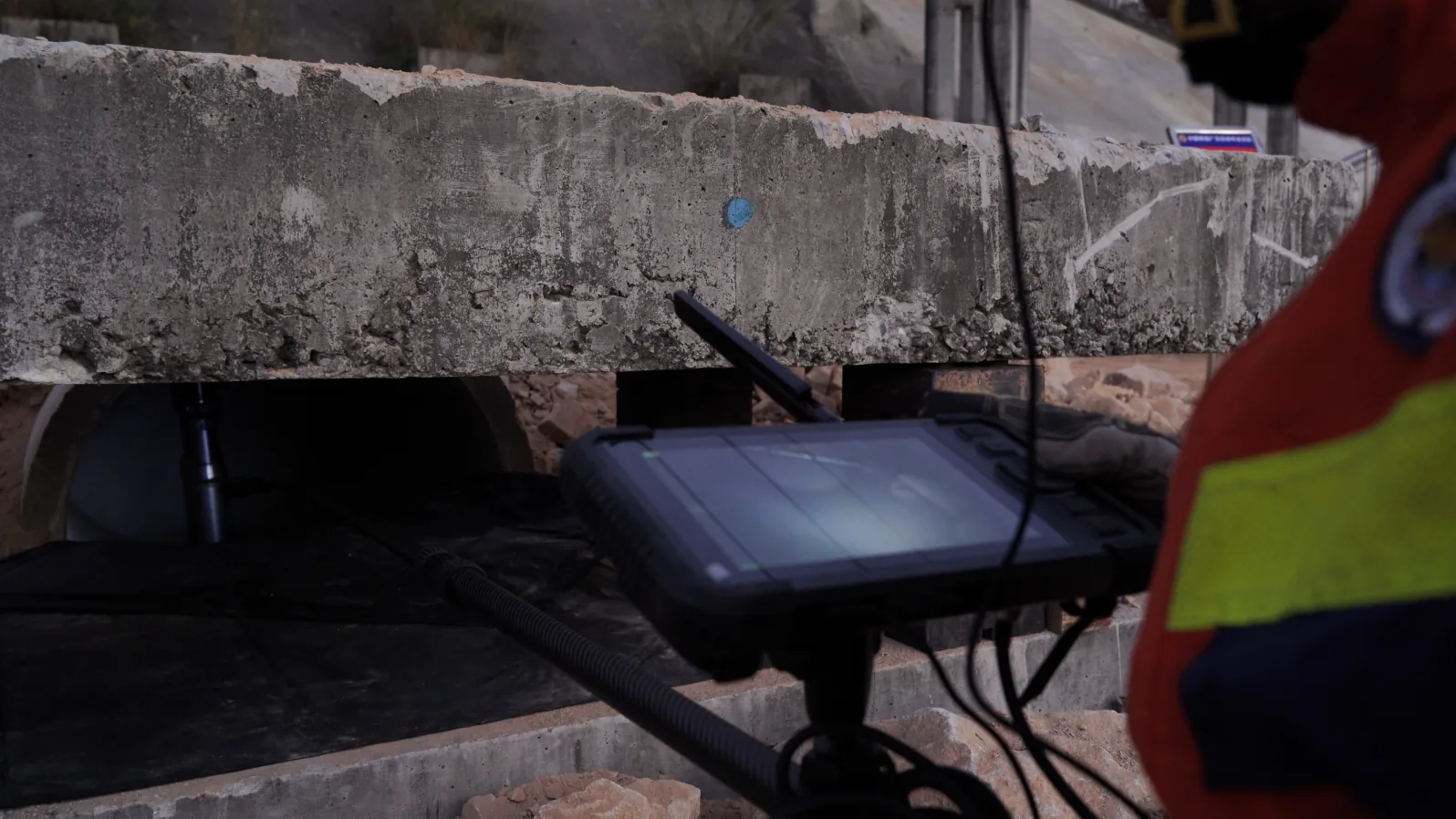
Figure: The terminal on its stand displays the live probe feed under a concrete slab; optional 4G/Wi-Fi shares the same picture with the command post.
Built for Real USAR, Fire and Disaster Response
The LSJ-C-E is specified for the full range of structural-collapse and confined-space missions:
Field-proven in major disaster responses
LSJ technicians accompanied Chinese Blue Sky Rescue teams into the February 2023 Turkey earthquake zone with audio/video and radar life detectors; LSJ equipment was also fielded in the April 2022 Changsha self-built building collapse, the Quanzhou hotel collapse and the Tibet earthquake response. The detector is manufactured by Beijing LSJ Technology Development Co., Ltd. (lsjkj.com), a specialist in life-detection and rescue instrumentation.
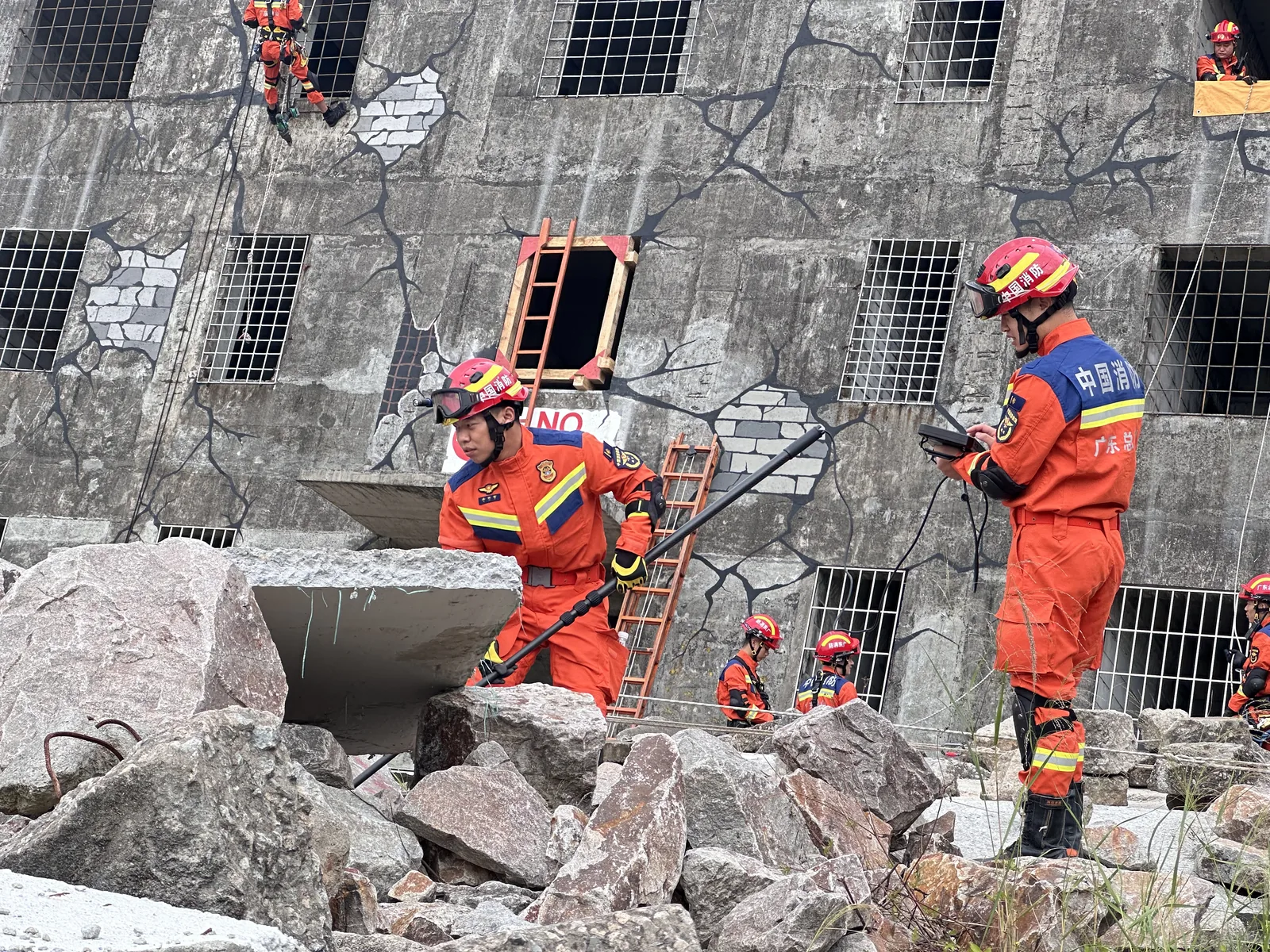
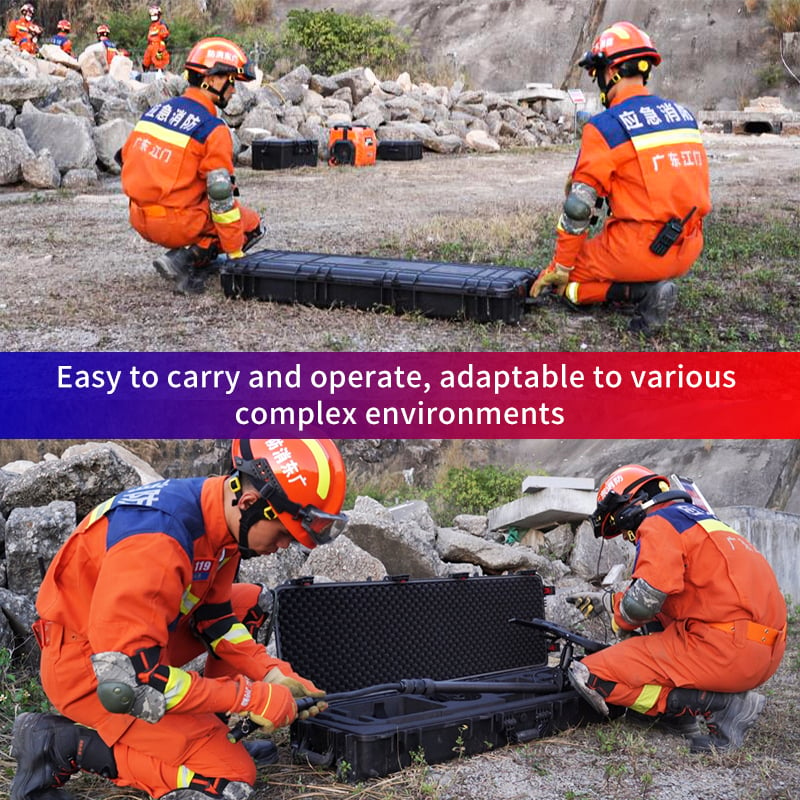
Figure: USAR fire-rescue personnel work the LSJ-C-E at a collapse training structure — one operator feeds the rod, one reads the terminal.
Standard 13-Piece Configuration, Ready for the Field
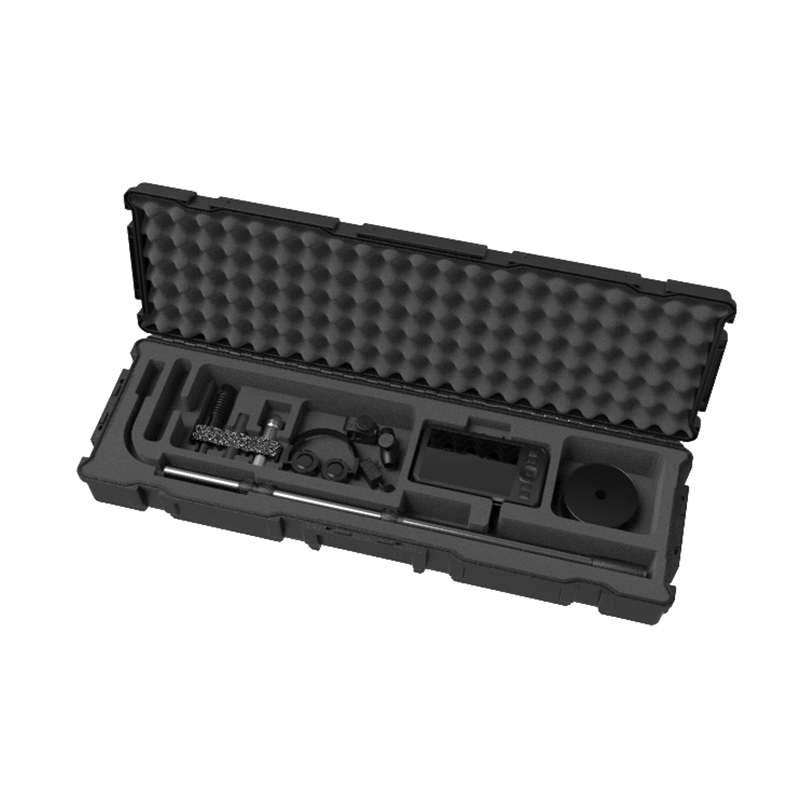
The LSJ-C-E ships in a precision foam-fitted rugged hard case. The probe set and cable length are configured to your mission at order.
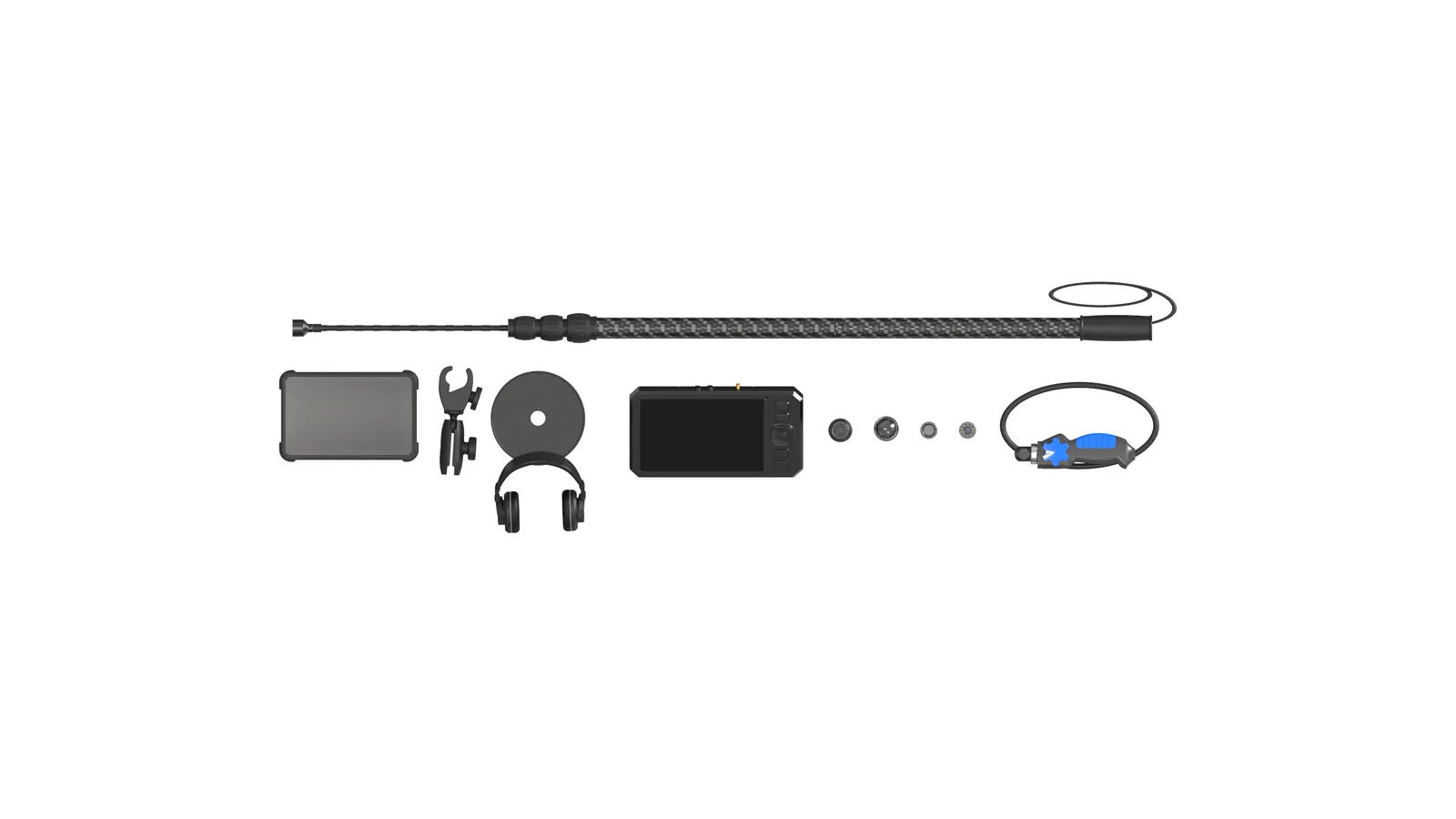
Figure: Standard configuration laid out — rod, terminal, interchangeable probes, headphones, snake-eye kit, reel, bracket and charger in one foam-fitted case.
Frequently Asked Questions — Procurement and Deployment
Q: What is the LSJ-C-E audio video life detector, and what does it detect?
A: It is a pole-mounted search and rescue camera with a telescopic 1.0–3.6 m rod. It delivers full-HD visual inspection, infrared thermal imaging and two-way voice through gaps and voids in collapsed structures, allowing crews to locate trapped people, assess their condition and speak with them before breaching.
Q: Can it detect survivors through solid concrete?
A: No — the LSJ-C-E is a through-gap detector. The camera must pass through an existing hole, crack, drilled opening or void, and its audio pickup works over a limited range; it cannot image through intact concrete or soil. For through-rubble detection without an opening, pair it with an LSJ radar life detector: radar narrows the search zone, and the pole camera then visually confirms the survivor and opens voice contact.
Q: How deep and how far can it reach, including underwater?
A: The carbon-fiber rod extends from 1.0 m to 3.6 m with a 30 cm flexible neck; the detection cable is 20 m standard and other lengths can be customized. The waterproof probes are IP68 rated — verified at 1.1 m water depth for 45 minutes — and the dedicated underwater probe on the cable reel supports flood and culvert search.
Q: Does it work at night, in smoke, or on the fire ground?
A: Yes. The optical probes use 10 dimmable high-brightness LEDs (plus fill or infrared lights) for total darkness and dust. The thermal probe operates to 650 °C with search-and-rescue, firefighting, fire-emergency, detection, white-hot and black-hot palettes, revealing body heat through smoke and finding post-fire hot spots.
Q: Can the command post see the live picture remotely?
A: The local link between rod and terminal is wired for maximum stability inside ruins. On request, the terminal is built with 4G and Wi-Fi modules and an antenna, streaming live video to the rear command post or an optional remote PAD through the LSJ cloud platform — specify the wireless option at order.
Q: What is the battery life and operating temperature?
A: The rechargeable lithium battery delivers up to 8.6 hours of continuous operation and charges via Type-C (dedicated 8.4 V, ≤2000 mA charger included). Operating temperature is −20 °C to +60 °C; storage temperature is −40 °C to +70 °C.
Q: How quickly can it be deployed, and how is it shipped?
A: Setup is tool-free: lock the rod sections, mount the terminal on its bracket, screw on a probe with the power off and switch on — a two-person crew can be searching from the collapse edge within minutes. The complete kit travels in one foam-fitted rugged hard case measuring 1300 × 420 × 172 mm.
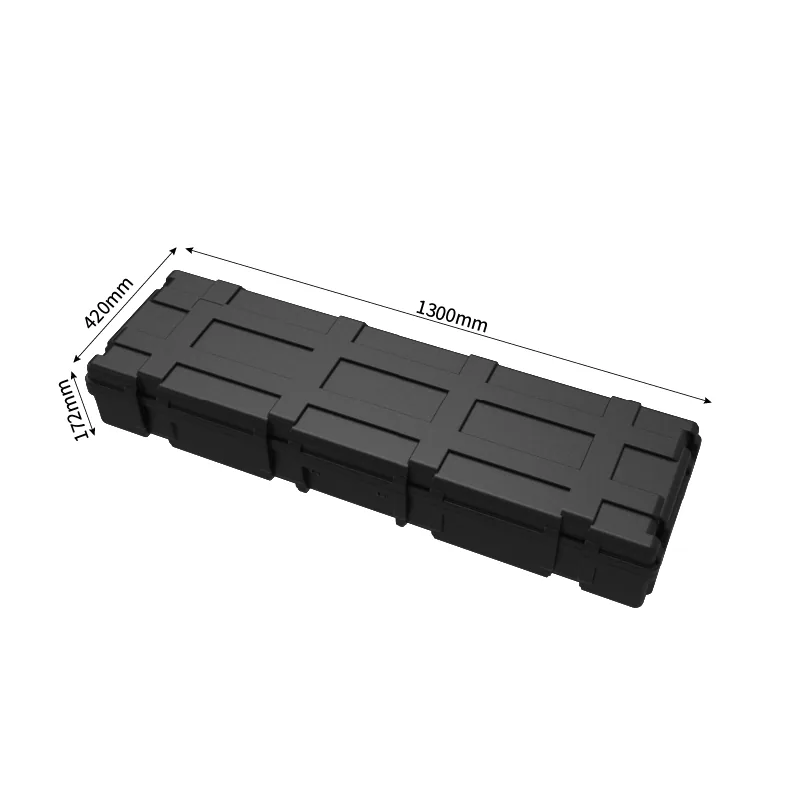
Figure: Transport case footprint — 1300 × 420 × 172 mm, one-piece checked freight.
Q: Can the probe set, cable length or wireless module be customized?
A: Yes. Probe combinations (rotating A/V, thermal, rotating waterproof, fixed waterproof, snake-eye, underwater), cable length (20 m standard) and the optional 4G/Wi-Fi/remote-PAD package are configured per mission. Share your target scenarios and destination with the LSJ export team to confirm configuration, MOQ, freight and lead time.
Configure your LSJ-C-E rescue kit
Tell us your scenarios — collapse, flood, fire ground or mine — and your preferred probe set. The LSJ export team will confirm configuration, cable length, freight and delivery.
Request a Quote from LSJ


