
 EN
EN
- Description

Is there a problem?
Please contact us to serve you!


Array Radar Life Detector LSJ-ARD
array-radar-life-detector-lsj-ard
- Description
- Parameter
- Recommended Products
Description
LSJ-ARD Array Radar Life Detector: Multi-Point Through-Rubble Survivor Search
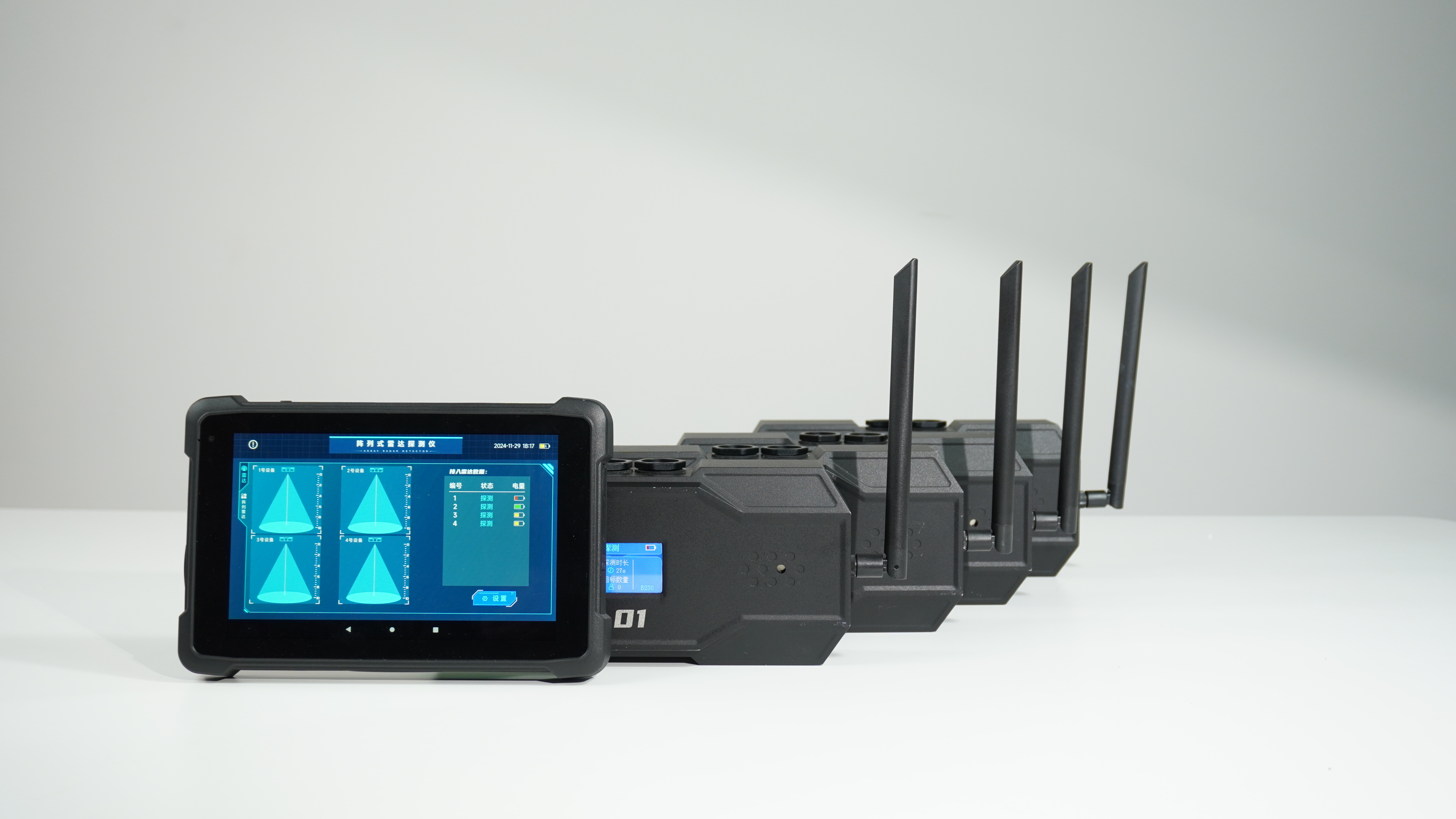
The LSJ-ARD Array Radar Life Detector is a wireless, array-type fixed-point search-and-rescue radar system that locates living people buried under earthquake rubble and collapsed buildings without touching them. Multiple radar detector nodes — configured four-in-one or eight-in-one — are laid out across a disaster site, penetrate concrete, brick, wood and snow, detect breathing and slight movement at 5 to 10 metres, and report each target’s distance and status to a single rugged 8-inch tablet over WiFi.
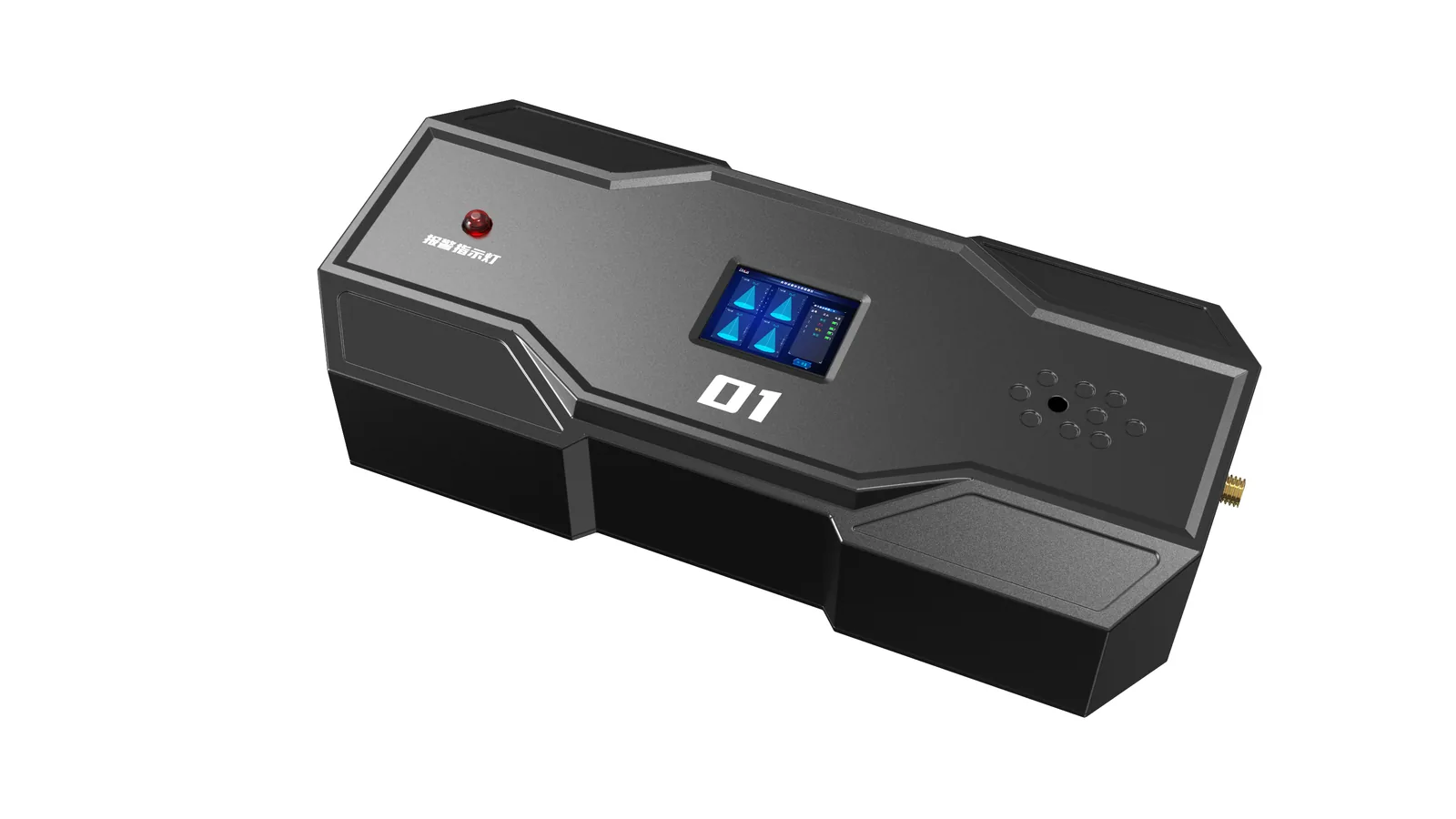
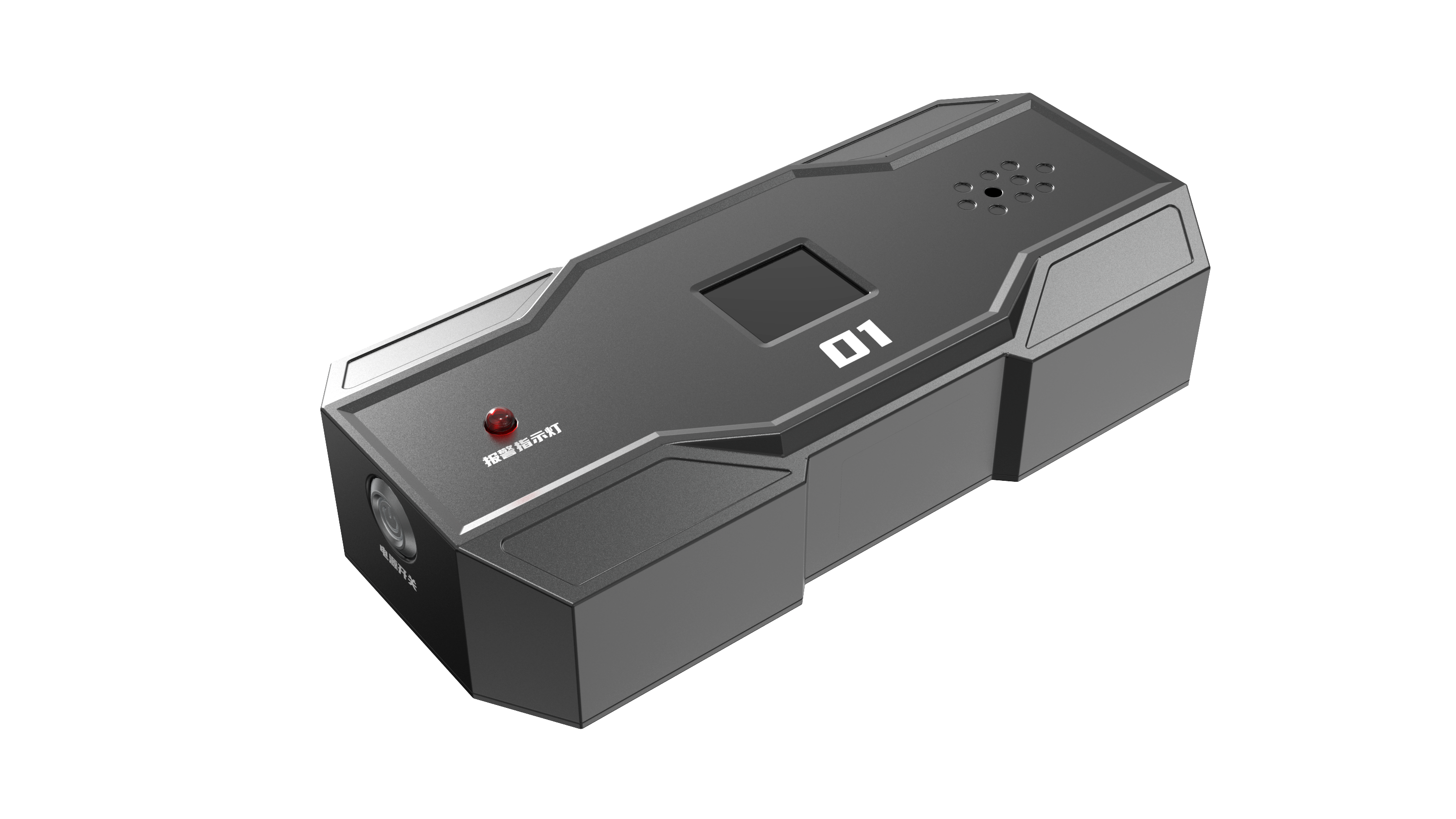
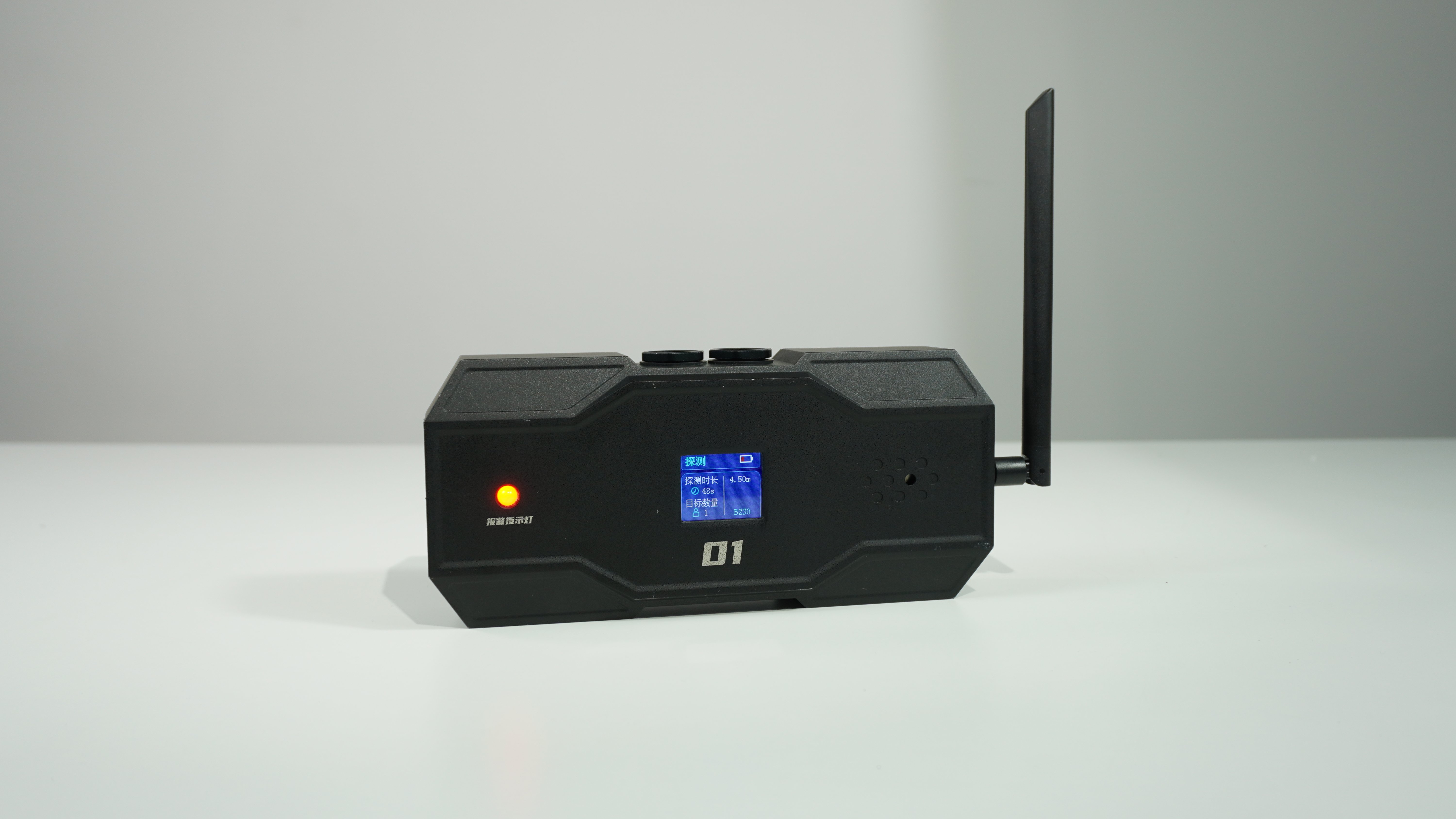
Figure 1: A single LSJ-ARD radar node — compact 250 × 120 × 52 mm body, 1.8-inch OLED status screen, acoustic/optical alarm indicator and external WiFi antenna.
The Challenge: Survivors You Cannot See, in a Narrow Time Window
After an earthquake, landslide or structural collapse, survivors are frequently trapped behind thick concrete slabs, brick walls and timber — invisible to cameras and unreachable by hand. Search teams must monitor several suspected locations at once, while unstable rubble and aftershocks make prolonged close-in work dangerous.
The LSJ-ARD answers with a deploy-and-monitor array:
Core Features and Proven Numbers
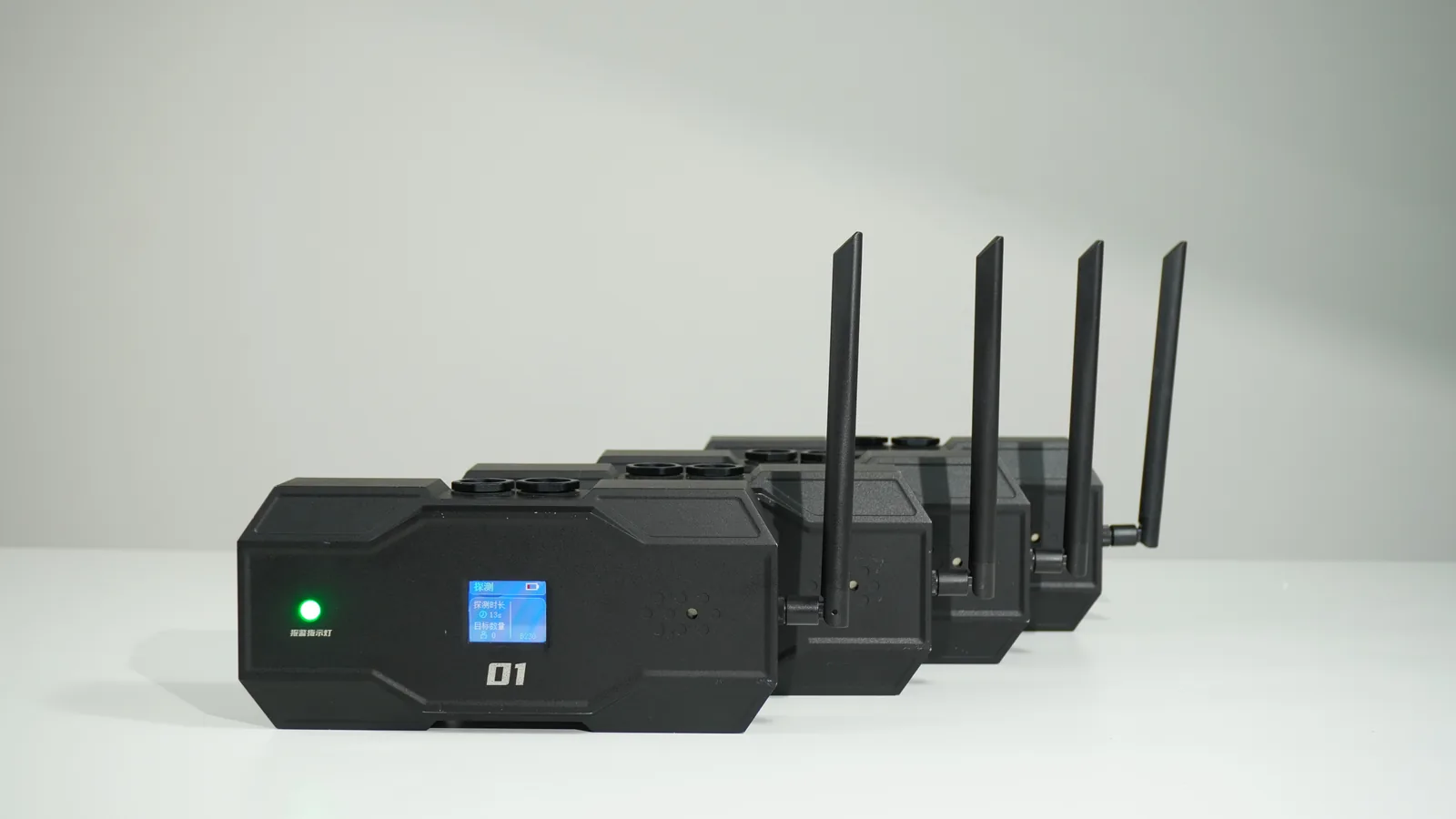
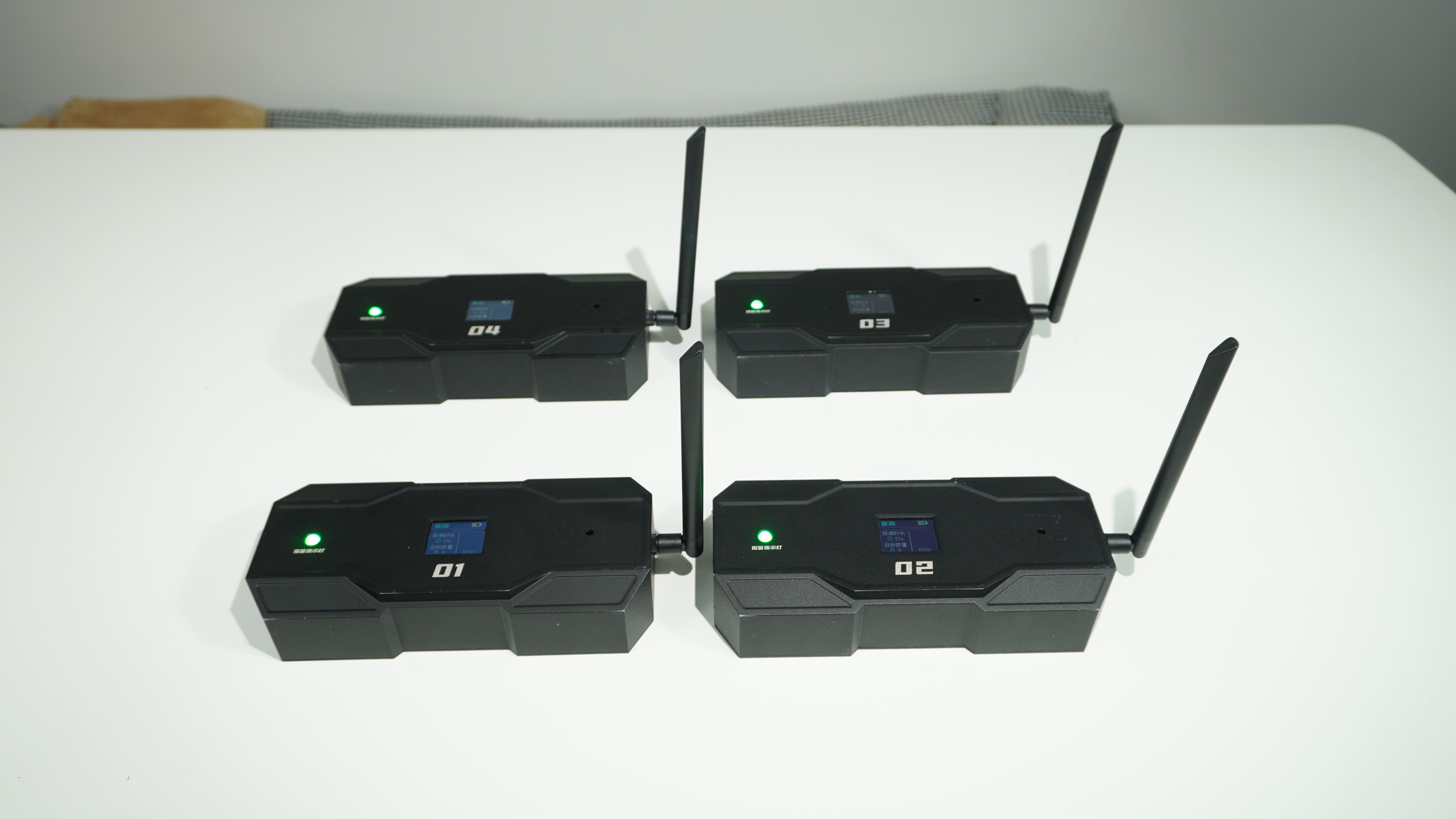
Figure 2: Four LSJ-ARD nodes cascaded into one wireless array. Each node weighs under 1 kg and is simply positioned at a separate monitoring point — scaling from four-in-one to eight-in-one kits.
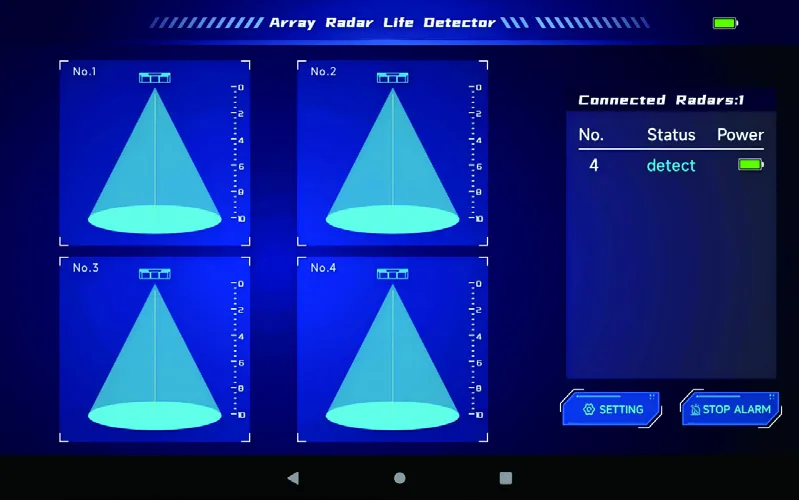
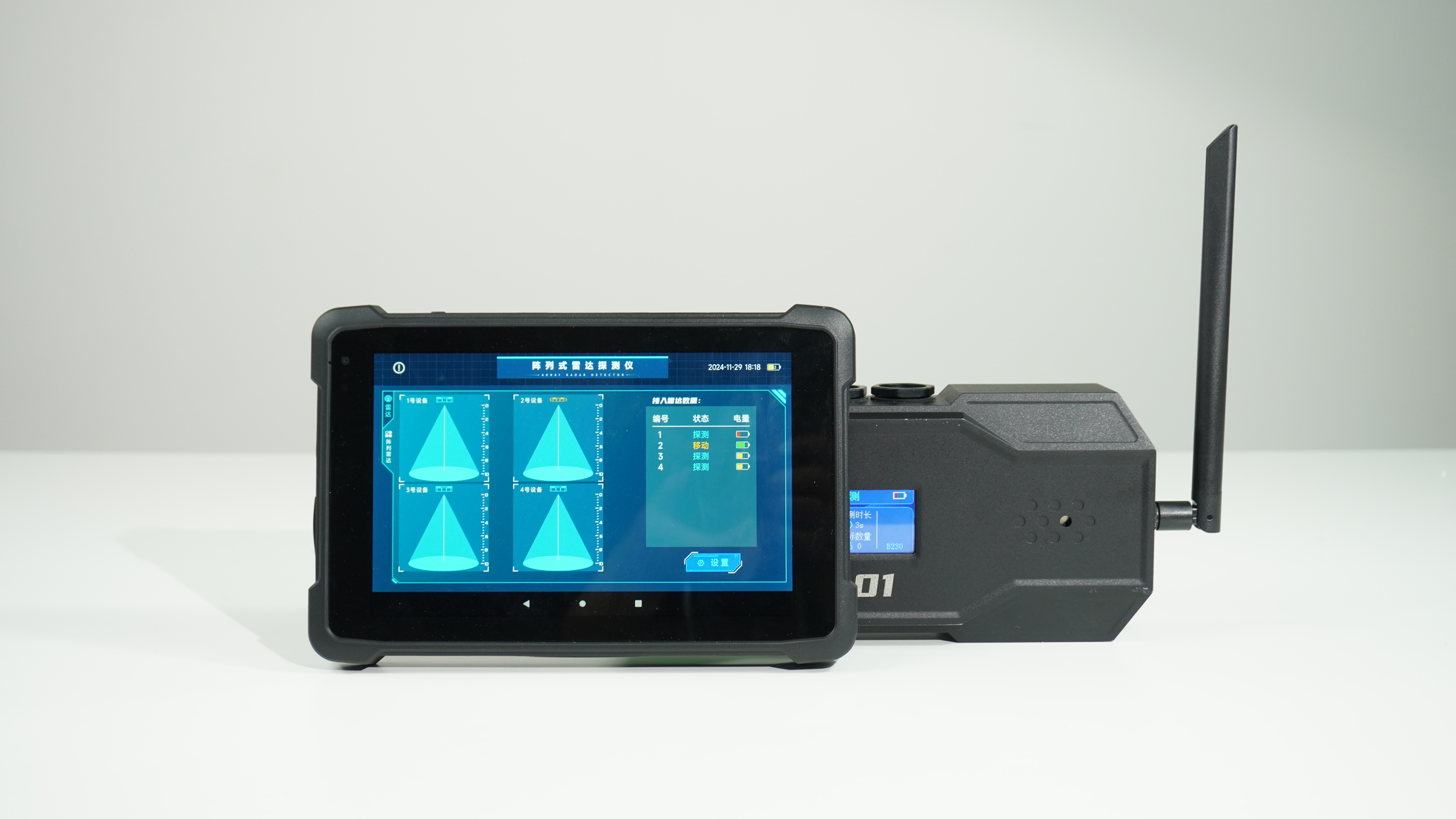
Figure 3: The English-language tablet interface — four conical radar views, connected-radar count, a No./Status/Power table (detect / move / stop), target distance readout, plus SETTING and STOP ALARM controls.
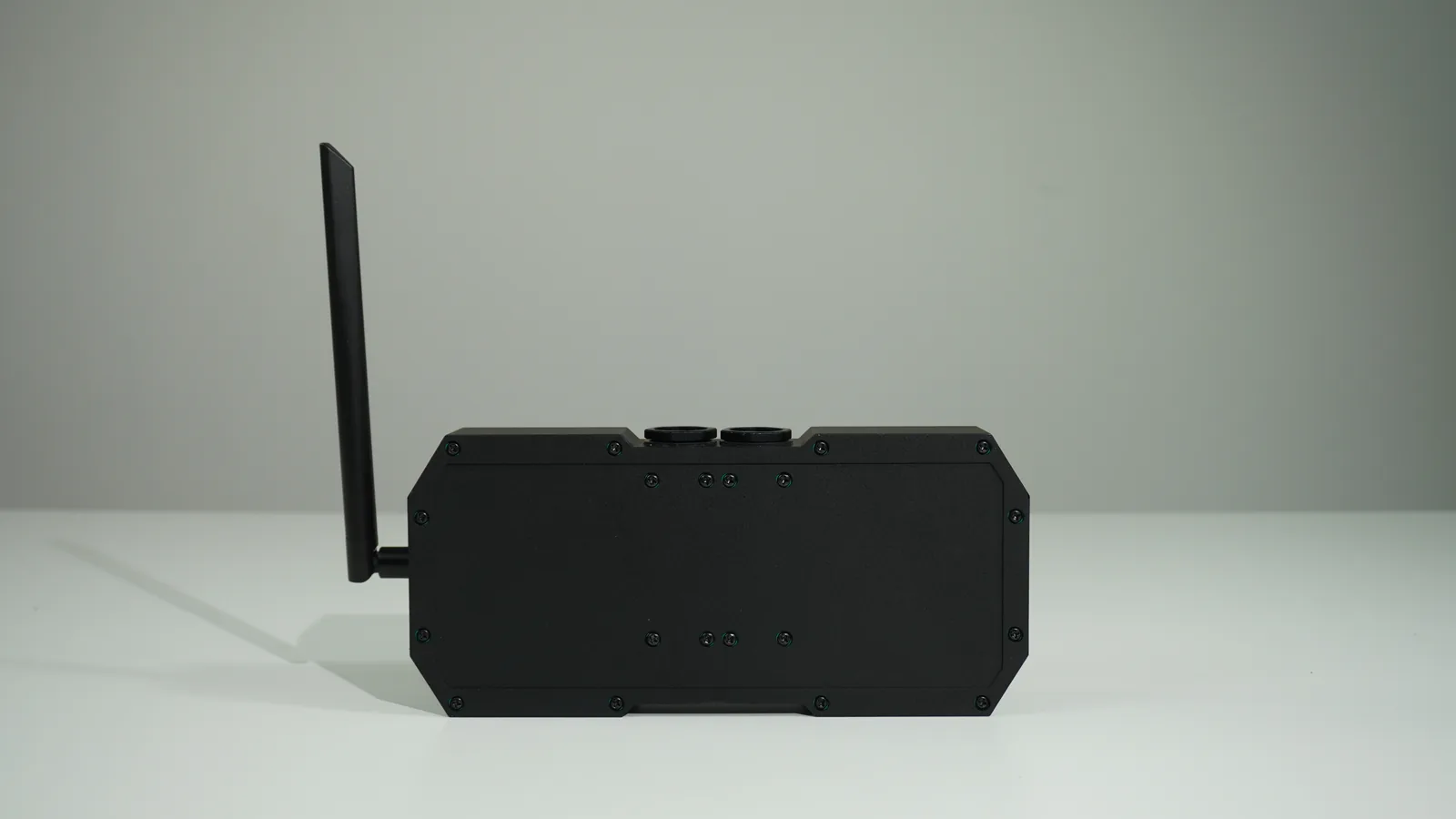
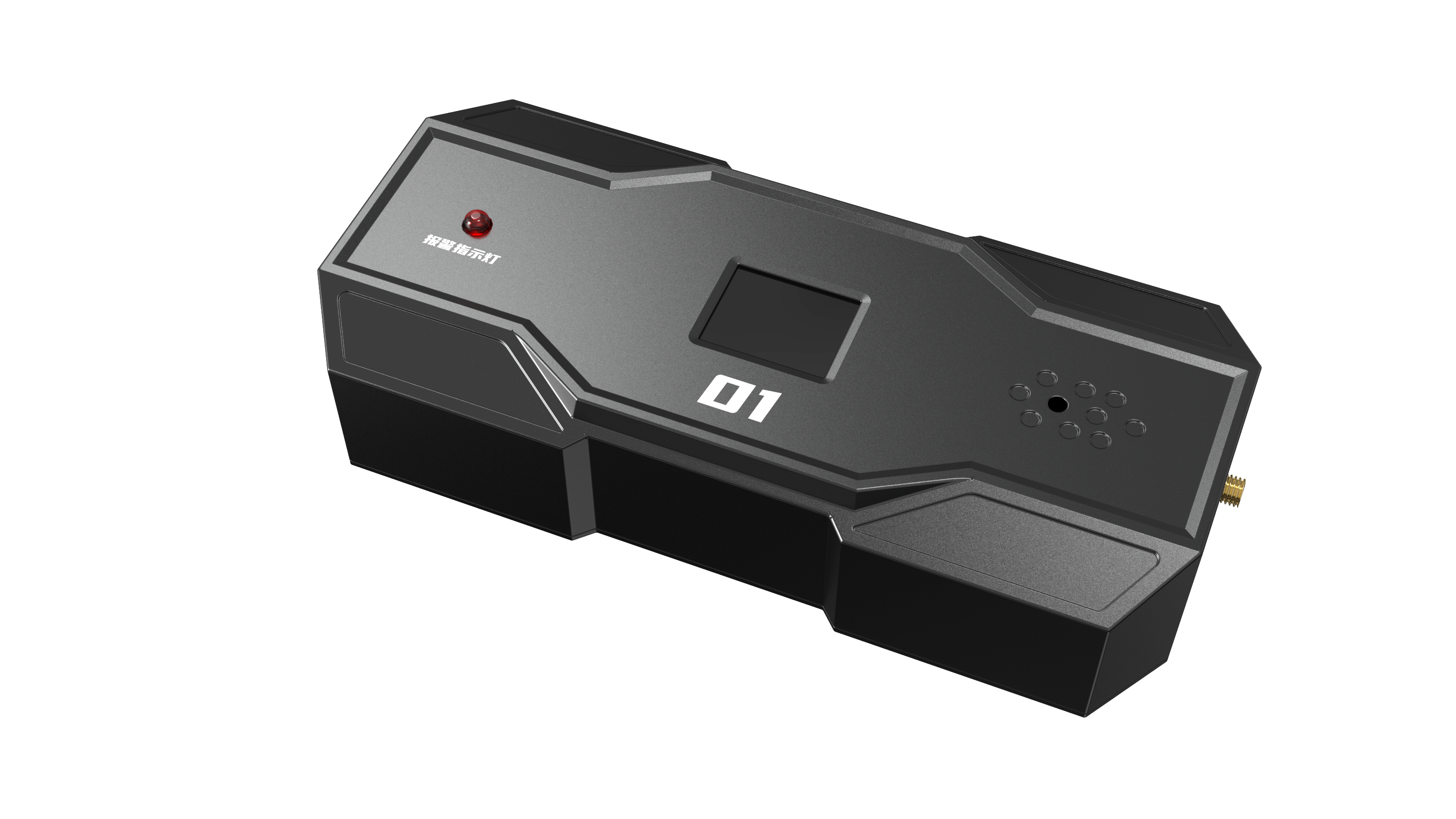
Figure 4: The screw-down sealed rear enclosure of an LSJ-ARD node, built to IP65 for dust ingress, rain and rubble-field handling between -20°C and +60°C.
Application Scenarios
The LSJ-ARD is built for urban search and rescue (USAR) teams that must search large, unstable debris fields quickly:
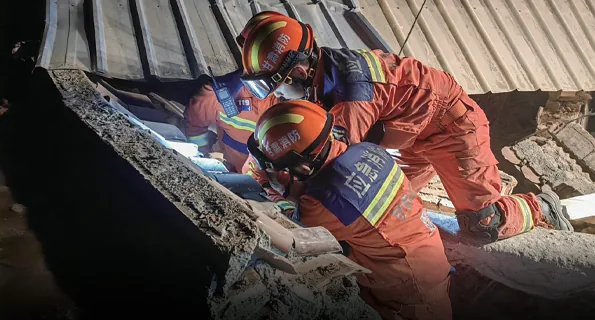
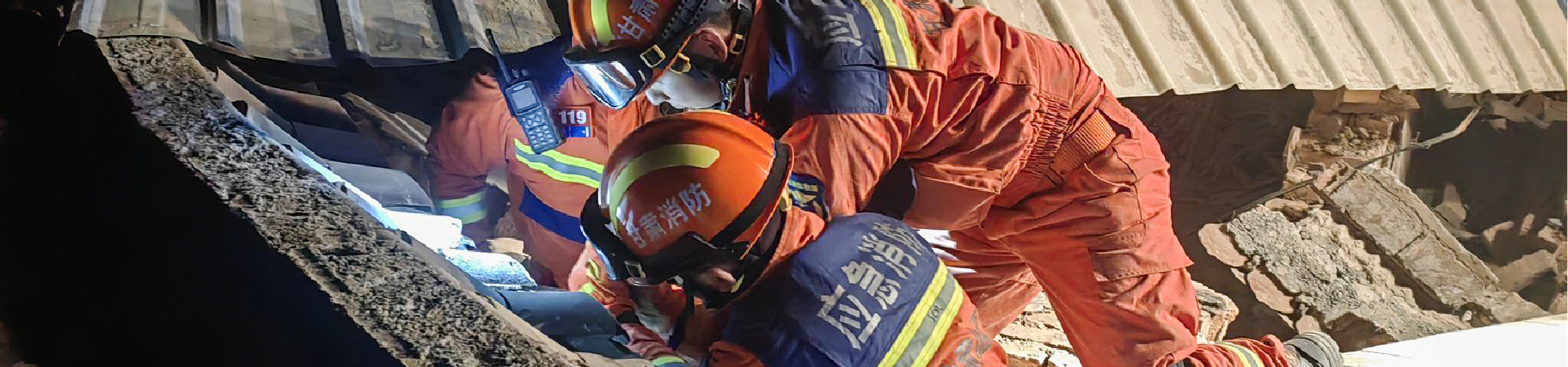
Figure 5: Search-and-rescue crews work a night-time collapsed-building site. LSJ-ARD nodes can be left monitoring the rubble while crews coordinate the next excavation from the command tablet.
System Configuration and Delivery
Every LSJ-ARD system is delivered as a deployment-ready kit in a waterproof, dustproof hard case with custom-cut foam:
- 8-inch rugged display & control terminal (1280 × 800, English interface)
- Four or eight array radar detector nodes with antennas (custom counts available)
- Removable dry / rechargeable batteries and a smart charger
- Instruction manual and waterproof transport hard case
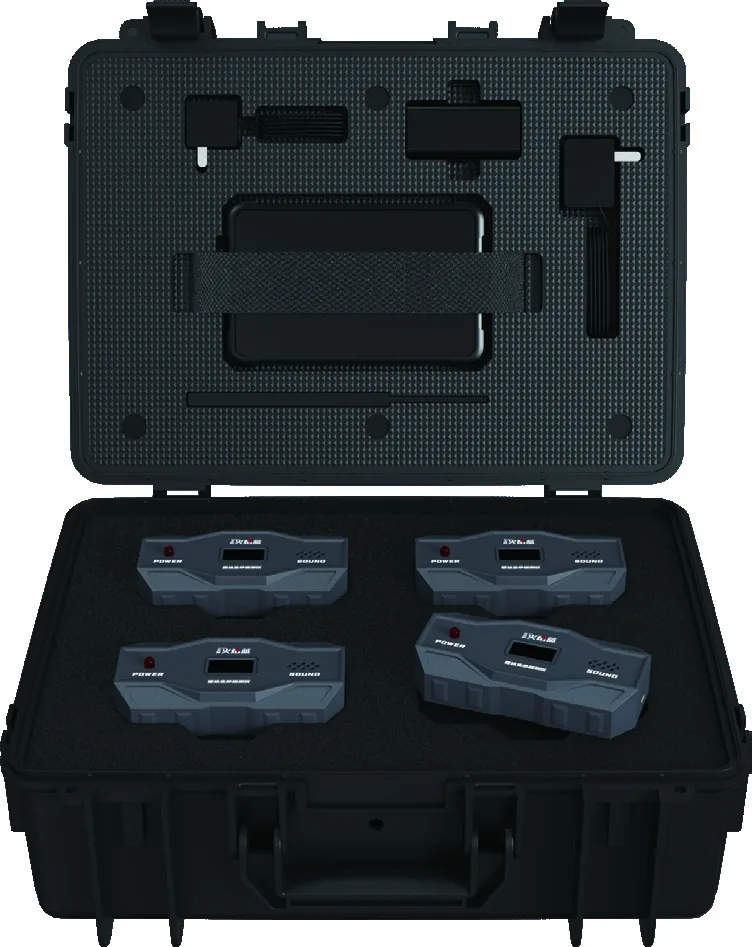
Figure 6: The four-in-one LSJ-ARD kit in its waterproof, dustproof hard case — four radar nodes, the rugged tablet bay, antennas and accessories in custom-cut foam for transport and storage.
Multiple power options and removable batteries keep the array running through extended operations, while the foam-fitted case protects the equipment in vehicle transit and on debris fields.
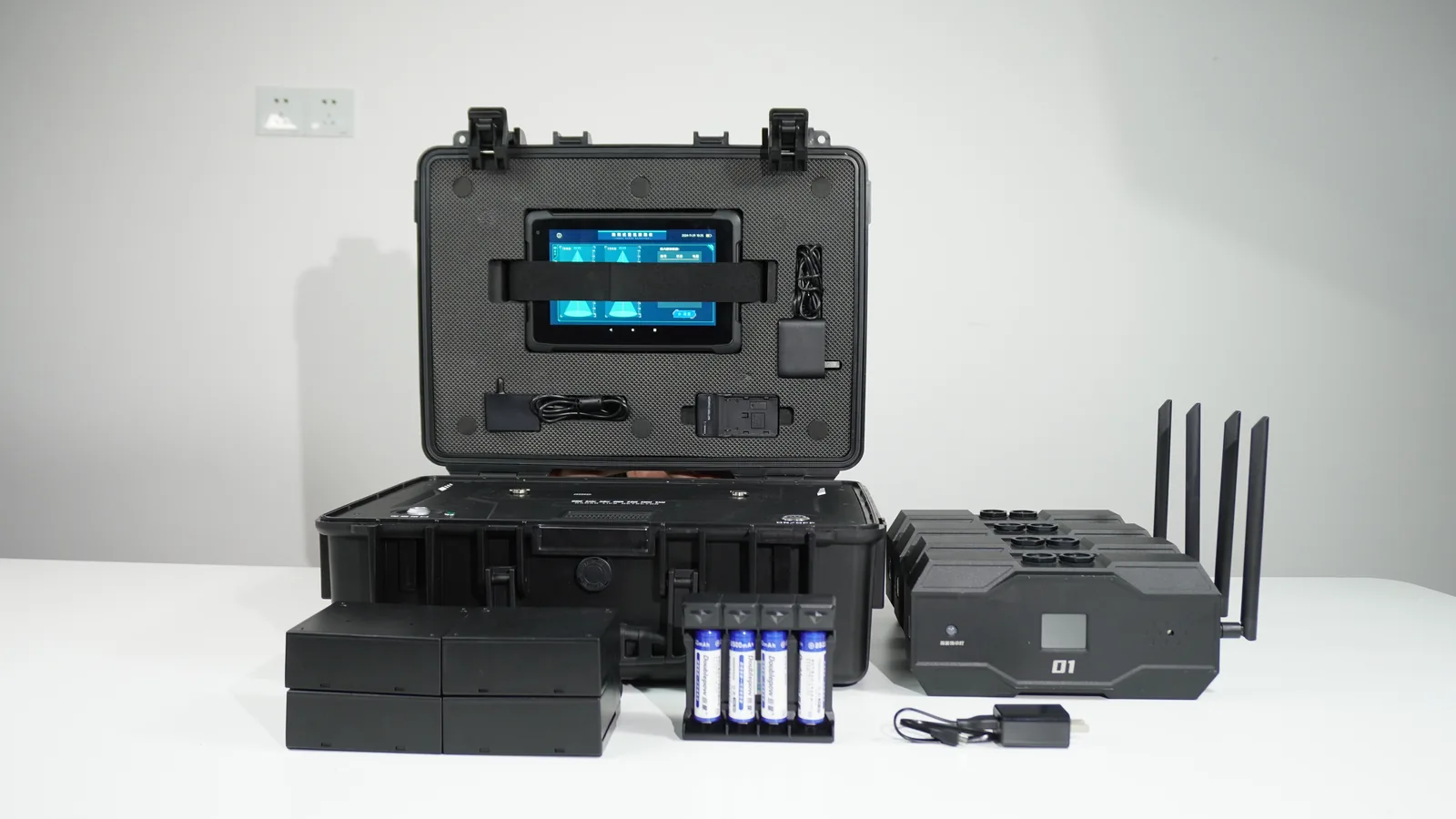
Figure 7: Complete LSJ-ARD delivery set laid out — radar nodes with antennas, rugged tablet terminal, removable batteries, smart charger and waterproof transport case.
Frequently Asked Questions
Q: What is the LSJ-ARD array radar life detector?
A: The LSJ-ARD is a wireless array of radar life-detector nodes that locates living people trapped under earthquake rubble, collapsed buildings, landslide debris and snow. It detects breathing and slight movement without contacting the victim and reports target distance and status to an 8-inch rugged tablet over WiFi.
Q: Can it detect a survivor who is completely stationary?
A: Yes. The LSJ-ARD detects the chest-wall breathing and micro-movement of stationary (non-moving) living targets, so an unconscious or trapped survivor does not need to move, speak or signal to be found.
Q: How thick a wall or layer of rubble can it penetrate?
A: Each node penetrates at least 50 cm of solid wood block or concrete brick and operates through brick-concrete and concrete walls, floor slabs, ruins, timber, snow and open air — all non-metallic, low-moisture obstacles — with a selectable range of 5 m or 10 m per node.
Q: What coverage and positioning accuracy does each node provide?
A: Each node covers a 90° horizontal effective angle (±45° three-dimensional cone) with a ≤0.5 m positioning error, enough to direct an excavation team to the right point on the rubble pile.
Q: How many radar nodes can one system use, and how do they connect?
A: Standard kits are four-in-one or eight-in-one configurations; custom node counts are available on request. All nodes connect wirelessly to the single 8-inch display and control terminal by WiFi, which lists every node’s status and battery.
Q: What does the control tablet display?
A: The 680 g, 8-inch 1280 × 800 rugged tablet shows a real-time conical radar view for each connected node, the connected-radar count, a No. / Status / Power table (detect, move, stop), target distance, and SETTING and STOP ALARM controls in an English interface.
Q: How is the LSJ-ARD powered, and how long does it last?
A: Nodes run on removable dry batteries, rechargeable batteries or a battery pack, with a smart charger included. Continuous operation is rated at ≥5 h per battery set, with cumulative field endurance of more than 7 days across multi-power deployments; battery level is shown on the OLED screen and tablet.
Q: Can it operate in rain, dust and freezing conditions?
A: Yes — every node is sealed to IP65 (waterproof and dustproof) and is rated for a working temperature of -20°C to +60°C, and the complete kit ships in a waterproof, dustproof hard case.
Q: What is included, and how do I order the right configuration?
A: Each kit includes the display and control terminal, four or eight radar nodes with antennas, batteries, a smart charger, the instruction manual and a waterproof transport case. Send LSJ your deployment scenario (site size, number of search points, 5 m or 10 m range) via the inquiry form to receive a configuration quote, MOQ and lead time.
Tell us your deployment scenario — four-node or eight-node kit, 5 m or 10 m range — and LSJ will prepare a configuration quotation for your team.
Request a Quote & Full Spec SheetComplete kit in waterproof hard case • IP65-rated nodes • factory-direct technical support from LSJ
Technical Specifications
Every LSJ-ARD value below is taken from the factory technical specification sheet. The complete kit is delivered in a waterproof, dustproof hard case.


